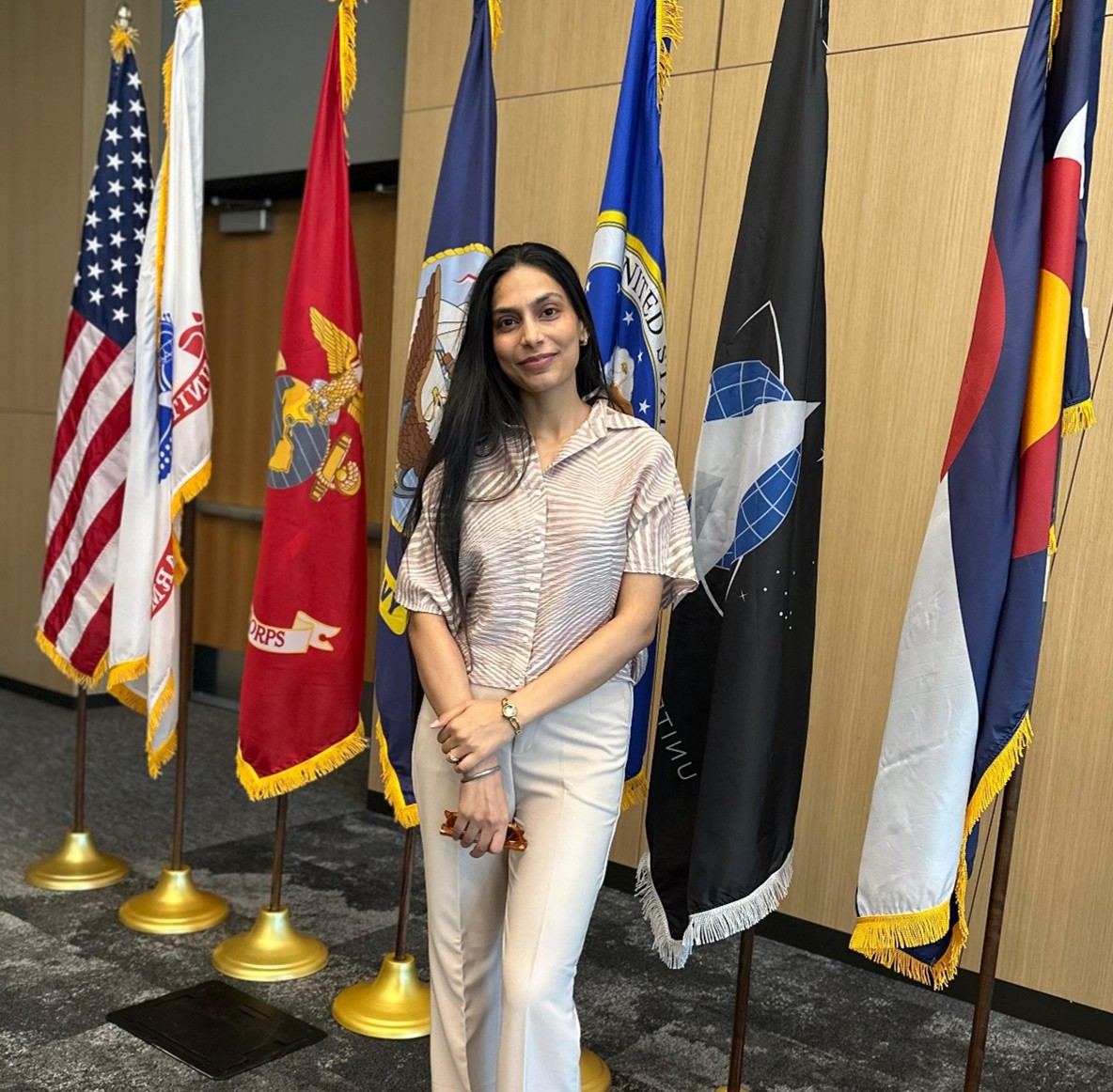
Summer 2026 Internship Reflection: Navneet Kaur

My summer internship with the National Council of Urban Indian Health (NCUIH) was an experience that allowed me to step beyond the classroom and see how public health research can contribute to meaningful change in communities. As an MPH Epidemiology student, I was excited to dive in public health research and health equity. What I did not expect was how much this experience would broaden my understanding of American Indian and Alaska Native (AI/AN) communities and Urban Indian Organizations (UIOs) and the importance of culturally responsive public health practice. 

Through projects focused on oral health, maternal health, racial misclassification, and traditional healing, I gained hands-on experience in literature review, survey development, Qualtrics, data management, qualitative and quantitative analysis, and public health communication.

One of the most meaningful lessons I learned was that data are more than numbers—they represent real communities and people’s experiences. My work on racial misclassification helped me understand how inaccurate representation of American Indian and Alaska Native populations can affect health surveillance, the visibility of disparities, and efforts to improve maternal health outcomes.

I also gained a deeper appreciation for culturally responsive and community-centered public health practice. Working with the NCUIH team taught me the importance of collaboration, asking questions, seeking feedback, and taking advantage of opportunities to learn beyond my assigned tasks.

I am grateful especially to Dr. Kimberly Fowler, Vice President, Technical Assistance and Research Center (TARC), NCUIH team and my mentors for their guidance and support throughout this experience. This internship strengthened both my technical and professional skills while expanding my understanding of Urban Indian health. I will carry these lessons with me as I continue my MPH journey and pursue a career in epidemiology, research, and health equity.

image_pdfPDFimage_printPrint

Summer 2026 Internship Reflection: Quentin Monette

The summer of 2026 marked an incredibly valuable experience in my academic and professional journey as a Public Health student at Xavier University of Louisiana. As I continue preparing for a career in healthcare, my internship with the National Council of Urban Indian Health (NCUIH) provided me with an opportunity to expand my understanding of public health, healthcare policy, research, and the unique challenges affecting American Indian and Alaska Native communities.

Throughout my internship, I had the opportunity to contribute to several projects that allowed me to apply what I have learned in the classroom to real-world public health work. One of my primary areas of work was supporting the Knowledge Resource Center (KRC), where I helped organize journals, fact sheets, and other resources and identify relevant keywords to improve the accessibility of public health information for Urban Indian Organizations (UIOs). This experience showed me the importance of making health information organized, accessible, and useful for both healthcare professionals and the communities they serve. I also worked on projects related to social determinants of health (SDOH), examining how factors such as housing, transportation, food access, and other conditions influence health outcomes. Through this work, I gained a better understanding of how public health extends beyond the healthcare system itself and how social and environmental conditions can create barriers to receiving quality care. I also contributed to research examining healthcare barriers affecting American Indian and Alaska Native populations, including insurance coverage and transportation-related challenges. Throughout the summer, I was also able to contribute to projects involving dental services among Urban Indian Organizations and help develop follow-up questions for organizations providing these services.

One of the most important things I gained from my time at NCUIH was a greater appreciation for the amount of collaboration and research that goes into improving healthcare outcomes. Working on projects that involved data, research, health policy, and community resources allowed me to see how different areas of public health come together to address real-world problems. It also strengthened skills that I will carry with me throughout my academic and professional career, including research, communication, organization, critical thinking, and working with public health data.

I am incredibly grateful to the NCUIH TARC team and staff for allowing me to be part of the organization this summer and for providing me with opportunities to learn and contribute. My internship experience gave me a deeper understanding of the importance of addressing health disparities and ensuring that healthcare systems and resources are accessible to the communities they serve. As I continue my journey in public health and pursue my long-term goals in healthcare, the knowledge, skills, and experiences I gained at NCUIH will continue to influence the way I understand and approach healthcare.

Overall, my time at NCUIH was more than just an internship. It was an opportunity to take the concepts I have learned as a Public Health student and see how they are applied to meaningful work outside of the classroom. I am thankful for the experiences, relationships, and lessons I gained throughout the summer, and I look forward to carrying them with me into my future career in healthcare.

image_pdfPDFimage_printPrint

Senate Appropriations Committee Releases Labor Health and Human Services Spending Bill: Indian Country Analysis

On November 16, 2026, the Senate Appropriations Committee released its Fiscal Year (FY) 2027 appropriations bill for Labor, Health and Human Services, Education, and Related Agencies (Labor-HHS). The bill provides $209.9 billion in base discretionary funding, including $112.1 billion in discretionary funding for the Department of Health and Human Services (HHS). Like the House bill, the Senate bill does not create the Administration for a Healthy America (AHA) proposed in the President’s budget. It funds the Health Resources and Services Administration (HRSA), the Substance Abuse and Mental Health Services Administration (SAMHSA), and the Centers for Disease Control and Prevention (CDC) as separate agencies.

The bill provides level funding for key Indian country provisions including the Improving Native American Cancer Outcomes program, Good Health and Wellness in Indian Country program, Tribal Behavioral Health Grants, and the Minority HIV/AIDS Fund – Tribal Set Aside. However, the bill lowers the National Health Service Corps (NHSC) set-aside for providers serving Indian Health Service, Tribal, and urban Indian health programs from 15 percent to 13 percent.

Background

The National Council of Urban Indian Health (NCUIH) submitted written testimony to the Senate in May 2026 highlighting funding priorities for key Indian health programs. The testimony encouraged $10 million for the Improving Native American Cancer Outcomes program, $30 million for the Good Health and Wellness in Indian Country program, and protection of Tribal set-asides.

On June 4, 2026, NCUIH also sent a letter to Senate Labor-HHS Appropriations Subcommittee Chair Shelley Moore Capito and Ranking Member Tammy Baldwin urging the subcommittee to maintain all enacted Tribal set-asides at or above FY 2026 levels, adopt the Tribal set-asides included in the FY 2026 House mark that were not included in the final enacted bill, and add Tribal set-asides to health programs where American Indian and Alaska Native (AI/AN) populations face a disproportionate burden.

On June 9, 2026, the House Appropriations Full Committee passed its FY 2027 Labor-HHS bill. The House bill provides $15 million for the Improving Native American Cancer Outcomes program and $30 million for Good Health and Wellness in Indian Country, but reduces the Minority HIV/AIDS Fund to $20 million (maintaining the $6 million Tribal set-aside) and the Ryan White HIV/AIDS Program to $2.35 billion.

Next Steps

The bill is not expected to become law in its current form; House and Senate negotiators must agree on final FY 2027 text.

The federal government is currently operating under the Continuing Appropriations and Extensions Act, 2027 (H.R. 6500), signed into law on September 2, 2026, which maintains FY 2026 funding levels through December 11, 2026. If Congress does not reach a final agreement by that date, it will need to pass another Continuing Resolution to avoid a lapse in funding. If a shutdown does occur, UIOs and parts of IHS will be protected by advance appropriations

Bill Highlights

Line Item FY 2026 Enacted FY 2027 President’s Budget Request FY 2027 House Proposed FY 2027 Senate Proposed
Health Resources and Services Administration $9.22 billion Fold into Administration for a Healthy America (AHA) $8.35 billion $9.37 billion
Substance Abuse and Mental Health Services Administration $7.44 billion Fold into AHA $7.29 billion $7.46 billion
National Institute of Health $48.49 billion $42.97 billion $48.82 billion $48.99 billion
Centers for Disease Control $9.2 billion Fold into AHA (partially) $8.16 billion $9.26 billion
Good Health and Wellness in Indian Country $27 million —————– $30 million $27 million
Improving Native American Cancer Outcomes $9 million —————– $15 million $9 million
Ryan White HIV/AIDS Program $2.57 billion $2.50 billion $2.35 billion $2.57 billion
Ending the HIV Epidemic $165 million ——- —— $165 million
Minority HIV/AIDS Fund $56 million Eliminated $20 million $56 million
Minority HIV/AIDS Fund – Tribal Set Aside No less than $6 million ———— $6 million $6 million
Tribal Behavioral Health Grants $25.67 million Eliminated. Created a new behavioral health program under AHA $30 million $25.67 million

Additional Key Provisions:

Department-Wide

Trust and Treaty Responsibilities

Explanatory Statement pg. 4: The Committee reminds departments and agencies funded by the act of their obligation to uphold federal trust and treaty responsibilities to Tribes, including early and robust government-to-government consultation. Within 60 days of enactment, each department is directed to brief the Committee on efforts to ensure that funding opportunities for Tribes and policies with Tribal implications are implemented with a focus on Tribal sovereignty.

Health Resources and Services Administration (HRSA)

National Health Service Corps: $133 million (13% I/T/U set-aside)

Explanatory Statement pg. 39; Bill Text pg. 54: The bill provides $133 million for the NHSC, a $3 million increase over FY 2026. Bill language reserves not less than 13 percent of NHSC funding for loan repayment awards to individuals who provide primary health services in Indian Health Service facilities, Tribally-operated 638 health programs, and Urban Indian Health Programs. This is lower than the 15 percent set-aside in the FY 2026 enacted bill.

Maternal and Child Health Services Block Grant

Explanatory Statement pg. 49: The Committee encourages HRSA to ensure the services offered through the MCH Services Block Grant are provided at Indian Health Service facilities, Tribally operated health programs, and Urban Indian Health programs.

Federal Office of Rural Health Policy: $455.5 million

Explanatory Statement pg. 60: The Committee provides $455,517,000 for Rural Health programs, a $37.6 million increase over FY 2026, including $147 million for the Rural Communities Opioid Response Program (pg. 61).

Native Hawaiian Health Care Program: $27 million

Explanatory Statement pg. 35: The Committee includes $27 million for the Native Hawaiian Health Care Program, including $10 million for Papa Ola Lokahi, equal to the FY 2026 enacted level.

Peer Support Specialists: $15 million

Explanatory Statement pg. 43: Within the Behavioral Health Workforce Education and Training program ($114 million), the Committee includes $15 million for training, internships, and certification for mental health and substance use peer support specialists.

Screening and Treatment for Maternal Mental Health and Substance Use Disorders

Explanatory Statement pg. 55: The Committee directs HRSA to expand the program to at least three additional States or Tribes, and requires HRSA’s annual public report to include steps taken to provide grants to Indian Tribes and Tribal organizations.

Centers for Disease Control and Prevention

Good Health and Wellness in Indian Country: $27 million

Explanatory Statement pg. 82: The Committee provides $27 million, equal to the FY 2026 enacted level.

Maternal Mortality Review Committees

Explanatory Statement pg. 88: The Committee encourages CDC to conduct outreach to Tribal and Native Hawaiian communities to raise awareness about the program and representation of Native American perspectives on State and local Maternal Mortality Review Committees.

National Diabetes Prevention Program

Explanatory Statement pg. 87: The Committee includes a $4 million increase for the National Diabetes Prevention Program and encourages CDC to work with local partners providing produce prescription programming and to integrate Food is Medicine approaches.

National Institutes of Health (NIH)

Improving Native American Cancer Outcomes: $9 million

Explanatory Statement pg. 146: The Committee includes $9 million, equal to the FY 2026 enacted level, and directs the National Institute on Minority Health and Health Disparities (NIMHD) to work with the National Cancer Institute (NCI) to locate the initiative at an NCI-designated cancer center demonstrating partnerships with Indian Tribes, Tribal organizations, and urban Indian organizations.

National Institute on Minority Health and Health Disparities: $538.4 million

Explanatory Statement pg. 145: The Committee provides $538,395,000, equal to the FY 2026 enacted level.

Substance Abuse and Mental Health Services Administration (SAMHSA)

State Opioid Response Grants: $1.61 billion (4.25% Tribal set-aside)

Explanatory Statement pg. 196; Bill Text pg. 81: The Committee provides $1.61 billion, a $15 million increase over FY 2026. Bill language provides not less than 4.25 percent for grants to Indian Tribes or Tribal organizations, equal to the FY 2026 percentage.

Medication-Assisted Treatment Tribal Set-Aside: $15.5 million

Explanatory Statement pg. 193: Of the $114 million for medication-assisted treatment, $15.5 million is for grants to Indian Tribes, Tribal organizations, or consortia, equal to the FY 2026 enacted level.

Tribal Behavioral Health Grants: $25.67 million

Explanatory Statement pg. 199: The Committee provides $25,665,000 within substance use prevention, equal to the FY 2026 enacted level, and directs the Assistant Secretary to engage with Tribes on ways to maximize participation in the program. The Committee also provides $26,250,000 for Tribal Behavioral Grants within mental health programs (pg. 181).

Zero Suicide: $23.8 million (AI/AN set-aside: $4.4 million)

Explanatory Statement pg. 186: The Committee notes that AI/AN people have the highest rates of suicide of any racial or ethnic group and includes $4.4 million for AI/AN within Zero Suicide, equal to the FY 2026 enacted level. The Committee also provides $4,931,000 for American Indian and Alaska Native Suicide Prevention (pg. 181).

Project AWARE

Explanatory Statement pg. 187: The Committee urges SAMHSA to consider the needs of Tribes and Tribal organizations within funds made available for Project AWARE.

Mental Health Block Grant: $996.5 million

Explanatory Statement pg. 188: The Committee provides a $5 million increase and encourages SAMHSA to consider the needs of Indian Tribes and Tribal organizations within the MHBG.

988 Suicide & Crisis Lifeline: $549.6 million

Explanatory Statement pg. 181: The Committee provides $549,618,000, a $15 million increase over FY 2026, and continues to request quarterly briefings on the 988 Lifeline spend plan.

National Center of Excellence for Eating Disorders: $2 million

Explanatory Statement pg. 183: The Committee provides $2 million for the National Center of Excellence for Eating Disorders.

Office of the Secretary – General Departmental Management

Minority HIV/AIDS Fund: 56million(6 million Tribal set-aside)

Explanatory Statement pg. 278: The Committee provides $56 million, equal to the FY 2026 enacted level, and includes $6 million for the Tribal set-aside within the fund.

Center for Indigenous Innovation and Health: $6 million

Explanatory Statement pg. 277: The Committee continues $6 million for the Center for Indigenous Innovation and Health.

Administration for Children and Families (ACF)

Indian Child Welfare Act Compliance

Explanatory Statement pg. 238: The Committee continues $3 million for State-Tribal partnership grants, encourages ACF to develop guidance for States to better serve Indian children, and directs the Children’s Bureau and Tribal Engagement Team to brief the Committee within 90 days of enactment on ICWA implementation.

Native American Programs: $63.5 million

Explanatory Statement pg. 241: The Committee provides $63.5 million, including $16 million for Native American language preservation, and continues support for the StrongHearts Native Helpline.

Administration for Community Living (ACL)

Native American Caregiver Support Program: $14 million

Explanatory Statement pg. 245: The Committee provides $14 million, equal to the FY 2026 enacted level, for grants to Tribes supporting AI/AN and Native Hawaiian families caring for older relatives.

Grants to Native Americans: $40.3 million

Explanatory Statement pg. 246: The Committee provides $40,264,000 for nutrition and supportive services, and encourages ACL to convene with stakeholders on potential barriers to Tribes accessing programs under Titles VI and III of the Older Americans Act.
image_pdfPDFimage_printPrint

Senate releases FY 2027 Interior Bill with Increases for IHS and Advance Appropriations for FY 2028

On November 12, 2026, the Senate Appropriations Full Committee released its Fiscal Year (FY) 2027 appropriations bill for Interior, Environment, and Related Agencies. The bill provides $8.40 billion for the Indian Health Service (IHS), a $353 million increase over the FY 2026 enacted level, including $5.39 billion in advance appropriations for FY 2028. The bill maintains urban Indian health at $95.42 million, equal to the FY 2026 enacted level and $10.57 million below the House-proposed level of $105.99 million.

The Committee states it “is committed to improving the health and well-being of AI/AN living in urban Indian communities” and reminds IHS of the directive to explore the formation of an interagency working group to identify where federal funding for Urban Indian Organizations (UIOs) should be increased or programs amended to allow greater access by UIOs.

Background

On June 3, 2026, the House Appropriations Full Committee passed the FY 2027 appropriations bill for Interior, Environment, and Related Agencies. The House bill provides $8.69 billion for IHS, including $6.06 billion in advance appropriations for FY 2028, and $105.99 million for urban Indian health, a $10.57 million increase over the FY 2026 enacted level.

On March 11, 2026, NCUIH submitted written testimony to the House Appropriations Subcommittee on Interior, Environment, and Related Agencies requesting $106 million for urban Indian health and the continuation of advance appropriations for IHS. On March 17, 2026, NCUIH CEO Francys Crevier testified before the Subcommittee, urging full funding for urban Indian health and the Indian Health System.

On March 20, 2026, 59 Congressional leaders joined Representative Leger Fernandez in a bipartisan letter to Chairman Simpson and Ranking Member Pingree of the House Interior Appropriations Subcommittee requesting support for urban Indian health, maintaining advance appropriations for IHS, and protecting IHS from sequestration.

On April 15, 2026, 20 Senators joined Senator Tina Smith (D-MN) in a letter to Chair Lisa Murkowski (R-AK) and Ranking Member Jeff Merkley (D-OR) of the Senate Interior Appropriations Subcommittee requesting funding for urban Indian health at the highest level possible, up to the Tribal Budget Formulation Workgroup’s request of $1,093,999,000, and retaining advance appropriations for IHS. 

Next Steps

The Senate released the bill text, explanatory statement, and bill summary. The bill is not expected to become law in its current form; House and Senate negotiators must agree on final FY 2027 text.

The federal government is currently operating under the Continuing Appropriations and Extensions Act, 2027 (H.R. 6500), signed into law on September 2, 2026, which maintains FY 2026 funding levels through December 11, 2026. If Congress does not reach a final agreement by that date, it will need to pass another Continuing Resolution to avoid a lapse in funding. If a shutdown does occur, UIOs and parts of IHS will be protected by advance appropriations.

Bill Highlights

Line Item FY 26 Enacted FY 27 Tribal Request FY 27 President’s Budget FY 27 House Proposed FY 27 Senate Proposed
Urban Indian Health $95.42 million $1.09 billion $95 million $ 105.99 million $95.42 million
Indian Health Service $8.05 billion $73 billion $9.1 billion $8.69 billion $8.4 billion
Advance Appropriations $5.31 billion ______________ $5.6 billion $6.06 billion $5.39 billion
Hospital and Clinics $2.63 billion $18.5 billion $2.84 billion $2.87 billion $2.70 billion
Tribal Epidemiology Centers $39.4 million ______________ $39.4 million $ 45 million ___________
Mental Health $133.69 million $5.41 billion $139 million $144.95 million $135.39 million

Additional Key Provisions:

UIO Interagency Workgroup

The Committee recommends $95,419,000 for the Urban Indian Health program and notes that, despite the excellent efforts of UIOs, AI/AN populations continue to be left out of many federal initiatives. The Committee reminds IHS of the directive to explore the formation of an interagency working group to identify existing federal funding supporting UIOs and determine where increases are needed or what programs should be amended to allow for greater access by UIOs; to develop a federal funding strategy to build out and coordinate the infrastructure necessary to pilot and scale innovative programs that address the needs of urban AI/ANs holistically; to develop a wellness-centered framework to inform health services; and to meet quarterly with UIOs. In addition to IHS, the working group should include HHS, HUD, USDA, DOJ, the Department of Education, VA, the Department of Labor, the Small Business Administration, the Economic Development Agency, FEMA, the U.S. Conference of Mayors, and others as identified by UIOs. (Explanatory Statement, pgs. 142–143)

Produce Prescription Pilot Program: $7 million

The bill maintains funding for the Produce Prescription Pilot program at the FY 2026 enacted level. (Explanatory Statement, pg. 140)

Contract Support Costs: $1.7 billion and Tribal 105(l) Leases: $720 million

The bill continues the indefinite appropriation for contract support costs, estimated at $1.731 billion for FY 2027 (compared to $1.819 billion in FY 2026). Retaining an indefinite appropriation allows additional funds to be provided if the estimate proves lower than necessary to meet the legal obligation to pay the full amount due to Tribes. (Explanatory Statement, pg. 144)

The bill also includes an indefinite appropriation of an estimated $720 million for Tribal 105(l) leases (compared to $366 million in FY 2026) for operating costs of facilities leased or owned by Tribes and Tribal organizations carrying out health programs under ISDEAA contracts and compacts. (Explanatory Statement, pg. 144)

Purchased and Referred Care: $996.75 million

The bill provides $996,755,000 for Purchased/Referred Care, equal to the FY 2026 enacted level, including $54 million for the Indian Catastrophic Health Emergency Fund. Within these funds, IHS is directed to support the delivery of health care services for New Tribes. (Explanatory Statement, pg. 142; Bill Text, pg. 135)

Indian Health Professions: $84.56 million

The bill provides $84,568,000 for Indian Health Professions, equal to the FY 2026 enacted level, including up to $51 million for the IHS Loan Repayment Program. The Committee expects the funding will allow the Indians into Medicine program to expand to four sites and maintains funding for the Quentin N. Burdick American Indians into Nursing Program and the American Indians into Psychology Program at no less than enacted levels. (Explanatory Statement, pg. 143; Bill Text, pg. 135)

Rural Health Care Access

The Committee directs IHS to procure integrated rural health care delivery models that leverage mobile medical units, telehealth-enabled clinical services, and clinical staff augmentation to address workforce gaps in rural and remote Tribal communities. (Explanatory Statement, pg. 142)

Recruitment, Retention, and Hiring

The Committee directs IHS to work with the Office of Management and Budget to expedite market-specific pay scales, to establish measurements for tracking improvement in patient health, and to review and expedite its hiring and credentialing process for medical providers at direct service clinics, with an update requested in the FY 2028 Congressional Justification. The bill also provides $75,774,000 for staffing of newly opened health facilities. (Explanatory Statement, pgs. 139–140)

Electronic Health Record System: $190.56 million

The bill provides $190,564,000 for the IHS Electronic Health Record (EHR) system, equal to the FY 2026 enacted level. EHR funding is excluded from the FY 2028 advance appropriation. (Explanatory Statement, pg. 141)

Sanitation Facilities Construction: $109.9 million

The bill provides $109,943,000 for Sanitation Facilities Construction, a $2 million increase over FY 2026, including $22,406,000 for Congressionally Directed Spending projects. The Committee directs IHS to establish a pilot program providing technical assistance and workforce training on sanitation system operations and maintenance (O&M), and to submit a study within 180 days of enactment on the need for dedicated O&M funding for Tribal sanitation systems. (Explanatory Statement, pgs. 144–145)

Health Care Facilities Construction: $184.7 million

The bill provides $184,679,000 for Health Care Facilities Construction, equal to the FY 2026 enacted level, and maintains FY 2026 funding for the small ambulatory clinic program. (Explanatory Statement, pg. 145)

Dental Health: $265.99 million

The bill provides $265,994,000 for dental health, a $5.63 million increase over FY 2026. IHS is encouraged to coordinate with the Bureau of Indian Education to integrate preventive dental care in BIE schools, and funding for the dental health therapy education program is maintained. (Explanatory Statement, pg. 141)

Alzheimer’s Disease: FY 2026 Funding

The bill maintains funding for the Alzheimer’s program at the FY 2026 enacted level. (Explanatory Statement, pg. 140)

Maternal Health: $1 million

The bill provides an additional $1 million for IHS maternal health initiatives. The Committee directs IHS to brief the Committee within 90 days of enactment on its plans for these funds and to coordinate with CDC, HRSA, and CMS, including on improved data collection. (Explanatory Statement, pg. 141)

Alcohol and Substance Abuse: $268 million

The bill provides $268,092,000 for alcohol and substance abuse programs, a $1.01 million increase over FY 2026, including $2.5 million for detoxification and related treatment services. The bill maintains funding for the Generation Indigenous initiative, the youth pilot project, and the Special Behavioral Health Pilot Program, and urges IHS to consider making opioid grant funds available to address all types of drug abuse. (Explanatory Statement, pgs. 141–142; Bill Text, pg. 134).

image_pdfPDFimage_printPrint

Representative Kennedy Introduces Bill to Strengthen Indian Health Service Workforce

On November 5, 2026, Representative Mike Kennedy (R-03-UT) introduced the IHS Workforce Parity Act (H.R. 10956). This bill allows recipients (including those who work at urban Indian organizations) of Indian Health Professions Scholarships or the Indian Health Service (IHS) Loan Repayment Program to fulfill their service obligations through half-time clinical practice.

Background

On February 19, 2025, Senator Cortez Masto (D-NV) and former Senator Mullin (R-OK), introduced the Senate version of the bill (S.632). The Senate bill was passed out of the Senate Committee on Indian Affairs and is now awaiting passage in the full Senate. The National Council of Urban Indian Health has long supported this commitment to IHS workforce parity, which would help urban Indian organizations, Tribal health programs, and IHS facilities recruit and retain the providers our communities need.

Next Steps

The bill has been referred to the House Committee on Natural Resources and the House Committee on Energy and Commerce. The House Committee on Natural Resources will hold a hearing on the bill on November 19, 2026.

image_pdfPDFimage_printPrint

Upcoming Tribal Consultations on OMB’s Proposed Changes to Federal Financial Assistance Regulations

On November 4, 2026, the Office of Management and Budget (OMB) issued a Dear Tribal Leader Letter announcing upcoming Tribal Consultations regarding OMB’s proposed revisions to federal financial assistance regulations. The proposal would significantly revise the framework governing federal grants, cooperative agreements, and other forms of federal financial assistance used by Tribal Nations, Tribal organizations, Urban Indian Organizations (UIOs), and Tribal-serving programs.

Dear Tribal Leader Letter

OMB will hold an in-person Tribal Consultation on:
Date: November 9, 2026
Location: Washington, D.C.

OMB will hold a virtual Tribal Consultation on:
Date: November 10, 2026
Format: Virtual

To RSVP to either session, or for questions about the consultation sessions, contact the Office of Federal Financial Management at MBX.OMB.Grants@omb.eop.gov.

Participants will be allowed up to three minutes to share their views. Written feedback will be accepted for up to five business days following the sessions.

Background on OMB Proposed Rule

On May 29, 2026, OMB published a proposed rule titled Regulation for Federal Financial Assistance (OMB-2026-0034), which would impact how nearly all grant awards are administered and overseen. This proposed revision would expand federal agency authority to terminate or suspend discretionary awards that are determined to no longer serve the program goals, agency priorities, or the federal government interest.

NCUIH previously submitted comments on the proposal requesting that the agency meaningfully engage with UIOs, allow additional rounds of public comment and engagement with UIOs and Tribes, and exclude applications from and awards to UIOs, Tribes, and Tribal Organizations from the changes in the proposed rule.

NCUIH has consistently highlighted the importance of ensuring that federal policy changes are developed in consultation with Tribal Nations and implemented in a manner that upholds trust and treaty obligations and protects Tribal and Urban Indian programs.

NCUIH will continue to monitor developments.

image_pdfPDFimage_printPrint