NCUIH April Policy Update: 2026-27 Policy Priorities, FY 2027 President’s Budget Update, Medicaid and 340B, and IHS Policy Developments

In this Edition:

  • 📋 NCUIH Released 2026-2027 Policy Priorities
  • 📊 FY 2027 President’s Budget: Proposes Increase for Indian Health Service, Advance Appropriations for FY 2028
  • 🤝 60 Bipartisan Representatives Sign Letter Supporting IHS and Urban Indian Health Funding
  • 💰 HRSA 340B Rebate Pilot Program: NCUIH and TTAG Support for IHCP Exemption
  • 📋 FMAP Updates for Urban Indian Organizations
  • 💻 NCUIH Comments on IHS Health IT Modernization PATH Activities
  • 🌾 Rural Health Transformation Fund: NCUIH Requests UIO Input
  • 📅 Upcoming Policy Events, Deadlines, and Opportunities
  • 🎉 Join Us April 27–30 for the 2026 NCUIH Annual Conference

NCUIH Released 2026-2027 Policy Priorities

NCUIH has released its 2026-2027 Policy Priorities, which outlines a summary of urban Indian organization (UIO) federal priorities:

  • Increasing Funding for IHS and the Urban Indian Health Line Item
  • Establishing Permanent Full (100%) Federal Medical Assistance Percentage (FMAP) for Medicaid Services at UIOs
  • Increasing Behavioral Health Funding
  • Stability in Federal Grants
  • Health Information Technology and Electronic Health Record Improvement

Read the full priorities.

President Releases FY 2027 Budget with Proposed Increase for IHS, Congress Requests Protection of IHS Funding

On April 3, 2026, the President released the full Fiscal Year (FY) 2027 Department of Health and Human Services Budget In Brief and the Indian Health Service (IHS) Congressional Justification. The budget prioritizes funding for IHS by proposing $9.1 billion for the Indian Health Service — an increase of more than $1 billion above FY 2026 enacted levels. It also includes:

  • Advance Appropriations for IHS for FY 2028: $5.6B
  • Read more on NCUIH’s blog.

60 Bipartisan Representatives Sign Letter Supporting IHS and Urban Indian Health Funding

In a significant show of bipartisan support, 60 Members of Congress signed a dear-colleague letter urging the protection of IHS funding and increased resources for Urban Indian Health. NCUIH supporting this effort which included requests for $106 million for Urban Indian Health, maintaining Advance Appropriations for IHS, and protecting IHS from sequestration.

Read more on NCUIH’s blog.

Health Resources and Services Administration 340B Rebate Pilot Program Updates – NCUIH Support for Indian Health Care Provider Exemption

The Health Resources & Services Administration (HRSA) is seeking information on potential implementation of a 340B Rebate Model Pilot Program rebate pilot program, which poses administrative and financial burdens for Indian Health Care Providers (IHCPs), including Urban Indian Organizations.

  1. NCUIH and the Centers for Medicare and Medicaid Services (CMS) Tribal Technical Advisory Group (TTAG) are supporting an exemption for IHCPs from the 340B rebate pilot program and requesting tribal consultation and urban confer.

Comments to HRSA are due April 20, 2026. Submission information can be found here.

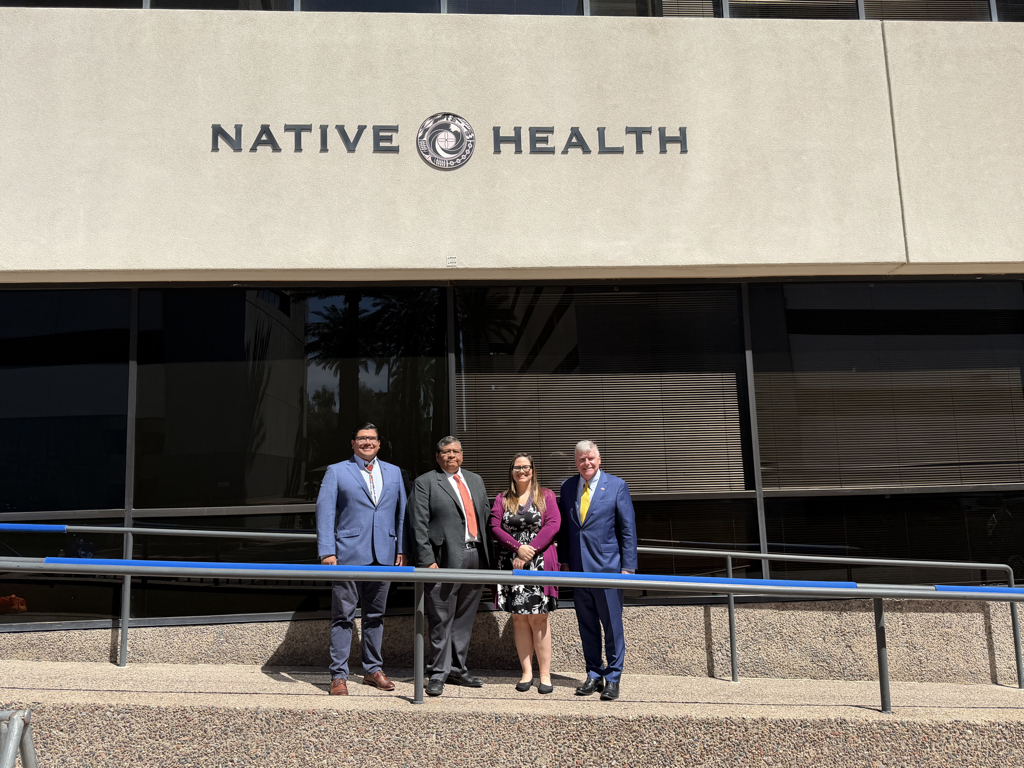
HRSA Visit to NATIVE HEALTH in Arizona

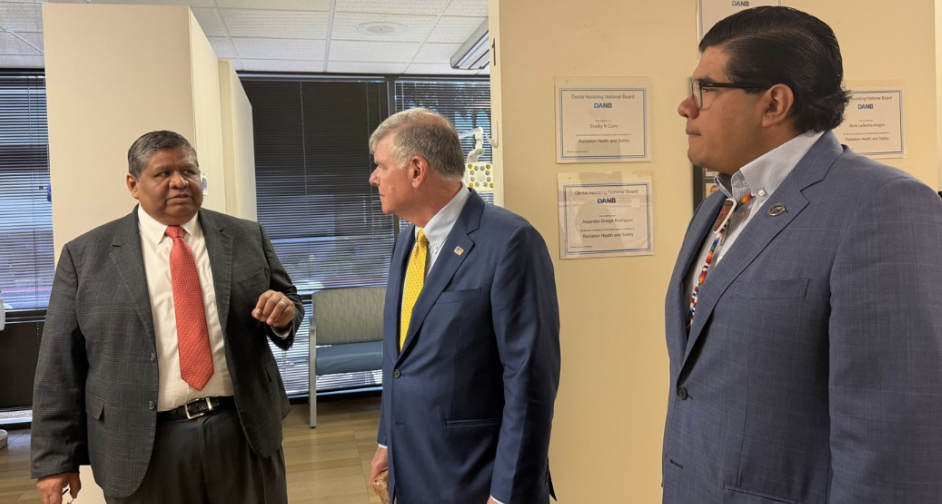
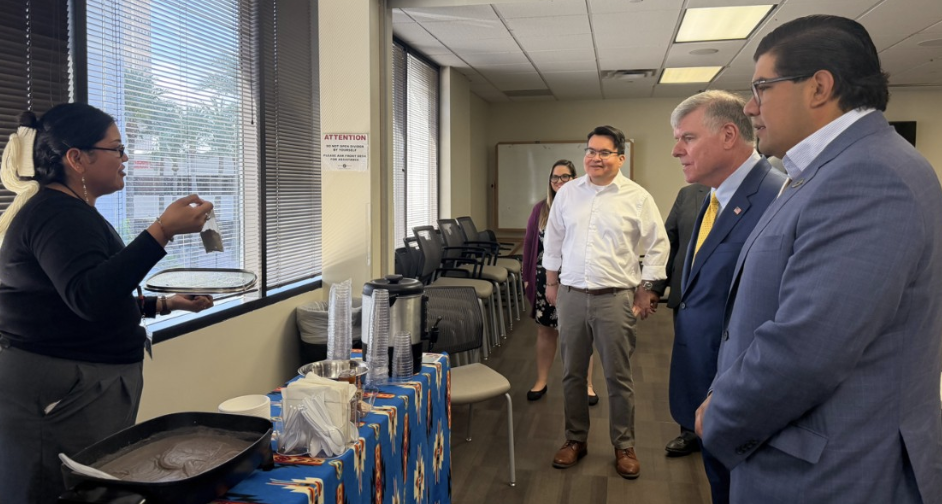
NCUIH’s CEO participated in a HRSA visit to NATIVE HEALTH on April 9, providing an opportunity to highlight the impact of 340B on Urban Indian clinics directly to HRSA leadership. The visit included Tom Engels, HRSA Administrator; Mark Cruz, Senior Advisor to U.S. Department of Health and Human Services Secretary Kennedy; Francys Crevier, NCUIH CEO, as well as Jack Ganter, HRSA Director of Legislation and Devin Delrow, Principal Advisor for Tribal Affairs, U.S. Department of Health and Human Services.

Federal Updates: 100% FMAP for UIOs and Traditional Healing Reimbursement

FMAP Support at CMS TTAG Meeting 

Federal Medical Assistance Percentage (FMAP) policy continues to be a critical issue for UIOs. Updates include:

  • NCUIH Board President Walter Murillo, who serves as the NCUIH representative on the CMS TTAG, raised the need of 100% Federal Medical Assistance Percentage for UIOs, specifically for Traditional Healing services reimbursement, to CMS leadership during the the March 24-25 CMS TTAG quarterly meeting.

Read more on NCUIH’s Policy Resource Center.

NCUIH Submitted Comments on IHS Health IT Modernization PATH Activities

On April 4, 2026, NCUIH submitted written comments to IHS in response to the March 5 Health IT Modernization Tribal Consultation/Urban Confer on Patients at the Heart (PATH) Electronic Health Record (EHR) activities.

  • NCUIH recommended that IHS ensure cohort selection equally prioritizes all facility types and provide UIOs with clear guidance on PATH EHR implementation.

NCUIH is Requesting UIO Input on Rural Health Transformation Fund Awards

On December 29, 2025, the Centers for Medicare & Medicaid Services (CMS) awarded all 50 states funding through the Rural Health Transformation Fund (RHTF). Read more about this funding on NCUIH’s blog.

  Request for UIOs:

2026 NCUIH Annual Conference

April 27–30, 2026, in Washington, D.C., as NCUIH marks the 50th anniversary of the Indian Health Care Improvement Act (IHCIA)—a landmark commitment to the health and well-being of American Indians and Alaska Natives—and reflects on five decades of progress, collaboration, and continued commitment to Native health.

  • Registration has closed.

Notable sessions include:

  1. IHS Listening Session — An opportunity for UIOs to engage directly with IHS leadership on policy priorities.

Upcoming Events and Policy Dates

April 21-22 — HHS Annual Tribal Budget Consultation (Washington, DC)
April 27–30, 2026 — 2026 NCUIH Annual Conference (Washington, D.C.)
May 20 — NCUIH Monthly Policy Workgroup (virtual)

Recent NCUIH Policy Blogs

  1. President’s Budget Proposes Increase for Indian Health Service, Advance Appropriations for FY 2028
    April 3, 2026/in /by 
  2. NCUIH Recognized at IHS 70th Anniversary Tribal Summit for Exceptional Partnership
    March 28, 2026/in /by 
  3. Tribal Leaders Recommend Increased Urban Indian Health Funding for Fiscal Year 2028
    March 25, 2026/in /by 

About NCUIH

The National Council of Urban Indian Health (NCUIH) is a national representative for the 41 Urban Indian Organizations contracting with the Indian Health Service under the Indian Health Care Improvement Act. NCUIH is devoted to the support and development of high quality and accessible health and public health services for American Indian and Alaska Native people living in urban areas.

NCUIH respects and supports Tribal sovereignty and the unique government-to-government relationship between our Tribal Nations and the United States. NCUIH works to support those federal laws, policies, and procedures that respect and uplift Tribal sovereignty and the government-to-government relationship. NCUIH does not support any federal law, policy, or procedure that infringes upon or in any way diminishes Tribal sovereignty or the government-to-government relationship.

image_pdfPDFimage_printPrint

NCUIH Requests the Indian Health Service Strengthen Relationships with Area Offices Under the Proposed Realignment

On February 27, 2026, the National Council of Urban Indian Health (NCUIH) submitted written comments to the Indian Health Service (IHS) Chief of Staff, Clayton Fulton, regarding IHS’ November 13, 2025, and December 5, 2025, Dear Tribal Leader and Urban Indian Organization (UIO) Leader letters (DTLLs/DULLs) and January 15, 2026, virtual Urban Confer on the IHS Proposed Realignment.  

In the written comments, NCUIH recommended IHS strengthen UIOs’ relationships with Area Offices as part of the Proposed Realignment, and emphasized the importance of protecting UIO contracts, addressing IHS staffing needs, and ensuring continued engagement with UIOs, while also highlighting the importance of 100% Federal Medical Assistance Percentage (FMAP) for UIOs. 

NCUIH will continue to closely follow the development and implementation of IHS’ Proposed Realignment. 

Background on the IHS Proposed Realignment 

On June 13, 2025, IHS published a DTLL/DULL announcing IHS was initiating Tribal Consultation and Urban Confer to receive comments and recommendations regarding IHS’ Proposed Realignment.​ IHS described the goal of the Proposed Realignment as creating a “more accountable, efficient, and responsive IHS that maximizes resources and improves outcomes while simultaneously strengthening intergovernmental relationships for better service coordination and funding access.” ​​During the Urban Confer session on the Proposed Realignment, IHS shared the agency is still in the development phase. As part of the development phase, IHS was seeking feedback from relevant stakeholders, including Tribes and UIOs. 

On November 13, 2025, IHS’ then-Acting Director, Ben Smith, published a DTLL/DULL announcing the next phase in the Agency’s proposed realignment which would include four in-person Tribal Consultation sessions and one virtual Urban Confer session. On December 5, 2025, the IHS Chief of Staff released a DTLL/DULL in response to requests for additional opportunities and added more in-person sessions and a virtual Tribal Consultation. IHS also released a realignment narrativea draft re-organization chart, and a frequently asked questions document. During the second Urban Confer on the Proposed Realignment, IHS reiterated that no decisions had been made by IHS regarding the Proposed Realignment.  

IHS also created a webpage on IHS’ website on the Proposed Realignment. 

Next Steps 

While the path forward is subject to change, IHS shared the Agency plans to have a Federal Register comment period (30 days) followed by a Federal Register notice with a “Transition to Future State” occurring between May and June of 2026. IHS stated that the Agency plans to continue to use Tribal Consultation and Urban Confer to keep Tribes and UIOs up to date on the Proposed Realignment. 

image_pdfPDFimage_printPrint

NCUIH Engages Federal Leaders on Urban Indian Health at NATIVE HEALTH Site Visit in Arizona

On April 9, 2026, Walter Murillo (Choctaw), Board President of National Council of Urban Indian Health and CEO of NATIVE HEALTH, welcomed a distinguished group of federal leaders to NATIVE HEALTH’s Arizona facility for a site visit showcasing the important role of Urban Indian Organizations (UIOs) in delivering care to Native communities. NATIVE Health is one of 11 HRSA-funded UIOs serving Native communities across the country. 

The delegation included Tom Engels, Health Resources and Services Administration (HRSA) Administrator; Mark Cruz, Senior Advisor to HHS Secretary Kennedy; Jack Ganter, HRSA Director of Legislation; and Devin Delrow, Principal Advisor for Tribal Affairs, U.S. Department of Health and Human Services. NCUIH CEO, Francys Crevier (Algonquin), joined the visit, ensuring NCUIH had a direct voice in conversations with federal decision-makers.

During the visit, leaders toured the facility, engaged with staff, and witnessed firsthand how UIOs provide culturally responsive care in urban settings. NCUIH used the occasion to elevate a top priority: securing an exemption for Tribal and Urban Indian facilities from HRSA’s 340B Rebate Model Pilot. The 340B drug pricing program is essential to UIO operations, enabling facilities like NATIVE HEALTH to extend limited resources and broaden access to care for American Indian and Alaska Native patients.

NCUIH also reinforced the distinct legal and operational framework within which UIOs function — a framework that federal policy must account for. Engagements like this are critical to ensuring Native voices are part of federal decision-making and that agency leadership understands the on-the-ground realities of urban Indian health programs.

NCUIH will continue pursuing direct engagement with HRSA and HHS leadership to protect and advance UIO priorities.  

Background 

The 340B Drug Pricing Program allows qualifying safety-net providers, including UIOs, to purchase outpatient drugs at significantly reduced costs. These savings are reinvested to expand services and improve health outcomes for underserved populations. HRSA’s proposed 340B Rebate Model Pilot has raised concerns across the UIO community, as it could undermine the financial sustainability of programs that American Indian and Alaska Native communities in urban areas depend on. NCUIH has consistently worked to protect Tribal and Urban Indian facilities from harmful changes to the 340B program. 

image_pdfPDFimage_printPrint

President’s Budget Proposes Increase for Indian Health Service, Advance Appropriations for FY 2028

On April 3, 2026, the President released the full Fiscal Year (FY) 2027 Department of Health and Human Services Budget In Brief and the Indian Health Service (IHS) Congressional Justification. The budget prioritizes funding for IHS by proposing $9.1 billion for the Indian Health Service — an increase of more than $1 billion above FY 2026 enacted levels.  Notably, the budget also requests $5.6 billion in advance appropriations for FY 2028, ensuring continuity of care for IHS, Tribal, and urban Indian health programs regardless of disruptions in the annual appropriations process.

The budget states that advance appropriations provide IHS with “predictable, stable funding that allows facilities to maintain operations, retain staff, and plan effectively across fiscal years.” Importantly, the budget also reflects direct Tribal input, stating that it “incorporates top tribal budget recommendations and invests in systems that enable Tribes to manage their own health programs effectively.” This commitment reflects the Administration’s recognition that funding stability and Indian Country partnership are essential to the success of the Indian health system.

Advance appropriations for IHS proved critical during the 2025 government shutdown, when IHS and urban Indian health programs were able to maintain operations and protect services for patients. Maintaining advance appropriations will help ensure the Indian health system continues to be protected from future funding disruptions.

Next Steps 

The FY 2027 proposal serves as a statement of the Administration’s policy and funding priorities. The budget acts primarily as a symbolic blueprint of the President’s vision for the size and scope of the federal government. The final appropriations will be determined through the Congressional budget process. The House and Senate Appropriations Committees are currently crafting their respective FY 2027 funding bills.

NCUIH has stood alongside Tribes, Urban Indian Organizations, and the community to advocate for stable and secure resources for the Indian health system. NCUIH will continue to engage with lawmakers to ensure the Indian health system and all Tribal programs receive the resources they need. NCUIH encourages Tribal leaders and Urban Indian Organizations to share their priorities as the Congressional process moves forward.

A more detailed NCUIH analysis of the budget will be released next week.

About NCUIH

The National Council of Urban Indian Health (NCUIH) is a national representative for the 41 Urban Indian Organizations contracting with the Indian Health Service under the Indian Health Care Improvement Act. NCUIH is devoted to the support and development of high quality and accessible health and public health services for American Indian and Alaska Native people living in urban areas.

NCUIH respects and supports Tribal sovereignty and the unique government-to-government relationship between our Tribal Nations and the United States. NCUIH works to support those federal laws, policies, and procedures that respect and uplift Tribal sovereignty and the government-to-government relationship. NCUIH does not support any federal law, policy, or procedure that infringes upon or in any way diminishes Tribal sovereignty or the government-to-government relationship.
NCUIH Contact: Meredith Raimondi, Vice President of Policy and Communications, mraimondi@ncuih.org

image_pdfPDFimage_printPrint