September Policy Updates: Government Shutdown, SDPI Call to Action & More Important News

September is almost over and Congress is running out of time to pass its budget!

Here’s what’s happening next week:

NCUIH UIO Focus Groups

  • October 3: Full Ambulatory​ at 1:00-2:30 pm EDT [Register Here]
  • October 3: Outpatient and Residential​ at 3:00-4:30 p.m. EDT​ [Register Here]
  • October 4: Limited Ambulatory​ at 1:00-2:30 p.m. EDT​ [Register Here]
  • October 4: Outreach and Referral​ at 3:00-4:30 p.m. EDT​ [Register Here]
  • October 5: Makeup Session​ at 1:00-2:00 p.m. EDT [Register Here]

US Government Shutdown: What You Need to Know

The big picture: Government funding is set to expire on September 30. If Congress can not reach a funding agreement before that date, there will be a government shutdown.

Go deeper: Congress has thus far failed to reach an agreement on government funding. The House and Senate are both strategizing on ways to prevent a shutdown but no clear consensus or path forward exists as of Thursday afternoon.

Why it matters: If the Government were to shutdown, it would have profound impacts such as:

  • Tribal law enforcement and courts, Tribal housing programs, and primary, secondary, and higher education will switch to emergency operating plans.
  • No funding for Contract Support Costs, payment for Tribal leases, and Health Care Facilities construction.
  • The Department of Health and Human Services wouldn’t be able to award Head Start Grants during a shutdown.

The bottom line: Due to NCUIH and other Native organization’s success of including advance appropriations for the Indian Health Service, if there is a shutdown, funding will be maintained for almost all programs in the Services and Facilities accounts, including funding for urban Indian organizations.

Take Action: Join NCUIH in our urgent opposition to budget cuts for Indian Country and the federal shutdown. We have prepared a social media toolkit with a set of resources and guidelines that you can use to communicate the urgency of this issue.

NCUIH Report Finds States Again Shoulder the Cost of an Unmet Federal Trust Responsibility

The big picture: On September 15, NCUIH released a policy report on the importance of setting the federal medical assistance percentage (FMAP) at 100% for services provided to Medicaid beneficiaries at urban Indian organizations (100% FMAP for UIOs).

By the numbers: With Medicaid beneficiaries making up 46% of the UIO Native patient population, 100% FMAP for UIOs is critical to expanding community health programming and youth services, ultimately leading to improved long-term health outcomes.

Go deeper: The report reflects the findings from case studies of two states, Washington and Montana, that successfully utilized the American Rescue Plan Act’s (ARPA) temporary authorization of 100% FMAP for UIOs to increase funding support for their UIOs.

Why it matters: The reports’ findings demonstrate that 100% FMAP for UIOs results in:

  • Increased services for Native patients ⬆️
  • Significant cost savings for states 💲
  • Flexibility for states to support UIOs in their health care delivery 🏥

What they’re saying: “This report showcases what we already knew: when the federal government faithfully honors its Trust responsibility to Native people, health access in our communities improves,” said Francys Crevier, CEO of NCUIH. “This provision has broad support across Indian Country because it directly impacts our people. Congress must act now to permanently reauthorize 100% FMAP for UIOs.”

Action Alert: Special Diabetes Program for Indians Expires in 2 Days – Contact Congress Now

We need your help contacting Congress to support the reauthorization of the Special Diabetes Program for Indians (SDPI)! With the program ending in 2 days, it remains critical that Congress reauthorizes SDPI to ensure there is no lapse in funding.

NCUIH is monitoring several bills that contain a reauthorization for SDPI:

  • The Special Diabetes Program Reauthorization Act of 2023 (H.R. 3561/S. 1855), which would reauthorize the SDPI program at $170 million per year for two years, has passed out of committee in both the House on May 24 and Senate on June 15. It currently awaits consideration by the full House and Senate.
  • The Lower Costs, More Transparency Act (H.R. 5378), which is a large health care package that includes reauthorization of SDPI, was pulled unexpectedly pulled from House consideration for floor vote last week.

Take Action: Use NCUIH’s toolkit to contact your Member of Congress to to support the reauthorization of SDPI today!

Upcoming: NCUIH UIO Focus Groups

We are excited to announce our upcoming virtual web series, “NCUIH UIO Focus Groups: Setting Policy Priorities for 2024.” These focus groups are open to UIO leaders and their staff.

Why it matters: The focus groups will also provide an invaluable opportunity to reflect on the achievements and challenges of 2023, fostering a deeper understanding of the progress made and the areas that require further attention.

The big picture: Participants will be encouraged to share their personal experiences, insights, and feedback, ensuring that the perspectives of our UIO partners play a pivotal role in shaping the path forward.

What if I can’t make it?: If you cannot attend your facility-type session or the makeup session, NCUIH will schedule a one-on-one session with you. Please email policy@ncuih.org to request a one-on-one session.

Legislative & Federal Updates: NCUIH Requests VA inclusion of UIOs, Native American Child Protection Act Passed in the House

On September 15, NCUIH submitted comments to the Department of Justice (DOJ), Department of Interior (DOI), and Department of Health and Human Services (HHS) regarding the Indian Child Welfare Act (ICWA) and steps the agencies can take to promote federal protections for American Indian and Alaska Native (AI/AN) children and their parents and caregivers.

  • The bottom line: NCUIH recommended that the Agencies actively inform state courts and child welfare agencies about the need to utilize UIOs to meet their obligations under ICWA, assist Tribes in coordinating with UIOs to strengthen resources and efforts to ensure ICWA is properly implemented, and engage directly with UIOs to improve implementation of ICWA.
  • Why it matters: AI/AN children continue to be overrepresented in the state foster care systems, and because more than 70% of AI/AN people live in urban settings, this overrepresentation undoubtedly includes AI/AN children living in urban areas. ICWA is the gold standard of child welfare proceedings, and ICWA’s procedural protections ensure that an AI/AN child’s best interests are appropriately accounted for in child welfare proceedings. The federal government must consider the needs of AI/AN children and families living in urban areas in efforts to promote federal protections for AI/AN children and their parents and caregivers.

On August 21, NCUIH submitted comments to the Department of Veterans Affairs (VA) Center for Minority Veterans (CMV) in response to a request for data and information on minority veterans.​

  • The bottom line: NCUIH provided an analysis showing that VA’s data historically excludes large portions of the AI/AN veteran population. NCUIH recommended that the Agency ensure data on AI/AN Veterans accounts for those living in urban areas and for those identifying as AI/AN alone or in combination with other races, clarify that data collections concerning AI/AN veterans do not undermine the unique political status of AI/ANs, and engage directly with Tribes, UIOs, and the VA Advisory Committee on Tribal and Indian Affairs to improve outreach, education, engagement, enrollment, advocacy and access programs for AI/AN veterans. ​
  • Why it matters: Data and information on minority and historically underserved veterans can inform efforts to improve outreach, education, engagement, enrollment, advocacy, and access programs for minority and underserved veterans.

On September 18, 2023, NCUIH-endorsed legislation, the Native American Child Protection Act (H.R. 633) passed the House with a vote of 378-32.​

  • Why it matters: This bill reauthorizes through FY2028 and otherwise revises certain programs related to the prevention, investigation, treatment, and prosecution of family violence,  abuse, and neglect involving Indian children and families. The bill directs the Indian Child Resource and Family Services Centers to develop and provide advice, technical assistance, and training to UIOs. It also allows UIO representatives with expertise in child abuse and child neglect to sit on a 12-member Advisory Board.

Upcoming Events and Important Dates: IHS FY 2026 Tribal Budget Meeting, UIO Listening Session on Behavioral Health and Substance Use Disorder Resources

Upcoming Opportunities:

  • The VA Office of Tribal Government Relations (OTGR) is seeking nominations of qualified candidates to be considered for appointment as a member of the Advisory Committee on Tribal and Indian Affairs (“the Committee”) to represent the following Indian Health Service (IHS) Areas: California; Nashville. Nominations for membership on the Committee must be received no later than 5:00 PM Eastern on October 20, 2023, and should be mailed to OTGR at 810 Vermont Ave. NW, Suite 915H (075) or emailed to tribalgovernmentconsultation@va.gov. UIOs are encouraged to work with local Tribes and Tribal organizations to identify local American Indian and Alaska Native veterans for nomination.

Upcoming Comments and Submissions:

Upcoming Events:

Important Requests for Information from UIO Leaders

We need input from Urban Indian leaders to help shape our advocacy and comments to federal agencies on policies affecting UIOs and American Indians/Alaska Natives living in urban areas.

Please email policy@ncuih.org with information on the following:

  • Food Security: Does or has your UIO worked with Tribes to address food insecurity in AI/AN communities? Would you be interested in doing so in the future?​
  • Advance Appropriations: Does your UIO have any questions for IHS regarding advance appropriations implementation?

NCUIH in Action: NCUIH Speaks at American Cancer Society’s Cancer Action Network “Expanding Cancer Health Equity” Summit on Capitol Hill

(L to R) Angela Sailor, Director, Federal Strategic Alliances – Health Equity American Cancer Society Cancer Action Network, Michael Reese Wittke, Vice President, Policy & Advocacy National Alliance for Caregiving, Ginger Miller, Founder and CEO, Women Veterans Interactive Foundation, Evan Davis, Director of Government Affairs, International Association of Fire Fighter, Meredith Raimondi, Vice-President of Policy and Communications, National Council of Urban Indian Health.

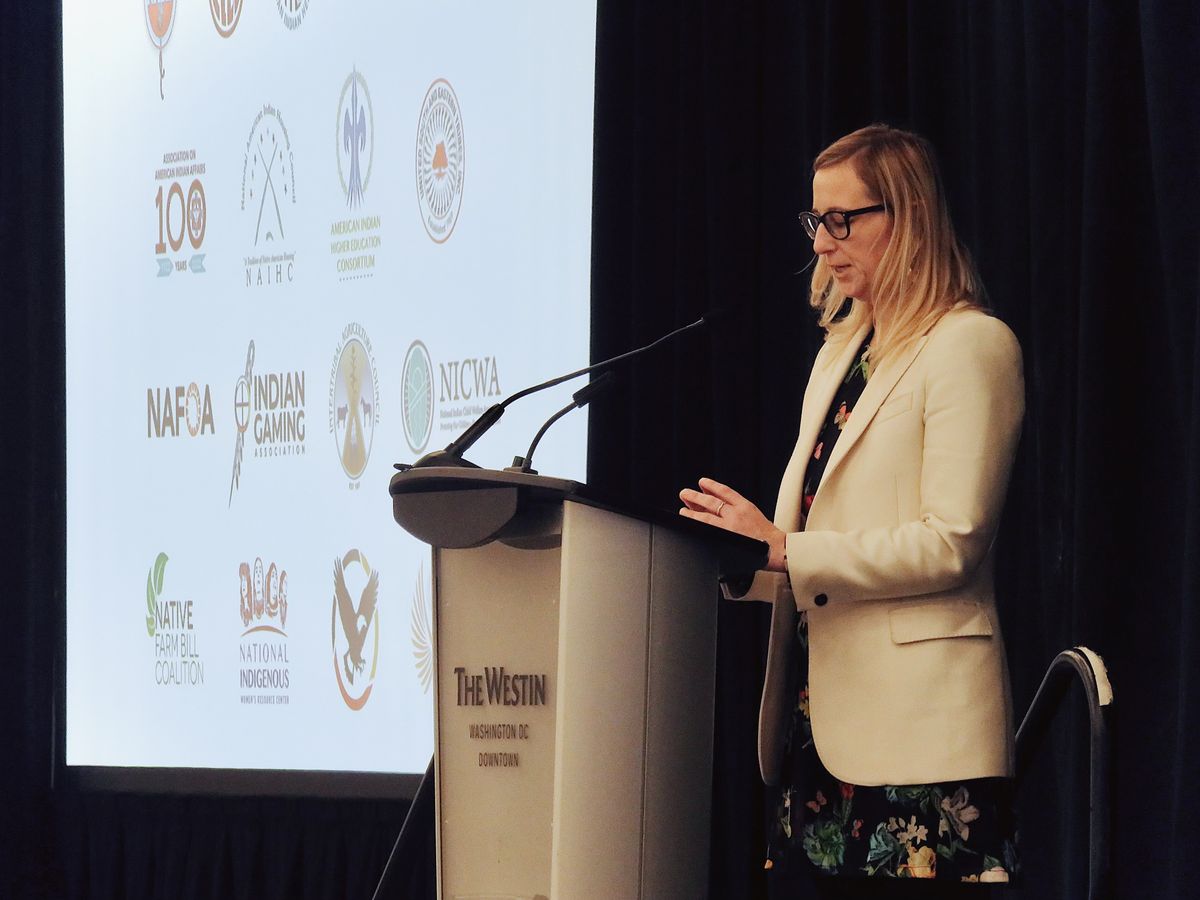
On September 18, 2023, Meredith Raimondi, VP of Policy and Communications at NCUIH, delivered a powerful presentation at the American Cancer Society Cancer Action Network (ACS CAN) Annual Leadership Summit and Hill Day event, emphasizing the critical need for full and mandatory funding in the Indian health system. Raimondi highlighted the devastating health disparities Native people face, particularly in cancer incidence and mortality. Moreover, Raimondi stressed the importance of advance appropriations for IHS to ensure stability for Native cancer patients, citing the impact of government shutdowns on urban Indian clinics and the need for policy change. It was an honor for Meredith to stand alongside fellow policy professionals and advocate for vital health care improvements.

Meredith Raimondi, NCUIH Vice-President of Policy and Communications, presents at the American Cancer Society Cancer Action Network (ACS CAN) Annual Leadership Summit and Hill Day.

Thank you for all your hard work and advocacy!

IHS Provides Update Following Confer on Urban Indian Interagency Workgroup

On August 30, 2023, the Indian Health Service (IHS) sent a Dear Urban Indian Organization Leader Letter (DULL) to follow up on a virtual urban confer convened on July 13, 2022, to explore UIO leaders interest in forming an Urban Indian Interagency Workgroup. In the letter, IHS summarized the 16 comments IHS received from UIOs, such as:

  • “Establish a new Urban Indian Interagency Workgroup in conjunction with the White House Council on Native American Affairs to ensure more comprehensive and effective collaboration throughout the Federal Government;”
  • “Develop a Federal funding strategy to pilot test innovative approaches and programs that address the needs of Urban Indians;” and,
  • “Provide technical assistance to Federal agencies to establish urban confer policies to address social determinants of health, such as housing, poverty, and education.”

As a next step, IHS plans to provide the Urban Indian Interagency Workgroup confer recommendations to the U.S. Department of Health and Human Services’ (HHS) Office of Intergovernmental and External Affairs and the Office of the Secretary’s Intradepartmental Council on Native American Affairs.

Background

The formation of an Urban Indian Interagency Workgroup to identify the needs and develop strategies to better serve urban American Indian and Alaska Native (AI/AN) populations has been a priority for NCUIH. On February 3, 2022, Senator Van Hollen, along with Senators Alex Padilla (D-CA), Catherine Cortez Masto (D-NV), Tina Smith (D-MN), Dianne Feinstein (D-CA), Elizabeth Warren (D-MA), Ed Markey (D-MA), Mark Kelly (D-AZ), Amy Klobuchar (D-MN), Patty Murray (D-WA), Tammy Baldwin (D-WI), Jacky Rosen (D-NV), Jeff Merkley (D-OR), and Jon Tester (D-MT) sent a letter to the Biden Administration requesting the establishment of this workgroup. NCUIH worked closely with Senator Padilla on this letter and supports the effort to bring better representation for the needs of Ai/Ans who do not reside on Tribal land.

The Senate Appropriations Subcommittee directed IHS to continue to explore the formation of this interagency working group in its Fiscal Year 2023 Interior Appropriations bill, noting that “in addition to the Indian Health Service, the working group should consist of the U.S. Department of Health and Human Services, U.S. Department of Housing and Urban Development, U.S. Department of Agriculture, U.S. Department of Justice, U.S. Department of Education, U.S. Department of Veteran Affairs, U.S. Department of Labor, the Small Business Administration, the Economic Development Agency, FEMA, the U.S. Conference of Mayors, and others as identified by UIOs.”

The workgroup would help identify federal funding strategies to better address the needs of urban AI/ANs, advance the development of a wellness-centered framework to inform health services, strengthen support for practice-based traditional healing approaches, improve urban confer policies at HHS and associated agencies, and ensure that UIOs can regularly meet with federal agencies to address relevant topics of concern.

IHS hosted a virtual urban confer session on July 13, 2022, to explore the formation of an Urban Interagency Workgroup with other federal agencies.

NCUIH’s Recommendation to IHS

On September 12, 2022, NCUIH submitted comments to IHS regarding the formation of an Urban Interagency Workgroup with other federal agencies. NCUIH made the following recommendations in response to the urban confer:

  • Respect Tribal sovereignty and the government-to-government relationship in the formation of an interagency workgroup.
  • Create a committee within the White House Council on Native American Affairs (WHCNAA) focused on how federal agencies can better serve AI/Ans living in urban areas.
    • The White House Council on Native American Affairs (WHCNAA) was established to improve outcomes for AI/AN communities through a stronger relationship between the federal government and Native people.
    • Developing an Interagency Oversight Committee on Urban Indian Affairs within WHCNAA would allow cross-collaboration across all agencies and ensure that all other WHCNAA committees are accurately incorporating urban Indian communities into their work.
  • IHS should provide technical assistance to federal agencies to develop urban confer policies.
    • Urban confer policies or UIO-specific consultations do not supplant or otherwise alter Tribal consultations and the government-to-government relationship between Tribes and federal agencies. IHS should provide support and assistance to federal agencies as they begin the development of such policies.

NCUIH will continue to monitor for any further development on the formation of an Urban Interagency Workgroup. NCUIH will also continue to engage with IHS, the White House, and Congress on moving this proposal forward.

NCUIH Policy Blog:  NCUIH Submits Comments to the Indian Health Service on the Creation of an Urban Indian Interagency Workgroup

DULL: IHS initiating Urban Confer exploring the formation of an Urban Interagency Workgroup

Letter to the Biden Administration requesting the establishment of an Urban Interagency Workgroup

Fiscal Year 2023 Interior Appropriations bill

Join NCUIH in Urgent Opposition to Budget Cuts for Indian Country and the Federal Shutdown: A Social Media Toolkit

We are facing a looming government shutdown, and it’s imperative that we come together to raise awareness and demand action from policymakers. As a valued member of the Urban Indian Health community, your voice and support are critical in advocating for the protection of Native healthcare funding during this challenging time.

To make it easier for you to join this advocacy effort, we have prepared a social media toolkit. This toolkit includes a set of resources and guidelines that you can use to effectively communicate the urgency of this issue and mobilize support from your network.

Protect Indian Country: A NCUIH Call to Action

What’s Included in the Toolkit:
  • Pre-Written Social Media Posts
  • “Protect Indian Country” Graphic [Download Here]
  • Hashtags and Handles
  • Action Steps.
How to Use the Toolkit:
  • Select the pre-written social media posts that resonate with your organization’s message and values. Customize them to make them your own.
  • Incorporate “Protect Indian Country” graphics into your social media posts to increase engagement.
  • Use the provided hashtags and handles to connect with a broader audience.
  • Encourage your followers to take action by contacting their Members of Congress and sharing your posts.
  • Share the toolkit with your stakeholders, partners, and colleagues to amplify our collective efforts.
Taking Action:

We urge you to start posting on your social media channels immediately, sharing information about the government shutdown and the potential consequences for Native health care funding. Together, we can raise awareness and advocate for a swift resolution that protects our vital programs.

Thank you for your unwavering commitment to the urban Indian health community. Your advocacy can make a real difference in ensuring that Native health care remains a top priority.

If you have any questions or need further assistance with the toolkit, please feel free to reach out to policy@ncuih.org.

Identify Your Congressional Representation:

  • Find your Members of Congress Here
  • Enter your zip code or address to determine who your senators and representatives are.
Use Social Media Platforms:
  • Go to your preferred social media platform
  • In the platform’s search bar, type the name of your senator or representative.
  • Look for accounts with official verification badges (blue checkmarks) next to their names, indicating that they are official accounts.
Together, we will continue to protect the health and well-being of our communities.

X (Twitter), Instagram, Facebook Posts:

  1. Post:
    • Content: 🚨 Urgent Action Needed! 🚨 Congress must protect Native programs from budget cuts. Stand with us to oppose the looming government shutdown. #ProtectIndianCountry #OpposeShutdown
  2. Post:
    • Content: 📢 We’re joining forces with @NCUIH_Official, @NCAI1944, @NIHB1, and other Native organizations to oppose any funding reductions for Indian Country programs. Let Congress know that #NativeLivesMatter. #NoBudgetCuts #StandWithUs
    • Additional Organizations to Tag:
      • @NDNrights
      • @WereNIEA
      • @NCUIH_Official
      • @TribalGovWorks
      • @NIHB1
      • @naihc_national
      • @NCAI1944
  3. Post:
    • Content: ⚠️ Congress, don’t gamble with Native lives! ⚠️ With a government shutdown looming, we urge you to protect the Indian Health Service and Tribal programs. Fulfill your trust responsibility! #GovernmentShutdown #ProtectIHS #StandTogether
  4. Post:
  5. Post:
    • Content: 🏛️ Democracy needs your voice! 🏛️ Tweet, call, or email your Members of Congress. Together, we can protect the Indian Health Service and Tribal programs. Don’t let Native lives be at risk! #ProtectOurPeople #AdvocateNow
    • Post (Tweet) 2: Find Your Member of Congress Here: https://www.congress.gov/members?q=%7B%22congress%22%3A118%7D

Email Content:

📣 Urgent Call to Action: Protect Indian Country’s Health Care Funding! 🏥

Dear Friends and Advocates,

We are at a critical juncture, and we need your voice to ensure the well-being of Native communities. As the threat of a government shutdown looms, Indian Country faces the risk of funding cuts that could have devastating consequences for health care programs.

📢 It’s time to take action! 📢

💡 Click the link below to find your Members of Congress and reach out to them NOW.

👉Find Your Member of Congress

Urge them to: ✅ Avoid a government shutdown. ✅ Protect the Indian Health Service (IHS) and all Tribal programs from funding cuts. ✅ Support Indian Country in budget negotiations.

Every call, every email, and every message counts. Together, we can make a difference and ensure that critical health care services continue to reach those who need them most.

Let’s stand together for Native health care! 🤝

#ProtectNativeHealth #GovernmentShutdown #Advocacy #IndianCountry #HealthCareFunding

NCUIH Joins National Native Organizations In Urgent Opposition To Federal Shutdown

Organizations Also Call on Congress to Protect Tribal Programs from Any Budget Cuts

FOR IMMEDIATE RELEASE 

WASHINGTON, D.C. (September 22, 2023) – Amid a looming federal government shutdown, the National Council of Urban Indian Health (NCUIH) joins the National Congress of American Indians (NCAI), National Indian Health Board (NIHB), and a group of national Native organizations in a joint press statement opposing any reductions in funding for vital Indian Country programs and reminding Congress that Native lives should never be used as political pawns.

Status of FY 2024 Funding

Annual funding for federal programs ends this September 30. If Congress does not pass a budget by this time, they must either pass a Continuing Resolution (CR) to provide short-term funding for the federal government, or the federal government will shut down and go into emergency operating plans. House Republicans have struggled to come to a consensus on any funding legislation. Earlier this week, House Republicans proposed a CR that included an overall 8% funding cut to the federal budget. Senate Democrats have signaled they will automatically oppose this CR proposal. Congress must commit to protecting the Indian Health Service (IHS) from any across-the-board cuts to agencies in accordance with the trust responsibility. 

Government Shutdown Effect on the Indian Health Service

Thanks to the tremendous advocacy by national Native and partner organizations, IHS will have advance appropriations, which will ensure a greater continuity of operations if the government shuts down. The timing of the enactment of the first-ever advance appropriation for IHS in last year’s omnibus could not be more significant in the prevention of needless deaths during any discontinuation in government operations.

Even with advance appropriations for Fiscal Year (FY) 2024, IHS will still be impacted by a government shutdown. Several IHS accounts were not included in this appropriation such as Electronic Health Record Modernization, Indian Health Care Improvement Fund, Health Care Facilities Construction, Sanitation Facilities Construction, Contract Support Costs, and Section 105(l) Leases. As a result, those accounts will be unfunded in the event of a government shutdown.

Call on Congress to Protect IHS and Tribal Programs from Funding Cuts!

Contact your Members of Congress and urge them to avoid a government shutdown and support Indian Country in budget negotiations.

  • Find your Member of Congress here

Raise your voice on Social Media!

  • Example post: Dear [@Member’s handle], please urge Congressional leadership to protect the Indian Health Service and Tribal programs from dangerous cuts! #TrustResponsibility

NCUIH Contact: Meredith Raimondi, Vice President of Policy and Communications, mraimondi@ncuih.org

PRESS RELEASE: Report Finds States Again Shoulder the Cost of an Unmet Federal Trust Responsibility

Congress Must Reauthorize 100% FMAP for Urban Indian Health Care

FOR IMMEDIATE RELEASE

NCUIH Contact: Meredith Raimondi, Vice President of Policy and Communications, mraimondi@ncuih.org

WASHINGTON, D.C. (September 15, 2023) – Today, the National Council of Urban Indian Health (NCUIH) announced the release of a policy report on the importance of setting the federal medical assistance percentage (FMAP) at 100% for services provided to Medicaid beneficiaries at urban Indian organizations (100% FMAP for UIOs).  With Medicaid beneficiaries making up 46% of the UIO Native patient population, 100% FMAP for UIOs is critical to expanding community health programming and youth services, ultimately leading to improved long-term health outcomes.

“This report showcases what we already knew: when the federal government faithfully honors its Trust responsibility to Native people, health access in our communities improves,” said Francys Crevier, CEO of NCUIH. “This provision has broad support across Indian Country because it directly impacts our people. Congress must act now to permanently reauthorize 100% FMAP for UIOs.”

The report reflects the findings from case studies of two states, Washington and Montana, that successfully utilized the American Rescue Plan Act’s (ARPA) temporary authorization of 100% FMAP for UIOs to increase funding support for their UIOs. The reports’ findings demonstrate that 100% FMAP for UIOs results in:

  • Increased services at UIOs;
  • Significant cost savings for states; and,
  • Flexibility for states to support UIOs in their health care delivery.

The report also provides an extensive history of 100% FMAP in the Indian health care system. The Indian Health Service and Tribal facilities have been extended 100% FMAP for decades, and UIOs have advocated for parity through legislation since 1999. Parity for UIOs allows patients to seek care closer to their homes and access community-focused and culturally competent care.

The full report is available at this link.

###

About NCUIH 

The National Council of Urban Indian Health (NCUIH) is the national non-profit organization devoted to the support and development of quality, accessible, and culturally competent health and public health services for American Indians and Alaska Natives (AI/ANs) living in urban areas. NCUIH is the only national representative of the 41 Title V Urban Indian Organizations (UIOs) under the Indian Health Service (IHS) in the Indian Health Care Improvement Act (IHCIA). NCUIH strives to improve the health of the over 70% of the AI/AN population that lives in urban areas, supported by quality, accessible health care centers.

NCUIH to Present During NHSC Webinar on Loan Repayment & Scholarship Programs

The Health Resources & Services Administration’s (HRSA) National Health Service Corps (NHSC) will be hosting an informational webinar and Q&A session on Tuesday, September 19, 1:00-2:00 p.m. ET for students, clinicians, and health care facilities that serve Tribal communities. The NHSC will be co-hosting this webinar with the National Indian Health Board (NIHB) with a presentation from the National Council of Urban Indian Health (NCUIH). The webinar will review eligibility requirements, share information on the application process, and respond to questions. To attend the webinar on Tuesday, September 19 at 1:00 p.m. ET, join here. No preregistration is required.

Background on NHSC

Congress created the NHSC in the Emergency Health Personnel Act of 1970 (P.L. 91-623). Today, NHSC supports more than 20,000 primary care medical, dental, and behavioral health providers through scholarships and loan repayment programs. It has increased access to quality health care in communities with significant health professional shortages for more than 50 years. NHSC participants serve at more than 9,000 community health care sites, serving over 21 million patients. A cornerstone of its work is increasing access to mental health and opioid use disorder treatment in impacted areas of the country by supporting more than 9,600 behavioral health providers. NHSC additionally offers a variety of loan repayment programs for health care professionals and can work towards eliminating school debt.

Action Alert: Special Diabetes Program for Indians Expires in 16 Days – Contact Congress

Contact Congress | Social Media

Dear Indian Health Advocates,

We need your help contacting Congress to support the reauthorization of the Special Diabetes Program for Indians (SDPI)! With the program ending in 16 days, it remains critical that Congress reauthorizes SDPI to ensure there is no lapse in funding.

  • For 25 years, SDPI has supported research-based interventions for diabetes prevention and cardiovascular disease (CVD) risk reduction in American Indian and Alaska Native community-based programs and healthcare settings. SDPI’s integrated approach to diabetes healthcare and prevention programs in Indian Country has become a resounding success and is one of the most successful public health programs ever implemented.
  • Currently, 31 urban Indian organizations (UIOs) receive SDPI funding that enables UIOs to provide necessary services that reduce the incidence of diabetes-related illness among urban Indian communities.
  • The National Indian Health Board and 16 advocates, including NCUIH, have sent a letter urging Congressional leadership to bring the current legislation, H.R. 3561 and S.1855, to the floor for a vote and ultimately reauthorize SDPI by September 30, 2023.

To ensure that SDPI receives as much support as possible, we encourage you to contact your Member of Congress and request that they vote to support the bills by September 30, 2023Please find a template email below with instructions.

Thank you for your leadership. Your outreach on this is invaluable to providing greater health equity for American Indians and Alaska Natives.

Sincerely,

The National Council of Urban Indian Health

Contact Congress Today

  • Step 1: Copy the email below.
  • Step 2: Find your Member of Congress here
  • Step 3: Paste the email into the form and send it.

Please contact Jeremy Grabiner (jgrabiner@ncuih.org) with questions.

Email to Your Members of Congress

Dear [Member of Congress],

As an Indian health advocate, I respectfully request you urge Congressional leadership to bring the Special Diabetes Program for Indians Reauthorization Act of 2023 to the floor for a vote and ultimately reauthorize the Special Diabetes Program for Indians (SDPI) by September 30, 2023.

For 25 years, SDPI has supported research-based interventions for diabetes prevention and cardiovascular disease risk reduction in American Indian and Alaska Native community-based programs and healthcare settings. SDPI’s integrated approach to diabetes healthcare and prevention programs in Indian Country has become a resounding success and is one of the most successful public health programs ever implemented.

With the program set to end in September 2023,  it remains critical that Congress reauthorizes SDPI to ensure there is no lapse in funding.

I respectfully ask that you honor the federal trust obligation to American Indians and Alaska Natives by supporting this effective public health program.

Thank you for your leadership and commitment to upholding the United States’ trust responsibility.
Sincerely,

[Contact Information]

Raise your voice on Social Media!

X (formerly Twitter)

From your X account, contact your Member of Congress.

  • Find your Member of Congress here.

Example tweet:

  • Dear [@Member’s handle], please urge Congressional leadership to bring the Special Diabetes Program for Indians Reauthorization Act of 2023 to the floor for a vote to protect the Special Diabetes Program for Indians! #SDPI


NCUIH Contact: Meredith Raimondi, VP of Policy and Communications, mraimondi@ncuih.org

Advisory Board for Exceptional Children to Host Two-Day Meeting September 21-22, UIOs Encouraged To Attend

The Bureau of Indian Education (BIE) announced that the Advisory Board for Exceptional Children (the Advisory Board) will hold a two-day meeting, in-person and online, on Thursday, September 21, 2023, from 8:00 a.m. to 4:30 p.m. Eastern Daylight Time (EDT) and Friday, September 22, 2023, from 8:00 a.m. to 4:30 p.m. EDT. The purpose of the meeting is to meet the mandates of the Individuals with Disabilities Education Act of 2004 (IDEA) for Indian children with disabilities.

The National Council of Urban Indian Health encourages urban Indian organization (UIO) leaders to attend and participate. The Advisory Board was established under the Individuals with Disabilities Act of 2004 (20 U.S.C. 1400 et seq.) to advise the Secretary of the Interior, through the Assistant Secretary-Indian Affairs, on the needs of Indian children with disabilities.

All Advisory Board activities will be conducted in-person and online. The onsite meeting location will be at the Crystal City Marriott, 1999 Richmond Highway, Arlington, Virginia. To attend the two-day meeting remotely, please register using this link: https://www.zoomgov.com/meeting/register/vJItf-2prTkjHQm8iBckGVMexfylXaLrHlo. Once registered, attendees can attend both meeting events. The meeting is open to the public in its entirety.

The following agenda items will be for the meeting on September 21- 22, 2023. The reports are regarding special education topics.

  • Office of Special Education Programs (OSEP). How can OSEP more directly support the BIE’s work in providing special education services that result in positive outcomes for children with disabilities across the BIE school system?
  • Office of the Secretary of the Interior. As the Secretary of the Interior, how do you ensure that all American Indian and Alaska Native children receive an equitable education?
  • BIE-Office of the Director. Provide updates on rural school internet access and include any challenges and potential resolves to the issues from BIE.
  • BIE Human Resources Office. During board meetings we consistently hear from Bureau Operated School (BOS) administrators that delays in the hiring process cost schools qualified hires. Can greater responsibility be provided to local school hiring authorities?
  • BIE Division of Performance and Accountability, (DPA)/BIE Special Education Program. Provide an update on IDEA, ESSA, and the Government Accountability Office (GAO) recommendations report.
  • Associate Deputy Director (ADD), Regions for Bureau Operated Schools (BOS), Navajo Schools (BOS & TCS) and Tribally Controlled Schools (TCS)/Special Education Programs: What services do you provide for BIE funded schools? Provide an update on the 2022–2023 school year. Discuss the successes, challenges, ongoing goals, and other items that would be pertinent to the Advisory Board.
  • On Thursday, September 21, two 15-minute sessions will be provided, 11:00 a.m. EDT and 2:00 p.m. EDT. Public comments can be provided via webinar or telephone conference call.
  • On Friday, September 22, 2023, two 15-minute sessions will be provided, 9:30 a.m. EDT and 12:15 p.m. EDT. Public comments can be provided during the meeting or telephone conference call.

Public comments can be emailed to the DFO at Jennifer.davis@bie.edu; or faxed to (602) 265–0293 Attention: Jennifer Davis, DFO; or mailed or hand delivered to the Bureau of Indian Education, Attention: Jennifer Davis, DFO, 2600 N Central Ave., 12th Floor, Suite 250, Phoenix, AZ 85004.

To make requests in advance for sign language interpreter services, assistive listening devices, or other reasonable accommodations, please contact Jennifer Davis at least seven (7) business days prior to the meeting to give the Department of the Interior sufficient time to process your request. All reasonable accommodation requests are managed on a case-by-case basis.

More information, please use this link: Federal Register :: Advisory Board of Exceptional Children.

Opportunity for AI/AN Representation on 2030 Census Advisory Committee

The Census Bureau is seeking nominations of members representing stakeholder organizations, groups, interests, and viewpoints to the 2030 Census Advisory Committee (“the Committee”). Through the Committee, the Census Bureau can engage with diverse voices as it prepares for the next census and seeks external perspectives on its plans to address census undercounts, communicate with different communities, and collect census information in an easy and efficient way. Nominations for membership on the Committee must be received no later than September 20, 2023, and should be emailed to Census.2030.Advisory.Committee@census.gov with the subject line “2030 Census Advisory Committee Nomination.” This is a unique opportunity for historically underrepresented populations, including urban American Indian and Alaska Native (AI/AN) populations, to improve Census representation. Individuals, groups, and/or organizations may submit nominations on behalf of candidates interested in joining the Committee.

Nominations

Individuals, groups, and/or organizations may submit nominations on behalf of candidates. The diverse membership of the Committee assures perspectives and expertise reflecting the breadth of the Committee’s responsibilities, and, where possible, the Census Bureau will also consider the ethnic, racial, and gender diversity and various abilities of the United States population.

NCUIH and the Census

NCUIH has reported on and advocated for census equity to represent urban AI/AN populations accurately. The previous 2020 U.S. Decennial Census continued these inaccuracies, undercounting (AI/AN) peoples. After the 2020 Census, the U.S. Census Bureau conducted a Post-Enumeration Survey to evaluate the accuracy of the census and estimate over- or undercount by state and demographic group. The report found that in 2020, there was a statistically significant undercount of AI/AN people. Undercounting jeopardizes the health of AI/AN people as well as future budget calculations in Indian Country.

Additionally, as recently reported by NCUIH, the undercounting of AI/AN people went underreported. The urban AI/AN community demands greater representation in the general population and decisionmakers’ viewpoints. This is especially pertinent in urban AI/AN communities as more than 70% of AI/AN people now live in urban areas. The 2030 Census Advisory Committee is an important opportunity for urban AI/AN representatives and UIO (Urban Indian Organization) leaders to serve on the Committee and impact Census reform.

For further information, click here or contact Shana J. Banks, Chief, Advisory Committee Branch, Office of Program, Performance and Stakeholder Integration (PPSI), Census Bureau, at Shana.J.Banks@census.gov.

August Policy Updates: Budget Updates, UIO Focus Groups, & Important RFIs

Welcome to the August edition of our monthly policy newsletter, delivering the latest updates and insights on key developments.

Budget Update:

Budget #

House Status:

  • The House Appropriations Committee advanced the Interior Appropriations bill on July 18.

Go deeperHouse IHS Funding Bill Passes out of Committee with Advance Appropriations and Modest Increase for the Indian Health Service

Senate Status:

  • On July 27, 2023, the Senate Appropriations Committee passed their bill out of committee with a vote of 28-0 and will advance to the Senate floor for initial passage.
  • Similar to the House Bill, the Senate IHS Funding Bill also included Advance Appropriations and a modest increase for the Indian Health Service.
  • Establishment of UIO Interagency Workgroup: The bill also includes direction for IHS to establish a UIO Interagency Workgroup with the IHS, Department of Health and Human Services, Department of Housing and Urban Development, Department of Agriculture, Department of Justice, Department of Education, Department of Veteran Affairs, Department of Labor, the Small Business Administration, the Economic Development Agency, FEMA, the U.S. Conference of Mayors, and others as identified by UIOs.​

Next Steps:

  • With the government funding deadline of September 30 rapidly approaching, Congressional leaders are negotiating a continuing resolution to fund the government at the current level until December.
  • A continuing resolution will give Senate and House leadership time to negotiate a final bill that can pass in both chambers.

Upcoming Events and Important Dates: UIO Listening Session, National Fentanyl and Opioid Summit

Calendar with events on it

Upcoming Comments and Submissions​:

  • September 1 – Comment deadline to the Indian Health Service on Health Information Technology Modernization​
  • September 15 – Comment deadline to the DOI, DOJ, and Department of Health and Human Services on Strengthening the Indian Child Welfare Act (ICWA) ​

Upcoming Events

  • August 22-24: IHS – Partnership Conference.​
  • August 22-24: National Indian Health Board/Northwest Portland Area Indian Health Board is hosting a National Fentanyl and Opioid Summit
  • August 23: NCUIH UIO Listening Session on HIV/AIDS. Register here.
  • August 29: Substance Abuse Mental Health Services (SAMHSA) Tribal Technical Advisory Committee Meeting​
  • August 29: SAMHSA Tribal Listening Session and Virtual Tribal Consultation on Behavioral Health and Substance Use Disorder Resources for Native Americans​
  • August 29-30: DOI Self-Governance Advisory Committee Meeting​
  • August 30-31: IHS Tribal Self-Governance Advisory Committee Meeting​
  • September 6: IHS – Advance Appropriations Listening Session for Tribal and UIO to share information and solicit input on advance appropriations implementation.​ UIOs are encouraged to attend and ask any questions you have regarding advance appropriations and their impact on your contracts. Click here to join the listening session.

Important Requests for Information from UIO Leaders

RFI

We need input from Urban Indian leaders to help shape our advocacy and comments to federal agencies on policies affecting UIOs and American Indians/Alaska Natives living in urban areas.

Please email policy@ncuih.org with information on the following:

DOI – Strengthening ICWA

  • Does your UIO work with State courts or child welfare agencies on child welfare or if not, would you like to?​
  • Does your UIO work with Tribes on child welfare or if not, would you like to?​
  • How can we improve the implementation of ICWA for Native children in urban areas? ​

DOJ – Medical/Legal Partnership​s

NCUIH recently met with the DOJ Office for Access to Justice (ATJ). ATJ is looking to support increased access to legal assistance for urban Native communities.

  • Do any UIOs have successful medical-legal partnerships?

IHS – Medicaid fraud schemes targeting American Indians and Alaska Natives

IHS Director Tso wrote a letter to Tribal and UIO leaders regarding fraudulent billing activities of registered behavioral health providers, and it appears to now be affecting programs in the Billings Area.​

  • Have any of your organizations been impacted by fraudulent residential treatment practices exploiting vulnerable Native communities?​

Medicaid Unwinding

  • How is unwinding proceeding in your state?
  • Do you have any data regarding AI/AN disenrollment?​

NCUIH Requests Urban Indian Inclusion in MMIP and Human Tracking Initiatives

Not Invisible Commission

Secretary Deb Haaland and Deputy Attorney General Lisa Monaco hosted the first in-person plenary session of the Not Invisible Act Commission at the U.S. Department of the Interior in Washington, D.C. in February 2023.

On August 10, NCUIH submitted comments to the Department of Interior’s (DOI) Not Invisible Act Commission regarding the Missing and Murdered Indigenous People (MMIP) and human trafficking (HT) crises​ to ensure that urban Native communities are considered.

The bottom line: NCUIH recommended that the Commission ensure that resources are available to combat MMIP, HT, and violent crime against American Indians and Alaska Natives in urban areas.

Why it matters: The federal government must ensure that it properly tracks and reports data on instances of missing persons, murder, and human trafficking of American Indians and Alaska Natives in urban areas.​

Go deeper: Learn more about the Not Invisible Commission.

Legislative Updates: Native American Child Protection Act Advances in House, Advance Appropriations Legislation Introduced

ICWA

In June, the Native American Child Protection Act (H.R. 663/S.2273) was passed by unanimous consent out of Natural Resources.​ The bipartisan legislation amends the Child Protection and Family Violence Prevention Act to include UIOs in the Indian Child Abuse Treatment Grant Program and permits UIOs to sit on the National Indian Child Resource and Family Services Advisory Board.​

On July 24, the House and Senate introduced the Indian Program Advance Appropriations Act (H.R. 4832/ S. 2424)​ to provide advanced appropriations for the Bureau of Indian Affairs, the Bureau of Indian Education, and the Indian Health Service.

Upcoming: NCUIH UIO Focus Groups

NCUIH UIO Focus Groups

We are excited to announce our upcoming virtual web series, “NCUIH UIO Focus Groups: Setting Policy Priorities for 2024.”

Why it matters: The focus groups will also provide an invaluable opportunity to reflect on the achievements and challenges of 2023, fostering a deeper understanding of the progress made and the areas that require further attention.

The big picture: Participants will be encouraged to share their personal experiences, insights, and feedback, ensuring that the perspectives of our UIO partners play a pivotal role in shaping the path forward.

  • October 3: Full Ambulatory​ at 1:00-2:30 pm EDT [Register Here]
  • October 3: Outpatient and Residential​ at 3:00-4:30 p.m. EDT​ [Register Here]
  • October 4: Limited Ambulatory​ at 1:00-2:30 p.m. EDT​ [Register Here]
  • October 4: Outreach and Referral​ at 3:00-4:30 p.m. EDT​ [Register Here]
  • October 5: Makeup Session​ at 1:00-2:00 p.m. EDT [Register Here]

What if I can’t make it?: If you cannot attend your facility-type session or the makeup session, NCUIH will schedule a one-on-one session with you. Please email policy@ncuih.org to request a one-on-one session.

NCUIH In Action

ncuih

MR presenting NCUIH Vice President of Policy and Communications, Meredith Raimondi, presents at IHS Bemidji Area Meeting with Urban Indian Leaders

On July 20, NCUIH presented on urban Indian health updates at the IHS Bemidji Area Urban-face to-face meeting and gave an update on relevant federal policies, appropriations, Supreme Court cases, and legislation.​

Culleen Presents

NCUIH/NORC Report Briefing for CMS TTAG

On July 26, NCUIH staff (Chandos Culleen, JD, Director of Federal Relations, Isaiah O’Rear, M.A., M.Ed, Health Policy Statistician & Nahla Holland (Eastern Pequot Tribal Nation) Research Associate) presented to the Centers for Medicare & Medicaid Services Tribal Technical Advisory Group on our Traditional Healing and Primary Care Case Management/Indian Managed Care Entity Reports.​

Francys presents

NCUIH CEO, Francys Crevier, participates in a panel discussion on Native life expectancy

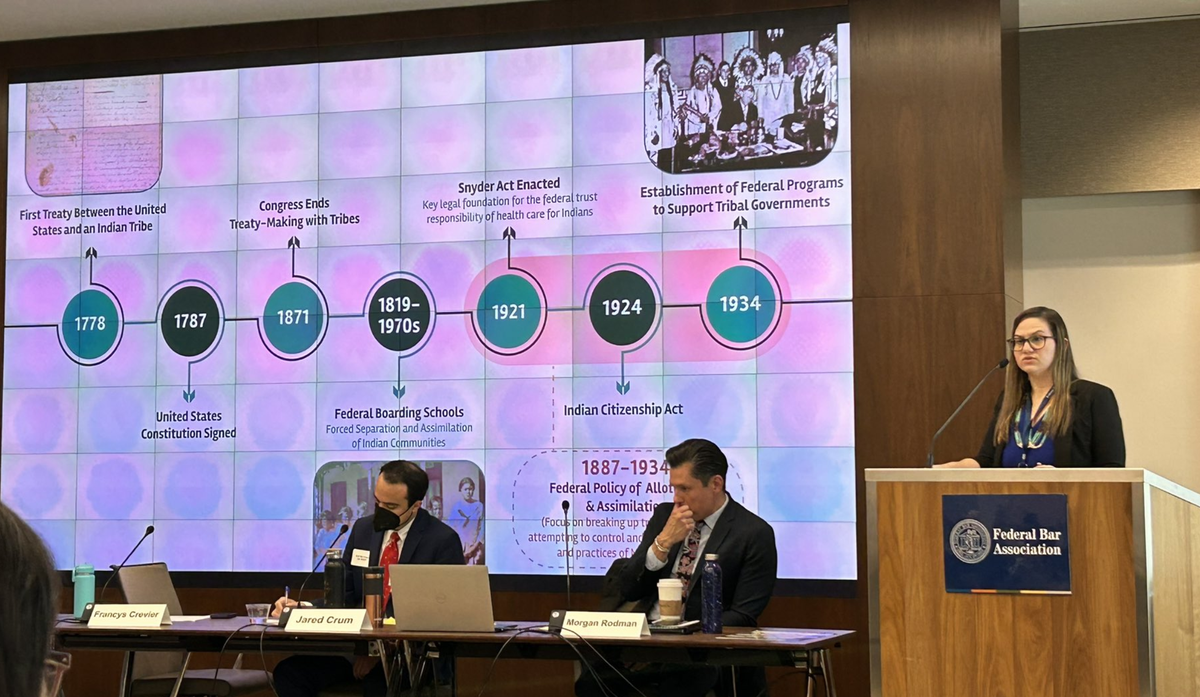
On August 9-10, the University of New Mexico Center for Native American Health hosted its “Native American Life Discrepancy in 2023: A Chronic Disease of Injustice” Symposium. ​NCUIH CEO, Francys Crevier explored the intersection of historical injustices, socio-economic challenges, and systemic barriers that continue to contribute to significant health issues facing Indian Country. She highlighted the critical importance of collaborative efforts, policy advocacy, and community-driven initiatives in addressing these inequalities and fostering sustainable positive change for urban Native American health and well-being.

Thank you for all your hard work and advocacy!