NCUIH January Policy Update: Increase for Urban Indian Health, Federal Agency, and Advocacy Developments

In this Edition:

  • 💰 $5 Million Increase for Urban Indian Health in Fiscal Year 2027
  • 📄 2025 Policy Assessment Released
  • 🏥 Indian Health Service Realignment: Comments Due February 9
  • ⚖ Court Grants Injunction on Health Resources and Services Administration 340B Rebate Pilot Program
  • 💬 Medicare and Medicaid Billing Challenges Request for Information
  • 💡 California Urban Indian Organization Social Determinants of Health Survey
  • 📅 Upcoming Events and Key Dates

Fiscal Year 2026 Appropriations Enacted with Increase for Urban Indian Health

Congress enacted Fiscal Year 2026 appropriations, including increased investments across Indian Health Service and Tribal health programs.

  • $95.42 million for Urban Indian Health, a $5 million increase over Fiscal Year 2025
  • $5.31 billion in advance appropriations for Fiscal Year 2027
  • Senate report language directing the Indian Health Service to explore an interagency working group to support Urban Indian Organizations

Additional provisions include:

  • $5 million for generators at Indian Health Service, Tribal, and Urban Indian facilities
  • $7 million for the Produce Prescription Pilot Program
  • $39.43 million for Tribal Epidemiology Centers

2025 NCUIH Policy Assessment Released

The National Council of Urban Indian Health released its 2025 Policy Assessment, which will inform the development of the organization’s 2026 policy priorities.

Key focus areas include:

  • Advance appropriations for the Indian Health Service
  • Impacts of federal policy changes on Urban Indian Organization funding
  • Executive orders affecting diversity, equity, inclusion, and accessibility programs
  • Achieving full Medicaid parity for Urban Indian Organizations
  • Strengthening the Urban Indian health workforce
  • Food is Medicine initiatives addressing food insecurity and health

→ Go Deeper: Access the Policy Assessment via the NCUIH Policy Resource Center.

Rural Health Transformation Funding Update

Rural Health Transformation Funding Awards in States

Several states have received Rural Health Transformation funding and included Tribes or Tribal organizations as partners, subrecipients, or priority populations in their state plans.

  • State awards range from approximately $160 million to $280 million
  • Multiple states explicitly list Tribes or Tribal organizations as subrecipients, including Michigan, Montana, Nebraska, and Oregon
  • Some states reference Tribal workforce development, training pipelines, and long-term retention strategies
  • New Mexico’s plan allows Tribes to apply directly for a competitive grant program funded through the state’s allocation

Why it matters: These state plans may present opportunities for Urban Indian Organizations to engage in implementation, partnerships, and future funding discussions.

Federal Agency Updates

Indian Health Service Realignment: Comments Due February 9

The Indian Health Service is seeking Tribal and Urban Indian Organization input on its proposed agency realignment.

  • Urban confer held January 15
  • NCUIH hosted a preparation session for Urban Indian Organizations on January 14
  • Written comments are due February 9, 2026 
  • NCUIH will provide a comment template for Urban Indian Organizations

Federal Court Update

Court Grants Injunction on Health Resources and Services Administration 340B Rebate Pilot Program

A federal court granted an injunction halting implementation of the Health Resources and Services Administration’s proposed 340B Rebate Pilot Program.

Why it matters: 

  • Prevents financial strain from paying full drug prices upfront
  • Avoids administrative disruptions to reimbursement and claims processing
  • Aligns with requests from the Secretary’s Tribal Advisory Committee and the Tribal Technical Advisory Group

NCUIH continues to advocate for exemptions for Indian health care providers.

Advocacy Highlights and Requests for Information

Medicare and Medicaid Billing and Claims Processing Challenges 

The National Indian Health Board’s Medicare, Medicaid, and Health Reform Policy Committee is collecting information on denied billing and claims processing challenges affecting Indian Health Service, Tribal, and Urban Indian providers.

  • Goal: Identify consistent issues across Indian Health Service Areas
  • Deadline: February 9, 2026 
  • Submissions will be de-identified and elevated to the Centers for Medicare and Medicaid Services Tribal Technical Advisory Group

Indian Health Service Loan Scholarship Program Recipients at Urban Indian Organizations 

NCUIH is seeking input from Urban Indian Organizations on participation in the Indian Health Service Loan Scholarship Program.

  • Does your organization currently employ any recipients of the Indian Health Service Loan Scholarship Program?
  • If your organization previously employed recipients, did they remain at your Urban Indian Organization after completing their service obligation?

How to Respond: Please share your responses by emailing policy@ncuih.org.

New NCUIH Research Opportunity (California Urban Indian Organizations)

Earn $750+ for Your Organization

The National Council of Urban Indian Health launched a survey to collect insights from California Urban Indian Organizations on key Social Determinants of Health affecting urban American Indian and Alaska Native communities.

  • Eligible organizations: California-based Urban Indian Organizations only
  • Stipend: $750+ per completed response
  • Limit: One response per Urban Indian Organization
  • Survey closes: January 31, 2026 

Go Deeper: Access the survey via the National Council of Urban Indian Health website.
Contact: Sophie Chishty, NCUIH Research Associate, at schishty@ncuih.org.

Federal Budget Process

Fiscal Year 2028 Indian Health Service Budget Formulation

  • Tribal request: $29.8 billion in full mandatory funding
  • Indian Health Service Area budget consultations held October–December
  • January 21–22: Area report presentation webinars
  • January 22: NCUIH presents Urban Indian Health priorities
  • February 10–11: National Tribal Budget Formulation Work Session

Upcoming Events and Important Dates

  • February 9: State of Indian Nations Address (Washington, District of Columbia)
  • February 10–12: National Congress of American Indians Executive Council Winter Session and Hill Day
  • February 12: Indian Health Service Tribal Summit (70th Anniversary)
  • February 18: National Council of Urban Indian Health Monthly Policy Workgroup (virtual)
  • February 19: Department of Urban Indian Affairs Executive Directors and Chief Executive Officers Call

2026 NCUIH Annual Conference

2026 NCUIH Annual Conference Registration Open

Join us for our 2026 Annual Conference on April 27–30, 2026, at The Westin Downtown in Washington, D.C. The conference will bring together Urban Indian Organizations, health leaders, policymakers, and partners to share strategies, strengthen systems, and advance urban Indian health nationwide. Programming includes UIO board training, two full days of conference sessions, and a Hill Day for Urban Indian Organizations. Registration and hotel room block are open!


Recent NCUIH Policy Blogs

About NCUIH

The National Council of Urban Indian Health (NCUIH) is a national representative for the 41 Urban Indian Organizations contracting with the Indian Health Service under the Indian Health Care Improvement Act. NCUIH is devoted to the support and development of high quality and accessible health and public health services for American Indian and Alaska Native people living in urban areas.

NCUIH respects and supports Tribal sovereignty and the unique government-to-government relationship between our Tribal Nations and the United States. NCUIH works to support those federal laws, policies, and procedures that respect and uplift Tribal sovereignty and the government-to-government relationship. NCUIH does not support any federal law, policy, or procedure that infringes upon or in any way diminishes Tribal sovereignty or the government-to-government relationship.

image_pdfPDFimage_printPrint

CMS Announces Rural Health Transformation Program Awards in All 50 States, Including Tribal Set-Asides and Initiatives in Several States

On December 29, 2025, the Centers for Medicare and Medicaid Services (CMS) announced all 50 states will receive awards under the Rural Health Transformation Program (RHTP), which was created in the One Big Beautiful Bill Act (OBBBA). In 2026, states will receive first-year awards from CMS averaging $200 million with awards ranging from $147 million to $281 million. Importantly, many states included Tribal-specific components within their RHTP application abstracts.

Annual Allocations and Tribal Mentions for States with UIOs

State Total Annual Allocation Tribal Set Aside or Tribal Initiative1
Arizona $166,988,956
California $233,639,308
Colorado $200,105,604
Illinois $193,418,216
Kansas $221,898,008
Maryland $168,180,838
Massachusetts $162,005,238
Michigan $173,128,201 List Tribes or Tribal organizations as subrecipients of the state’s funding allocation.
Minnesota $193,090,618 Minnesota states that rural Tribal Nations are a potential subgrantee of its funding allocation.
Missouri $216,276,818
Montana $233,509,359 List Tribes or Tribal organizations as subrecipients of the state’s funding allocation.
Nebraska $218,529,075 List Tribes or Tribal organizations as subrecipients of the state’s funding allocation.
Nevada $179,931,608
New Mexico $211,484,741 Includes an initiative to “build and sustain a rural and Tribal health workforce by expanding local career pathways, strengthening clinical training pipelines and educational opportunities, and supporting long-term retention through housing, mentorship, and community-based incentives.” Also includes an initiative to “launch a competitive grant program that empowers rural, frontier, and Tribal communities in New Mexico to design and lead locally tailored health initiatives addressing unique challenges such as preventive care, behavioral health, non-medical drivers of health, and provider facility needs.”
New York $212,058,208 Includes information about partnering with Tribal Nations to implement their plans in the most effective way possible.
Oklahoma $223,476,949 Includes information about partnering with Tribal Nations to implement their plans in the most effective way possible.
Oregon $197,271,578 Oregon has a dedicated set-aside for the nine federally recognized Tribes in the state.
South Dakota $189,477,607
Texas $281,319,361
Utah $195,743,566 Includes information about partnering with Tribal Nations to implement their plans in the most effective way possible.
Washington $181,257,515 Washington states its initiatives will support, among other things, “increasing training capacity for Tribal providers, nurses and long-term care workers.”
Wisconsin $203,670,005 Includes information about partnering with Tribal Nations to implement their plans in the most effective way possible.

Background on the RHTP

The RHTP’s $50 billion in funds will be allocated to approved states over five years, with $10 billion available each year from 2026 through 2030. As directed by the OBBBA:

  • 50% of the funding is distributed equally among all approved states; and
  • 50% is allocated based on factors as described in the Notice of Funding Opportunity.

NCUIH will continue to monitor how the allocations under the RHTP will be distributed.

1Hobbs, Straus, Dean & Walker, LLP., General Memorandum 26-001, (2026, January 6), https://hobbsstraus.com/general_memo/general-memorandum-26-001/.

image_pdfPDFimage_printPrint

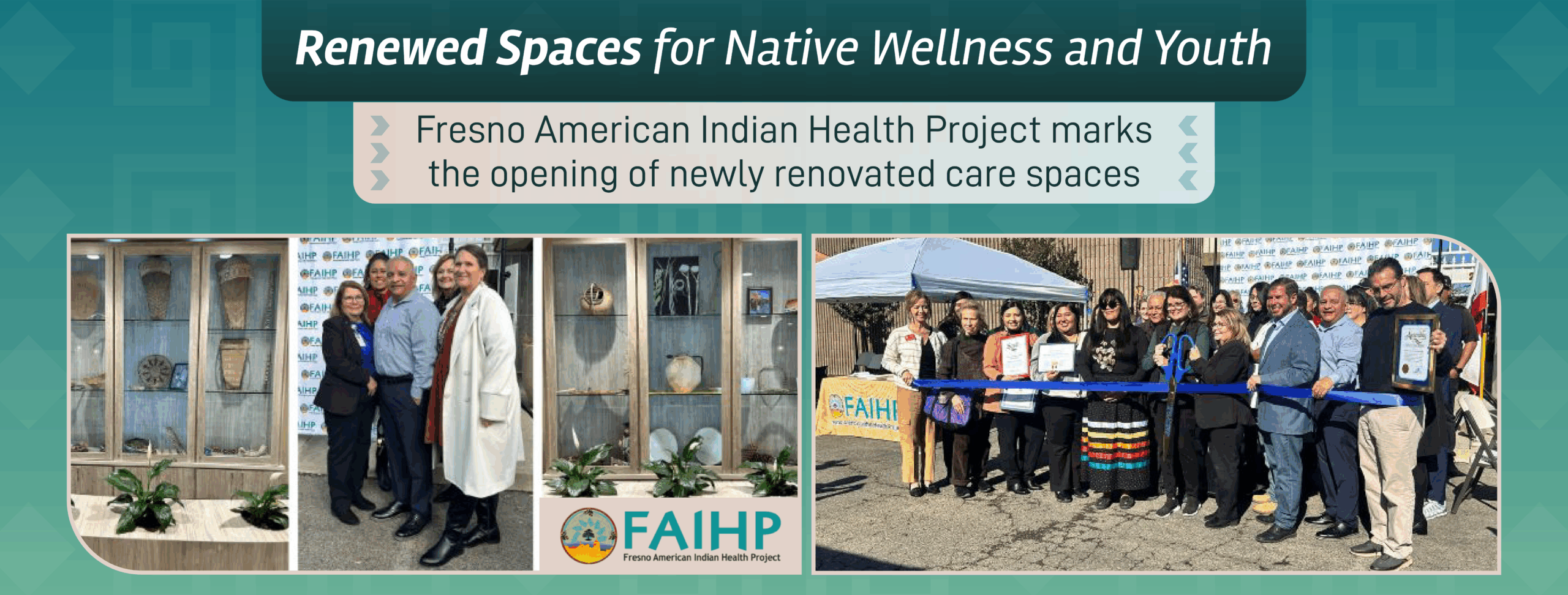
Fresno American Indian Health Project Marks the Opening of Renewed Native Wellness and Youth Services Spaces

Fresno American Indian Health Project recently gathered community members, staff, and partners to mark the opening of its newly renovated Native Wellness and Youth Services spaces. The moment reflects continued investment in care that is shaped by community, culture, and trust. 

The renewed spaces were designed to better support Native youth and families accessing wellness and behavioral health services in Fresno. Community members and partners recognized the importance of environments that feel welcoming, grounded, and reflective of the people they serve. 

FAIHP continues to show how intentional spaces can strengthen care, connection, and long-term wellness for urban Native communities across California. 

image_pdfPDFimage_printPrint

Congressional Leaders Release Three Bill Minibus for FY 2026 with Increases for Urban Indian Health and Advance Appropriations for Indian Health Service

On January 5, 2026, the House and Senate Appropriations Full Committee released a three bill appropriations minibus for fiscal year (FY) 2026 entitled the Commerce, Justice, Science; Energy and Water Development; and Interior and Environment Appropriations Act, 2026. The bill provides a total of $8.05 billion for the Indian Health Service (IHS), and $5.31 billion in advance appropriations for the agency for FY 2027. The bill also authorizes $95.42 million for urban Indian health– an increase of $5 million over the FY 2025 enacted amount. The bill also reaffirms the Senate report language directing IHS to explore the formation of an interagency working group aimed at supporting urban Indian organizations (UIOs).

Other key provisions include:

  • $5 million for generators at IHS/Tribal Health Programs/UIOs
  • $7 million, a $4 million increase, for the Produce Prescription Pilot Program for Tribes and UIOs to increase access to produce and other traditional foods
  • $39.43 million, a $5 million increase, for Tribal Epidemiology Centers (TECs).

Next Steps

The minibus is expected to receive a vote by the House on January 8, 2026. Once it passes, the bill will head to the Senate for a vote. The bill is expected to pass both chambers.

Background

The National Council of Urban Indian Health (NCUIH) is a longstanding advocate for full funding for IHS and urban Indian health and supports the recommendations of the Tribal Budget Formation Workgroup. On February 27, 2025, NCUIH board president-elect and Oklahoma City Indian Clinic CEO Robyn Sunday-Allen (Cherokee) testified before the House Appropriations Subcommittee on Interior, Environment, and Related Agencies, urging full funding for urban Indian health and the Indian Health System.

NCUIH is also grateful for the support of the Senators and Representatives working to support the health of Indian Country. On May 15, 2025, 60 Congressional leaders joined Representative Leger Fernandez in a bipartisan letter to Chairman Simpson and Ranking Member Pingree of the House Interior Appropriations Committee requesting support for Urban Indian Health, maintaining advance appropriations for IHS, and protecting IHS from sequestration. The letter emphasized that the federal government has a trust responsibility to provide federal health services to maintain and improve the health of American Indian and Alaska Native people. On May 21, 2025, 19 Senators joined Senator Tina Smith in a similar letter to Chair Lisa Murkowski (R-AK) and Ranking Member Jeff Merkley (D-OR) of the Senate Interior Appropriations Committee.

Bill Highlights

Line Item FY 25 Enacted FY 26 Tribal Request FY 26 Senate Proposed FY 26 House Proposed FY 26 Enacted
Urban Indian Health $90.42 million $770.5 million $90.4 million $105.99 million $95.42 million
Indian Health Service $8.22 billion $63 billion $8.1 billion $8.41 billion $8.05 billion
Advance Appropriations $5.19 billion ______________ $5.3 billion $6.05 billion $5.3 billion
Hospital and Clinics $2.5 billion $13.8 billion $2.65 billion $2.85 billion $2.63 billion
Tribal Epidemiology Centers $34.4 million ______________ ______________ $44.43 million $39.4 million
Mental Health $127.1 million $4.76 billion $131.3 million $144.95 million $133.69 million

Additional Key Provisions:

Produce Prescription Pilot Program: $7 million

Bill Report, Pg. 60: The recommendation includes $7,000,000 for IHS to expand, in coordination with Tribes and Urban Indian Organizations (UIOs), the Produce Prescription Pilot to implement a produce prescription model to increase access to produce and other traditional foods among its service population.

  • This represents a $4 million increase.
Contract Support Costs – $ 1,819 billion and Tribal 105(l) leases – $366 million

Bill Report, Pg. 60: The bill provides an indefinite appropriation to fully fund contract support costs, which are estimated to be $ 1,819,000,000 in fiscal year 2026.

  • This represents a $217 million decrease.

Bill Report, Pg. 60: The bill provides an indefinite appropriation to fully fund payments for Tribal leases. which are estimated to be $366,000,000 in fiscal year 2026.

  • This represents a $34 million decrease.
Purchased and Referred Care – $997 million
  • This is level funding for the line item.
Indian Health Professions: $84.57 million
  • This represents a $4 million increase.
Sanitation Facilities Construction: $107.94 million

Bill Report, Pg. 62: The agreement provides $107,943,000 for Sanitation Facilities Construction.

  • This represents a $1.3 million increase.
Health Care Facilities Construction: $184.68 million

Bill Report, Pg. 62: The agreement includes $184,679,000. including $13,000,000 for staff quarters for staff housing across the IHS health care delivery to support the recruitment and retention of quality healthcare professionals across Indian country.

  • This represents a $2 million increase.
Equipment – Generators: $5 million
Dental Health: $260.36 million

Bill Report, Pg. 60: The recommendation includes $260,360,000 for Dental Health, including $6,500,000 for Dental Support Centers and continues funding for Electronic Dental Health Records.

  • This Represents a $6.24 million increase.
Alzheimer’s Disease: $6 million

Bill Report, Pg. 60: The agreement provides $6,000,000 to continue Alzheimer’s and related dementia activities.

Maternal Health: $8 million

Bill Report, Pg. 60: The agreement provides $8,000,000 for Improving Maternal Health.

Alcohol and Substance Abuse: $267.08 million
  • This represents a $309,000 increase.
Bureau of Indian Affairs, Missing and Murdered Indigenous Women Initiative: $18. 5 million

Bill Report, Pg. 32: The recommendation includes $27.094,000 for Law Enforcement Special Initiatives, including $ 18,500,000 for the Missing and Murdered Indigenous Women Initiative.

  • This represents a $2 million increase.
image_pdfPDFimage_printPrint