NCUIH March Policy Update: Congressional Testimony, Medicaid Guidance, and IHS Policy Developments

In this Edition:

  • 🎙 NCUIH Testified Before Congress on Urban Indian Health
  • 🏥 HHS Secretary Kennedy Jr. Announced $1 Billion for IHS Infrastructure
  • 🤝 NCUIH in Action: Recent Policy Engagement with IHS and HHS leaders
  • 📋 Medicaid Redetermination Guidance Included an AI/AN Exemption
  • 🏛 Bipartisan Bill Would Elevate Indian Health Service Leadership Within HHS
  • 💻 IHS Requested Feedback on Health IT Modernization PATH Activities
  • 🌾 NCUIH Requested Input on Rural Health Transformation Fund Awards
  • 📅 Upcoming Policy Events, Deadlines, and Opportunities
  • 🎉 Join Us in April for the 2026 NCUIH Annual Conference

NCUIH Testifies Before Congress on Urban Indian Health

On March 17, 2026, NCUIH CEO Francys Crevier, testified before the House Appropriations Subcommittee on Interior, Environment, and Related Agencies during the American Indian and Alaska Native Public Witness hearing. Testifying on behalf of the National Council of Urban Indian Health (NCUIH) and the 41 Urban Indian Organizations (UIOs) it represents, she elevated the role of UIOs in the Indian health system and urged Congress to protect funding for the Indian Health Service, provide $106 million for Urban Indian Health in FY27, maintain advance appropriations, and include UIOs in the Behavioral Health Pilot Program.

Her testimony underscored that Urban Indian Organizations remain an essential part of the Indian health system and continue to meet growing need in Native communities across the country. As stated in her testimony, “The three requests before you today are targeted and achievable: fund Urban Indian Health at $106 million, maintain advance appropriations, and include UIOs in the Behavioral Health Pilot Program.”

She also emphasized that these requests are grounded in the federal government’s trust responsibility to provide health care for American Indian and Alaska Native people, including those living in urban areas. Her testimony reinforced that sustained investment in urban Indian health is necessary to protect services, strengthen care delivery, and ensure Native communities are not left behind.

NCUIH also submitted written testimony.

Read more about the hearing on NCUIH’s blog.

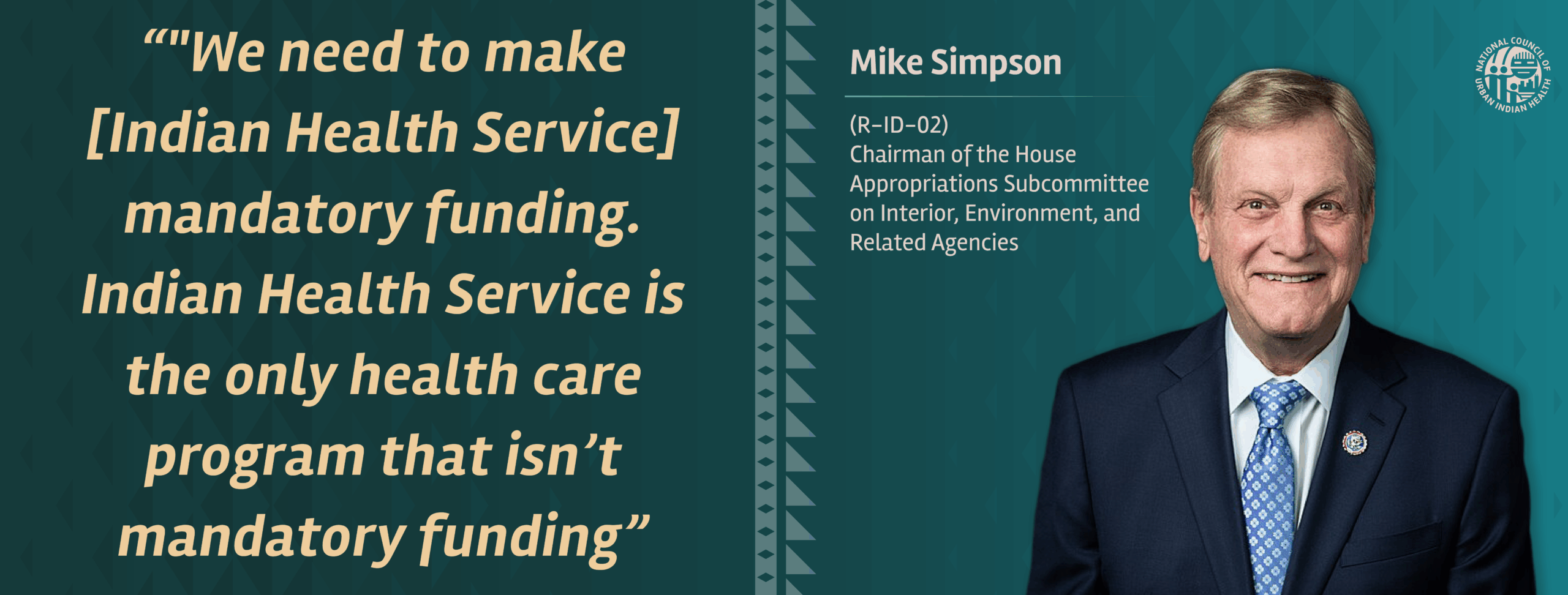
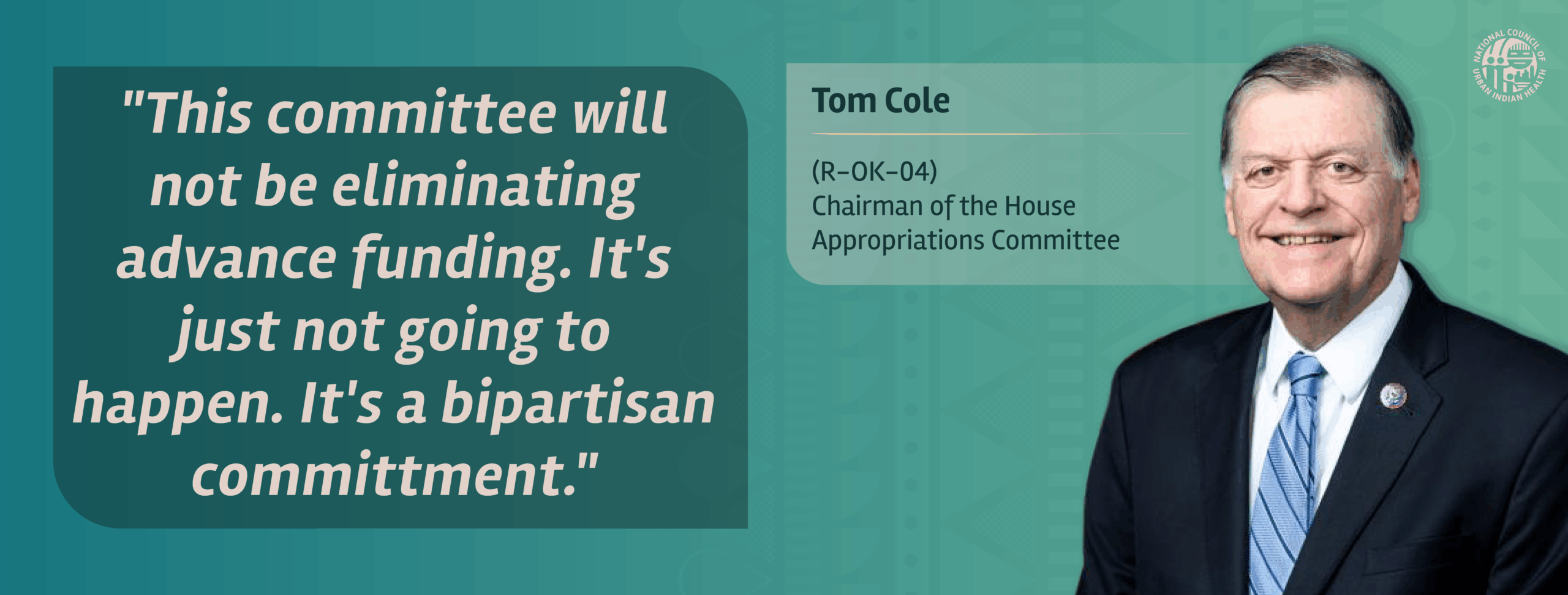
Interior Subcommittee Chairman Mike Simpson (ID-02-R) and Appropriations Committee Chairman Tom Cole (OK-04-R) both reaffirmed the committee’s commitment to advancing progress in Indian health care and protecting and maintaining stable funding for IHS.

U.S. Department of Health and Human Services Secretary Kennedy Jr. Announces $1 Billion in Infrastructure Investment for IHS

HHS Secretary Kennedy Jr. announced a $1 billion investment toward priority Indian Health Service facilities infrastructure projects beginning in FY 2027.

  • Funding is from existing departmental resources drawn from the HHS Nonrecurring Expenses Fund.
  • Announcement was made at the February 12 IHS Tribal Summit.

Read more on our blog.

NCUIH in Action: Recent Policy Engagement

NCUIH engaged in several recent convenings, including:

  • IHS Tribal Self-Governance Advisory Committee (TSGAC) Meeting
    February 24–25, 2026 | Washington, D.C.
    Discussion included the recently announced $1 billion IHS infrastructure initiative.
  • Native American Coalition for Economic Prosperity (NACEP) Fourth Convening of the Government-to-Government Roundtable Series
    February 25, 2026 | Washington, D.C.
    Discussion also included the $1 billion IHS infrastructure initiative.

CMS Guidance to States on Implementation of One Big Beautiful Bill Act 6-Month Medicaid Redeterminations – includes AI/AN Exemption

The Centers for Medicare & Medicaid Services (CMS) issued guidance to states on implementation of 6-month Medicaid redeterminations, and the guidance included an American Indian and Alaska Native exemption that also applies to Urban Indians.

NCUIH-Endorsed Bipartisan Bill to Elevate Indian Health Service Leadership Within HHS Introduced in Senate

The Stronger Engagement for Indian Health Needs Act is a bipartisan bill supported by NCUIH that would elevate the IHS Director to Assistant Secretary for Indian Health within HHS.

Why it matters:

  • This would strengthen Tribal representation in federal health decision-making and reinforce the federal government’s trust responsibility to provide health care to American Indian and Alaska Native people.

Legislative updates include:

  • Senate bill introduced February 5, 2026 by Senators Catherine Cortez Masto (D-NV) and Mike Rounds (R-SD)
  • House bill introduced January 28, 2026 by Representatives Greg Stanton (D-AZ-04) and David Joyce (R-OH-14)

Read more on our blog.

NCUIH Provided Comments to IHS on Proposed Realignment following Second Round of Urban Confer

Following IHS’ January 15 virtual Urban Confer session on the IHS Strategic Realignment, NCUIH submitted written comments to IHS emphasizing the importance of protecting UIO contracts, maintaining Area offices and strengthening partnerships, addressing IHS staffing needs, and ensuring continued engagement with UIOs, while also highlighting the importance of 100% Federal Medical Assistance Percentage (FMAP) for UIOs.

IHS’ Realignment plans (communicated during the January 15 Urban Confer):

  • April 1: Federal Register Comment Period (30 days)
  • May 22: Federal Register Notice
  • May-June: Transition to Future State

IHS Requested Feedback on Health IT Modernization PATH Activities

On March 5, IHS held a Health IT Modernization Information Session on Patients at the Heart (PATH) electronic health record (EHR) activities. Planned go-live for the pilot site for implementing PATH EHR is the beginning of August 2026.
During the session, IHS shared consultation and confer questions for Tribes and UIOs, including:

  • What clarifications are needed regarding the PATH EHR activities?
  • What additional information or content would help sites better understand PATH EHR implementation?
  • What additional information or content would be helpful to better understand PATH EHR implementation at your site?
    •What potential opportunities do you foresee for staff or patients in implementing PATH EHR?

Written comments are due by Saturday, April 4, 2026, to urbanconfer@ihs.gov with the subject line: Health IT Modernization CY 03-5-2026.

NCUIH is Requesting UIO Input on Rural Health Transformation Fund Awards

On December 29, 2025, The Centers for Medicare & Medicaid Services (CMS) awarded all 50 states funding through the Rural Health Transformation Fund (RHTF). Read more about this funding on NCUIH’s blog.

NCUIH is asking Urban Indian Organizations to share whether they receive this funding.

Request for UIOs: 

  • Let NCUIH know if your UIO receives RHTF funding. Contact: policy@ncuih.org

Upcoming Events and Key Dates Requests for Information

  • March 25–26, 2026 — CMS Tribal Technical Advisory Group Quarterly Meeting (Washington, D.C.)
  • April 4, 2026 — Written comments due for IHS Health IT Modernization PATH activities
  • April 6–9, 2026 — Tribal Self-Governance Conference (Phoenix, Arizona). Register here.
  • April 15, 2026 — NCUIH Monthly Policy Workgroup (Virtual)
  • April 27–30, 2026— 2026 NCUIH Annual Conference (Washington, D.C.)

2026 NCUIH Annual Conference

Join us April 27–30, 2026, in Washington, D.C., as NCUIH marks the 50th anniversary of the Indian Health Care Improvement Act (IHCIA)—a landmark commitment to the health and well‑being of American Indians and Alaska Natives—and reflects on five decades of progress, collaboration, and continued commitment to Native health.

Register to attend: https://ncuih.org/conference/

Recent NCUIH Policy Blogs

  1. 1. Serving Native Community Across New York City: The Work of the New York Indian Council
    March 3, 2026/in /by 
  2. HHS Secretary Kennedy Jr. Announces $1 Billion in Infrastructure Investment for IHS
    March 4, 2026/in /by 
  3. NCUIH Submits Written Testimony Urging House to Protect Funding of Indian Health Service and Urban Indian Health
    March 13, 2026/in /by 
  4. NCUIH Testifies Before Congress on Native Health Priorities
    March 17, 2026/in /by 

About NCUIH

The National Council of Urban Indian Health (NCUIH) is a national representative for the 41 Urban Indian Organizations contracting with the Indian Health Service under the Indian Health Care Improvement Act. NCUIH is devoted to the support and development of high quality and accessible health and public health services for American Indian and Alaska Native people living in urban areas.

NCUIH respects and supports Tribal sovereignty and the unique government-to-government relationship between our Tribal Nations and the United States. NCUIH works to support those federal laws, policies, and procedures that respect and uplift Tribal sovereignty and the government-to-government relationship. NCUIH does not support any federal law, policy, or procedure that infringes upon or in any way diminishes Tribal sovereignty or the government-to-government relationship.

image_pdfPDFimage_printPrint

NCUIH CEO Francys Crevier Testifies on Importance of Native Health Care

What They’re Saying: Congressional Support for Strengthening Indian Health Services

Interior Subcommittee Chairman Mike Simpson (ID-02-R) reaffirmed the committee’s commitment to advancing progress in Indian health care, “Indian Country has been and will continue to be a bipartisan priority for this community.” He also emphasized the importance of protecting and maintaining stable funding for IHS. “We are not going back on that [advance appropriations]. We need to make it mandatory funding. Indian health service is the only health care program that isn’t mandatory funding”

Appropriations Committee Chairman Tom Cole (OK-04-R) similarly highlighted the committee’s commitment to maintaining advance appropriations. “This committee will not be eliminating advance funding. It’s just not going to happen. It’s a bipartisan commitment. 

Why It Matters: The Urgency of Action

Protecting the Entire Indian Health System
  • Responsible Stewardship and the Case for Increased Investment
    Ms. Crevier highlighted the Oklahoma City Indian Clinic as a model of what responsible federal investment in Urban Indian Health looks like. Roughly half of every dollar the clinic spends goes directly to preventative care, and six out of the clinic’s top ten diagnoses are preventative care diagnoses. Ms. Crevier emphasized that this is exactly why increased investment pays off — and called on Congress to fully fund IHS and fund Urban Indian Health, maintain advance appropriations, and protect IHS funding from any cuts, sequestrations, or funding freezes. As she testified, these are “not new asks — they are overdue asks.” 
  • Cancer: Rising Concern in Indian Country
    Ms. Crevier underscored the alarming rise in cancer rates in Indian Country. She highlighted that the Oklahoma City Indian Clinic is now diagnosing over 20 new cancer cases every single month. In response, the clinic has hired a full-time oncology nurse case manager and a part-time oncologist. Ms. Crevier urged Congress to protect funding for programs like the Native American Cancer Outcomes Program, which she described as more critical than ever. 
  • A Growing Behavioral Health Crisis Demands Action
    Ms. Crevier testified to a growing behavioral health crisis unfolding inside Urban Indian clinics, where they have seen a surge in anxiety and depression, disproportionately affecting young Native people. She noted that while clinics are not traditionally equipped for robust behavioral health services, patients are coming to them anyway, and demand is outpacing available resources. Ms. Crevier called on Congress to protect SAMHSA programs like Native Connections, which plays a critical role in addressing Native youth suicide, and urged the committee to include Urban Indian Organizations in the Behavioral Health Pilot Program established this year. 

Next Steps

NCUIH will continue to advocate for protecting and fully funding the Indian Health System–including UIOs, Tribes, and IHS—so that no Native person goes without life-saving care. NCUIH stands ready to work with Congress and federal agencies to ensure that all Native people have consistent, high-quality health care.

image_pdfPDFimage_printPrint

NCUIH Testifies Before Congress on Native Health Priorities

Today, the National Council of Urban Indian Health (NCUIH) is participating in congressional hearings that help shape federal funding decisions affecting Native communities across the country.

The U.S. House Appropriations Subcommittee on Interior, Environment, and Related Agencies is holding American Indian and Alaska Native Public Witness hearings on March 17–18, 2026. These hearings provide an important opportunity for Native leaders and organizations to speak directly to Congress about community needs ahead of the Fiscal Year 2027 federal budget.

Why These Hearings Matter

Funding decisions made by Congress determine how health care and public health services are delivered to American Indian and Alaska Native people. These hearings are one of the few chances each year for Native voices to be formally placed on the congressional record before appropriations levels are set.

NCUIH’s testimony highlights:

  • The federal trust responsibility to provide health care to Native people
  • The growing health needs of Native communities, including rising cancer rates and behavioral health challenges
  • The importance of stable, sustained funding to ensure access to preventive care and life‑saving services

NCUIH’s testimony helps ensure that Congress understands how federal investments in Native health directly affect patients, families, and communities nationwide.

NCUIH Testimony

NCUIH will testify on Tuesday, March 17, 2026 at 2:10 PM ET (estimated, but subject to change).

Hearings: Livestream Links, List of Witnesses and Testimony

The hearings are open to the public and will be livestreamed. Links below include the livestream information, the full list of witnesses, and all submitted written testimony, including NCUIH’s.

Interior, Environment, and Related Agencies – American Indian and Alaska Native Public Witness (Day 1, Morning Session)

Interior, Environment, and Related Agencies – American Indian and Alaska Native Public Witness (Day 1, Afternoon Session)

Interior, Environment, and Related Agencies – American Indian and Alaska Native Public Witness (Day 2, Morning Session)

Interior, Environment, and Related Agencies – American Indian and Alaska Native Public Witness (Day 2, Afternoon Session)

Next Steps

NCUIH will continue working with Congress throughout the federal budget process to advance policies and funding that protect and strengthen the health of Native communities across the country.

image_pdfPDFimage_printPrint

NCUIH Submits Written Testimony Urging House to Protect Funding of Indian Health Service and Urban Indian Health

On March 11, 2026, the National Council of Urban Indian Health (NCUIH) submitted written testimony to the House Appropriations Committee on Interior, Environment, and Related Agencies regarding Fiscal Year (FY) 2027 funding for Urban Indian Health. NCUIH called for protecting funding for the Indian Health Service (IHS) and urban Indian Health and increasing resources for American Indian and Alaska Native health programs.

In the testimony, NCUIH requested the following:

  • Protect Funding for the Indian Health Service and fund Urban Indian Health at $106 million for FY27
  • Maintain Advance Appropriations for the Indian Health Service, until mandatory funding is achieved
  • Request: Include Urban Indian Organizations in the Behavioral Health Pilot Program  

Next Steps 

This testimony will be considered by the House Committee and used in the development of the Committee’s priorities. NCUIH Board President, Robyn Sunday-Allen (Cherokee), will also be testifying in front of the Committee on March 17 as part of the Committee’s American Indian and Alaska Native Witness Days. NCUIH will continue to support these requests in the 119th Congress and work closely with Committee members and staff.


Written Testimony of Robyn Sunday-Allen (NCUIH) House Committee on Appropriations Subcommittee on Interior, Environment, and Related Agencies

My name is Robyn Sunday-Allen. I am a citizen of the Cherokee Nation and the President-Elect of the National Council of Urban Indian Health, a national representative advocating for the Urban Indian Organizations (UIOs) contracting with the Indian Health Service (IHS) under the Indian Health Care Improvement Act (IHCIA) and the American Indians and Alaska Native patients they serve. On behalf of NCUIH and these 41 UIOs, I would like to thank Chairman Simpson, Ranking Member Pingree, and Members of the Subcommittee for your leadership to improve health outcomes for urban Indians and for the opportunity to testify today. We respectfully request the following:

  • Protect Funding for the Indian Health Service and fund Urban Indian Health at $106 million for FY27
  • Maintain Advance Appropriations for the Indian Health Service, until mandatory funding is achieved
  • Request: Include Urban Indian Organizations in the Behavioral Health Pilot Program
A Brief History on Urban Indian Organizations:

As a preliminary issue, “urban Indian” refers to any American Indian or Alaska Native (AI/AN) person who is living in an urban area, either permanently or temporarily. UIOs were created by urban American Indians and Alaska Natives with the support of Tribes, starting in the 1950s in response to severe problems with health, education, employment, and housing caused by the federal government’s forced relocation policies.1 Congress formally incorporated UIOs into the Indian Health System in 1976 with the passage of the Indian Health Care Improvement Act (IHCIA). Today, over 70% of AI/AN people live in urban areas. UIOs are an integral part of the Indian health system, comprised of the Indian Health Service, Tribes, and UIOs (collectively I/T/U), and provide essential healthcare services, including primary care, oral care, behavioral health, and social and community services, to patients from over 500 Tribes in 38 urban areas across the United States. UIOs also work closely with Tribal and law enforcement partners to address the Missing and Murdered Indigenous People’s (MMIP) crisis.

Request: Protect Funding for the Indian Health Service and fund Urban Indian Health at $106 million for FY27

We want to first acknowledge that your leadership was instrumental in the first increase in three years for urban Indian health in the final FY26 appropriations bill and for maintaining advance appropriations. It is important that we continue in this direction to build on our successes.

The federal government owes a trust obligation to provide adequate healthcare to AI/AN people. It is the policy of the United States “to ensure the highest possible health status for Indians and urban Indians and to provide all resources necessary to effect that policy.”2This requires that funding for Indian health be significantly increased if the federal government is to finally fulfill its trust responsibility.

We thus request the Committee honor its trust obligation by appropriating the maximum amount possible for IHS and $106 million for Urban Indian Health, which is in line with the House proposed amount for FY26. According to the Tribal Budget Formulation Workgroup (TBFWG), a workgroup comprised of Tribal leaders representing all twelve IHS service areas and serving all 574 federally recognized Tribes, “Only a significant increase to the Urban Indian Health line item will allow UIOs to increase and expand services to address the needs of their Native patients, support the hiring and retention of culturally competent staff, and open new facilities to address the growing demand for UIO services.” If urban Indian health does not continue to receive increases to keep pace with inflation, it will continue to contribute to the severe health challenges. In fact, according to a recent survey from the National Council of Urban Indian Health, over half of surveyed UIOs report they would be unable to sustain operations beyond six months without federal funding.3

The Department of Health and Human Services (HHS) Secretary Kennedy Jr. recently

announced that HHS will be transferring $1 billion from the HHS Nonrecurring Expenses Fund (NEF) to help support facilities infrastructure programs at IHS. These funds are not accessible to UIOs. In fact, UIOs generally do not receive direct funds from any other distinct IHS accounts, including the Hospital and Health Clinics, Indian Health Care Improvement Fund, Health Education, Indian Health Professions, or any of the line items under the IHS Facilities account. UIOs can only use their line item funding for any facilities improvements and without an increase to the urban Indian line item will have limited budgets to implement much needed improvements to their facilities to fully address the needs of their patients.

While UIOs have historically received only 1% of the IHS budget, they have been excellent stewards of the funds allocated by Congress and are effective at ensuring that increases in appropriations correlate with improved care for their communities. Additionally, UIOs are critical in providing robust culturally competent care for all American Indian and

Alaska Native people living in urban areas. Every dollar invested in Urban Indian Health translates directly into expanded services, new jobs, and measurably better health outcomes for Native communities across 38 urban areas.

Request: Maintain Advance Appropriations for the Indian Health Service until Mandatory Funding is Enacted

We are grateful to Chair Simpson and this Committee for the historic inclusion of advance appropriations for IHS in the FY23 appropriations bill and its subsequent continuation in following FY spending packages. This action proved to be critical during the 2025 government shutdown. Prior to FY23, the I/T/U system was the only major federal health care provider funded through annual appropriations. As such, in previous shutdowns, clinic staff had to go without pay, some UIOs reduced services, while others had to shut down completely. These impacts were severe and long lasting in our communities.

With IHS receiving advance appropriations, funding was able to flow to UIOs without delay during the shutdown, ensuring that services were maintained for the community. As one UIO leader said, “The last government shutdown impacted our ability to provide full services, which resulted in 10 members of our community losing their lives. Advance Appropriations has allowed us to stay open and continue serving our people, and that stability has truly saved lives.” Advance appropriations has been a crucial step towards ensuring long-term, stable funding for IHS, which improves accountability and increases staff recruitment and retention at IHS.

Unfortunately, not all line items within the IHS budget are protected under advance appropriations, notably, Sanitation Facilities Construction, the Indian Health Care Improvement Act Fund, Facilities Construction, Contract Support Costs (CSC), Section 105(l) lease payments, and Electronic Health Records. These accounts account for more than $1.3 billion in the IHS budget and should similarly be protected.4

Finally, while advance appropriations is a step in the right direction to avoid disruptions during government shutdowns and CRs, mandatory funding is the only way to assure fairness in funding and fulfillment of the trust responsibility. Until authorizers act to move IHS to mandatory funding, we call on Congress to continue to provide advance appropriations to the Indian health system to improve certainty and stability.

Request: Include Urban Indian Organizations in the Behavioral Health Pilot Program

Native people continue to face high rates of behavioral health issues caused by generational trauma and federal policies. These are not abstractions: in 2023, the CDC reported that the American Indian and Alaska Native people died of overdoses at a rate of 70.4 deaths per 100,000 people, which is the highest for any racial or ethnic group.5Native youth also experience the highest rates of suicide and depression, with the Native youth suicide rate being 2.5 times that of the national average. And among American Indian and Alaska Native people needing treatment in 2021, only 5.3% received any treatment and just 3.7% received specialty care.6

We were grateful to see Congress pass the committee’s new behavioral health pilot program to support 10 Tribes and Tribal programs to implement special behavioral health programs. We urge the Committee to sustain this program and include funding for at least one UIO in the FY27 appropriations bill. Additionally, we request that the Committee increase funding for existing behavioral health grants, such as Native Connections, which play a significant role in reducing Native youth suicide rates. These grants ensure our communities have access to the care they need.

Conclusion

The three requests before you today are targeted and achievable: fund Urban Indian Health at $106 million, maintain advance appropriations, and include UIOs in the Behavioral Health Pilot Program. Each of these asks reflects a direct obligation this government has already acknowledged. We are simply asking you to follow through. The federal government must continue to work towards its trust and treaty obligation to maintain and improve the health of American Indians and Alaska Natives. We urge Congress to take this obligation seriously and provide UIOs with all the resources necessary to protect the lives of the Native population, regardless of where they live.

1Relocation, National Council for Urban Indian Health, 2018. 2018_0519_Relocation.pdf(Shared)- Adobe cloud storage
225 U.S.C. § 1601(1)
3Impact of Federal Funding Pauses on Urban Indian Organizations. National Council of Urban Indian Health. 2025. https://ncuih.org/wp-content/uploads/Fed-Funding-Pause_NCUIH-D562_F3.pdf
4Continuing Appropriations and Extensions Act, H.R. 9747, 118th Cong. (2024)
5Centers for Disease Control and Prevention (CDC). (2024, December 12). State Unintentional Drug Overdose Reporting System (SUDORS) Dashboard: Fatal Drug Overdose Data – Final Data. US Department of Health and Human Services. Retrieved August 15, 2025 from https://www.cdc.gov/overdose-prevention/data-research/facts-stats/sudors-dashboard-fatal-overdose-data.html.
6Substance Abuse and Mental Health Services Administration (SAMHSA). (2022). Key substance use and mental health indicators in the United States: Results from the 2021 National Survey on Drug Use and Health (HHS Publication No. PEP22-07-01-005, NSDUH Series H-57). Center for Behavioral Health Statistics and Quality, Substance Abuse and Mental Health Services Administration. Retrieved August 14, 2025 from https://www.samhsa.gov/data/report/2021-nsduh-annual-national-report.

image_pdfPDFimage_printPrint

HHS Secretary Kennedy Jr. Announces $1 Billion in Infrastructure Investment for IHS

On February 12, 2026, at the 70th Anniversary Indian Health Service (IHS) Tribal Summit, the Department of Health and Human Services (HHS) Secretary Robert F. Kennedy Jr. announced that HHS will direct $1 billion in existing departmental resources, drawn from the HHS Nonrecurring Expenses Fund, toward priority IHS health care facilities infrastructure projects beginning in FY 2027. The funding will focus on supporting facilities on the 1993 IHS Construction Priority List 

The $1 billion infrastructure commitment was part of a broader set of actions Secretary Kennedy announced at the summit, including the largest hiring initiative in IHS history to address a roughly 30% personnel shortage across the agency, expanded behavioral health and addiction services, and new tribal representation within HHS leadership. Together, these commitments signal an effort to address not just the buildings, but the people and systems needed to deliver quality care in Indian Country. 

Resources 


image_pdfPDFimage_printPrint

Syphilis Rates Among American Indian and Alaska Native Communities

The following resource was developed by the National Council of Urban Indian Health (NCUIH) in 2025 to highlight disparities in syphilis experienced by the American Indian and Alaska Native (AI/AN) population.

Primary & Secondary Syphilis Disparities

Syphilis is a sexually transmitted infection (STI) that is transmitted through direct contact with an infected syphilis sore during oral, vaginal, or anal sex (Centers for Disease Control and Prevention [CDC], 2025a). Syphilis has four key stages: the primary stage (characterized by minimal sores typically found in, on, or around the genitals or mouth), secondary stage (characterized by sores and/or rashes in the mouth, vagina, or anus), latent stage (a period where there are no visible signs or symptoms), and tertiary stage (in which syphilis spreads to different organ systems, typically occurring ten to thirty years after the infection began) (2025a). Primary and secondary syphilis are considered the most infectious stages of syphilis (Centers for Disease Control and Prevention [CDC], 2024). If left untreated, syphilis can cause damage to the heart, brain and nervous system, and more (CDC, 2025a).

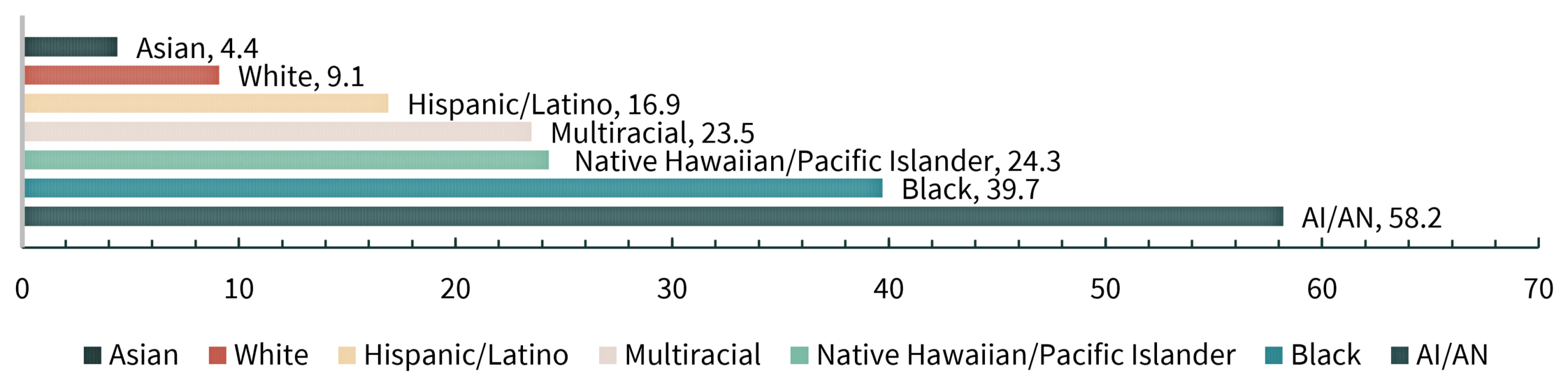
American Indian and Alaska Native (AI/AN) people experience disproportionately higher rates of primary and secondary syphilis compared to their counterparts (see Figure 1). In 2023, the rate of primary and secondary syphilis was 15.8 per 100,000 persons for the total population and 58.2 per 100,000 persons for the AI/AN population (Centers for Disease Control and Prevention, 2024). Specifically, the AI/AN population had the highest rate of primary and secondary syphilis in 2023 of all racial/ethnic groups in the United States, a rate 3.7 times that of the total population and 6.4 times that of their White counterparts (2024).

Figure 1. 2023 Primary and Secondary Syphilis Rates by Race/Ethnicity1

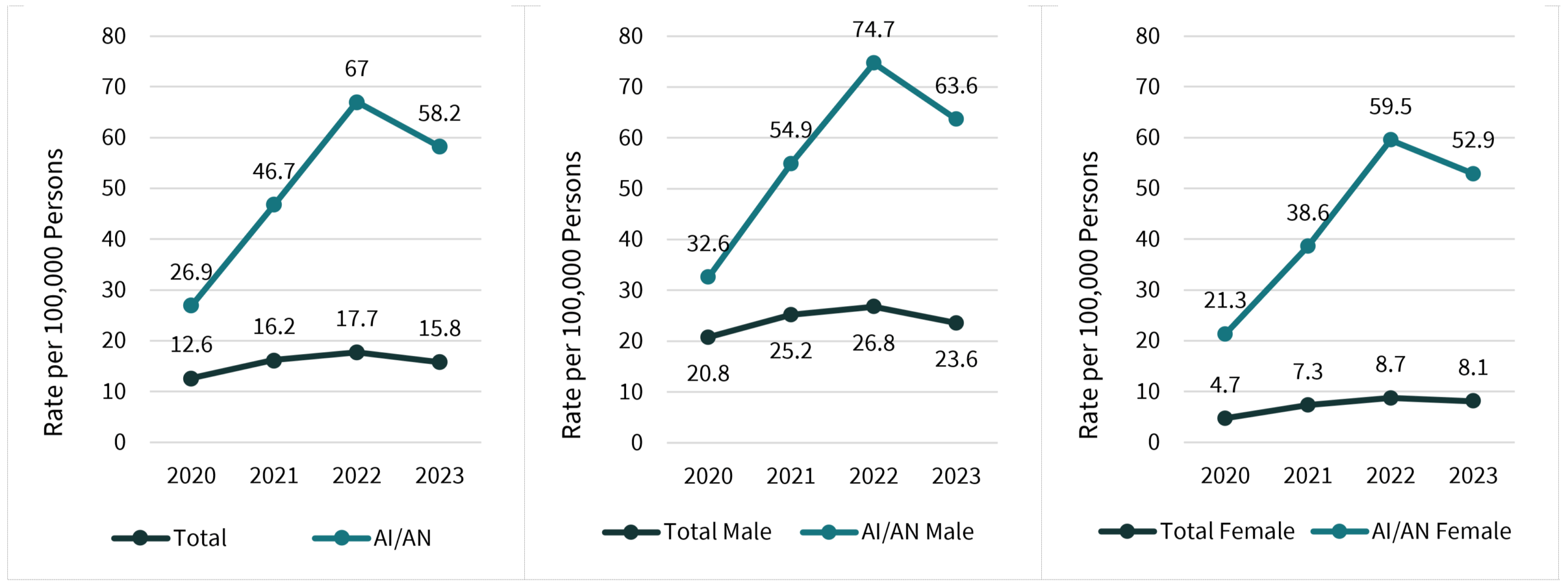
Primary and secondary syphilis disparities have also worsened disproportionately for the AI/AN population compared to the total population (see Figure 2). Between 2020 to 2023, the total rate of primary and secondary syphilis in the United States increased by 25.4 percent, while the AI/AN rate of primary and secondary syphilis increased by 116.3 percent (Centers for Disease Control and Prevention [CDC], 2021; CDC, 2022; CDC, 2023; CDC, 2024).

Disparities in primary and secondary syphilis also affect AI/AN males and females disproportionately compared to their counterparts (see Figure 2). In 2023, the male AI/AN rate of primary and secondary syphilis per 100,000 persons was approximately 2.7 times that of the national rate (CDC, 2021; CDC, 2022; CDC, 2023; CDC, 2024). Between 2020 to 2023, the rate of primary and secondary syphilis increased by 13.5 percent for all males and 95.1 percent for AI/AN males (CDC, 2021; CDC, 2022; CDC, 2023; CDC, 2024). In comparison, the female AI/AN rate of primary and secondary syphilis per 100,000 persons was approximately 6.5 times that of the national rate (CDC, 2021; CDC, 2022; CDC, 2023; CDC, 2024). Between 2020 to 2023, the rate of primary and secondary syphilis increased by 72.3 percent for all females and 148.4 percent for AI/AN females (CDC, 2021; CDC, 2022; CDC, 2023; CDC, 2024). While primary and secondary syphilis rates decreased between 2022 and 2023 (likely due to increased STI prevention efforts, such as the nationally coordinated response spearheaded by the National Syphilis and Congenital Syphilis Syndemic Task Force), further intervention is needed to address these impacts of these disparities on the AI/AN population (CDC, 2024).

Figure 2. Trends in Primary and Secondary Syphilis, 2020-20232

Congenital Syphilis Disparities

Congenital syphilis is a disease that occurs when syphilis is passed from pregnant people to their babies during pregnancy (Centers for Disease Control and Prevention, 2025b). Congenital syphilis can affect pregnancy by causing miscarriage, stillbirth, prematurity, low birth weight, or even infant mortality (2025b). Babies born with congenital syphilis can experience issues like bone deformity, severe anemia, jaundice, blindness or deafness, and more (2025b).

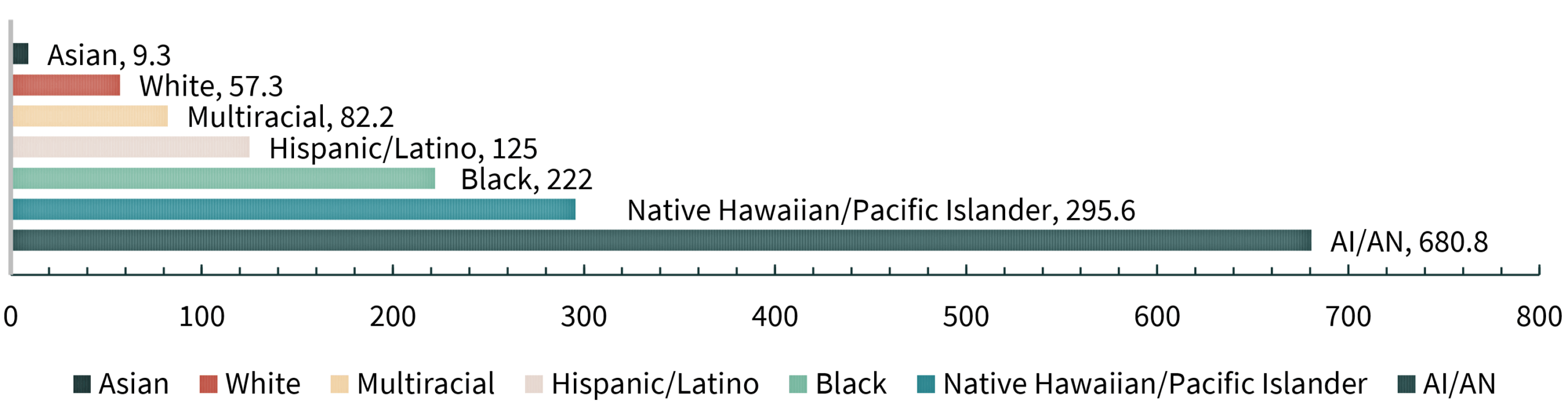
AI/AN people experience disproportionately higher rates of congenital syphilis compared to their counterparts (see Figure 3). In 2023, the rate of congenital syphilis was 105.8 per 100,000 live births for the total population and 680.8 per 100,000 live births for the AI/AN population (Centers for Disease Control and Prevention [CDC], 2024). Specifically, the AI/AN population had the highest rate of congenital syphilis in 2023 of all racial/ethnic groups in the United States, a rate 6.4 times that of the total population and 11.9 times that of their White counterparts (2024).

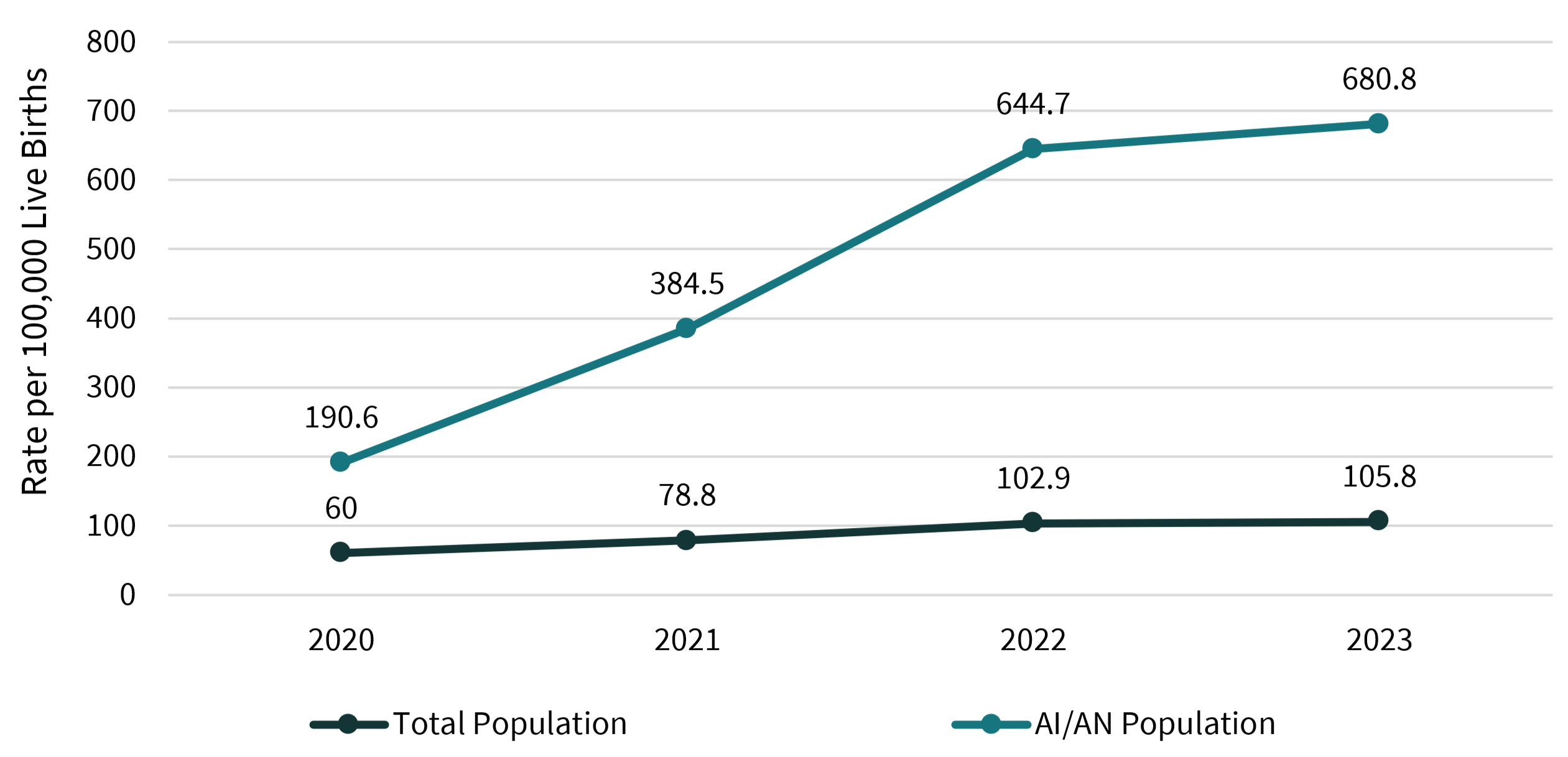
Congenital syphilis disparities have also worsened disproportionately for the AI/AN population compared to the total population (see Figure 4). Between 2020 to 2023, the rate of congenital syphilis per 100,000 live births increased by 76.3 percent for the total population, compared to an increase of 257.2 percent for the AI/AN population (CDC, 2021; CDC, 2022; CDC, 2023; CDC, 2024).

Figure 3. 2023 Congenital Syphilis (Rate per 100,000 Live Births) by Race/Ethnicity3

Figure 4. Congenital Syphilis (Rate per 100,000 Live Births), 2020-20234

Resources

These disparities highlight the need for improved access to syphilis prevention, testing, and treatment for AI/AN populations. Urban Indian Organizations (UIOs) play a crucial role in providing programs and healthcare to address syphilis disparities affecting urban AI/AN populations.

The National Council of Urban Indian Health (NCUIH) has developed an HIV and STI web page dedicated to providing relevant information and tools for UIOs serving urban AI/AN communities, including guides and infographics on sexually transmitted infection (STI) disparities and best practices, culturally-tailored educational videos on STIs, recordings of webinars and trainings such as Strengthening Syphilis Care in Indian Country, and more.

Additionally, NCUIH’s Knowledge Resource Center (KRC) is the first searchable resource center devoted to the dissemination of knowledge on Urban Indian health across the United States, and it features many resources on STIs and syphilis. Use the STI/STD tag to directly search for resources on STI research, prevention, best practices, and more in the KRC.

NCUIH has also developed a new Syphilis Rates Among American Indian and Alaska Native Communities infographic summarizing these AI/AN syphilis disparities which can be downloaded here.

Additional resources:

  1. Indian Country ECHO Syphilis Resource Hub
  2. CDC Syphilis Pocket Guide for Providers
  3. Medicaid Fact Sheet: Syphilis and Congenital Syphilis Resources
  4. CDC Syphilis Fact Sheet
  5. We R Native Sexual Health Resources
  6. IHS Syphilis Resources
  7. Reproductive Health National Training Center Syphilis Resource List
  8. I Want the Kit: STI Testing Resources
  9. IHS STI Toolkit
  10. CDC Syphilis Informational Resources by Audience
  11. SAMHSA Syphilis News and Resources
  12. Healthy People 2030: Female Syphilis Reduction
  13. Healthy People 2030: Congenital Syphilis Reduction
  14. Healthy People 2030: MSM Syphilis Reduction
References

Centers for Disease Control and Prevention. (2021). Sexually Transmitted Disease Surveillance 2020. https://www.cdc.gov/sti-statistics/media/pdfs/2024/07/2020-SR-4-10-2023.pdf.

Centers for Disease Control and Prevention. (2022). Sexually Transmitted Disease Surveillance 2021. https://www.cdc.gov/sti-statistics/media/pdfs/2024/07/2021-STD-Surveillance-Report-PDF_ARCHIVED-2-16-24.pdf.

Centers for Disease Control and Prevention. (2023). Sexually Transmitted Infections Surveillance 2022. https://www.cdc.gov/sti-statistics/media/pdfs/2024/11/2022-STI-Surveillance-Report-PDF.pdf.

Centers for Disease Control and Prevention. (2024). Sexually Transmitted Infections Surveillance 2023. https://www.cdc.gov/sti-statistics/media/pdfs/2025/09/2023_STI_Surveillance_Report_FINAL_508.pdf.

Centers for Disease Control and Prevention. (2025a, January 30). About Syphilis. https://www.cdc.gov/syphilis/about/index.html.

Centers for Disease Control and Prevention. (2025b, January 31). About Congenital Syphilis. https://www.cdc.gov/syphilis/about/about-congenital-syphilis.html.

1Data was sourced from the Sexually Transmitted Infections Surveillance 2023 report (Centers for Disease Control and Prevention, 2024). Rates for primary and secondary syphilis are presented as rates per 100,000 persons.

2Data was sourced from the Sexually Transmitted Infections Surveillance reports from 2020, 2021, 2022, and 2023 (CDC, 2021–2024). Rates for primary and secondary syphilis are presented as rates per 100,000 persons.

3Data was sourced from the Sexually Transmitted Infections Surveillance 2023 report (Centers for Disease Control and Prevention, 2024). Rates for congenital syphilis are presented as rates per 100,000 live births.

4Data was sourced from the Sexually Transmitted Infections Surveillance reports from 2020, 2021, 2022, and 2023 (CDC, 2021–2024). Rates for congenital syphilis are presented as rates per 100,000 live births.

image_pdfPDFimage_printPrint

Serving Native Community Across New York City: The Work of the New York Indian Council

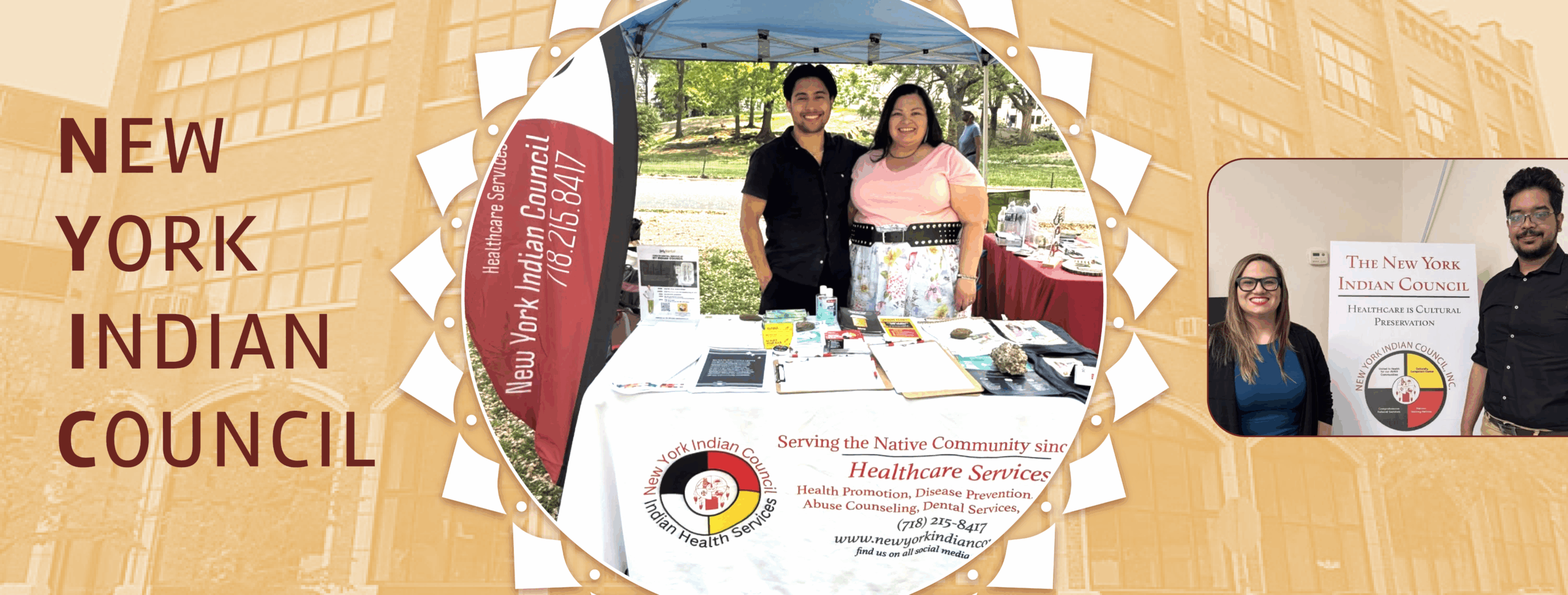
The New York Indian Council, Inc. (NYIC) is an Indian Health Service (IHS)-funded Urban Indian Organization (UIO) providing comprehensive, culturally grounded healthcare services to Native individuals and families throughout New York City. Serving community members across all five boroughs, NYIC ensures that Native people living in urban settings have access to coordinated care rooted in respect and cultural understanding.

Through health promotion and disease prevention programs, immunization clinics, behavioral health services, and dental referrals, NYIC works to address the full spectrum of community health needs. Their Wellness Case Managers provide one-on-one support to help individuals navigate insurance enrollment, schedule appointments, and connect with trusted providers.

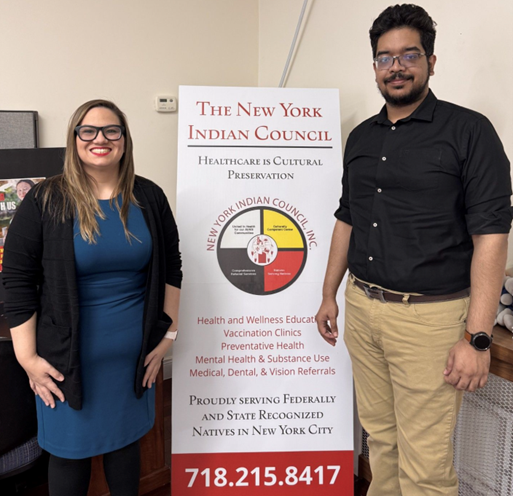
In February, NCUIH CEO, Francys Crevier (Algonquin), visited the NYIC to see firsthand how they are delivering culturally grounded health services to Native communities in New York City. The visit reinforced the strength of Urban Indian Organizations nationwide and NCUIH’s commitment to elevating and supporting their work.

As one of 41 IHS-funded Urban Indian Organizations nationwide, NYIC plays an essential role in fulfilling the federal government’s trust responsibility to provide healthcare to American Indian and Alaska Native people living off Tribal lands. Urban Indian Organizations like NYIC help bridge gaps in access for the more than 70% of Native people who reside in urban areas.

By combining culturally grounded care with practical navigation support, NYIC strengthens health access and stability for Native people across New York City.

About this Series

NCUIH is spotlighting Urban Indian Organizations to connect national policy priorities to lived experience in urban Native communities.

Interested in being featured? Urban Indian Organizations can submit information about their programs, services, recent milestones, and high-resolution photos to communications@ncuih.org for consideration in an upcoming highlight.

image_pdfPDFimage_printPrint