National Council of Urban Indian Health
712 H St NE
#5030
Washington, DC 20002-3627
Phone: 202.544.0344
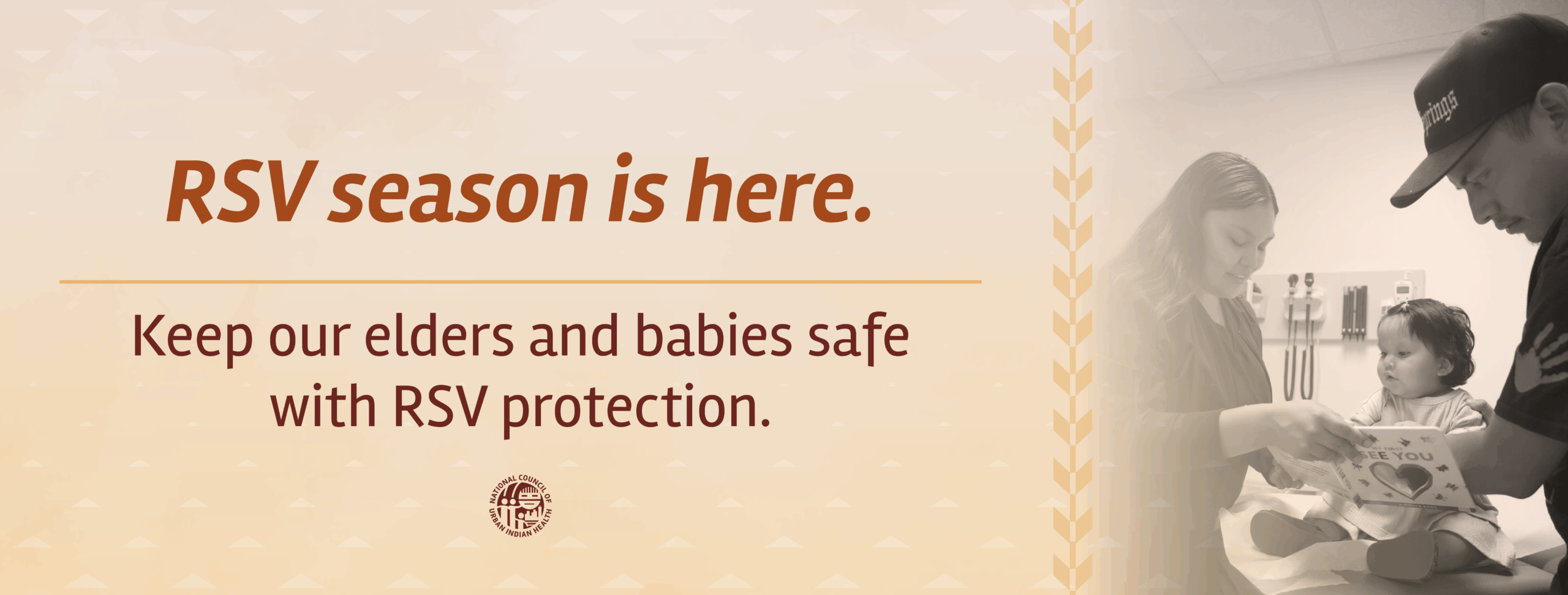
RSV is a highly contagious respiratory virus and can harm elders and babies. American Indian and Alaska Native children experience disproportionately higher rates of RSV-related hospitalization and ICU admission when compared to other U.S. infants.
NCUIH has created campaign materials including social media graphics, posters, and sample social media posts—that can be used to raise community awareness about RSV. Together, we can raise awareness about RSV prevention and highlight the power of community care.
Share and tag! We encourage you to share the toolkit on your channels using #NCUIH and tag us to help us amplify these important messages.
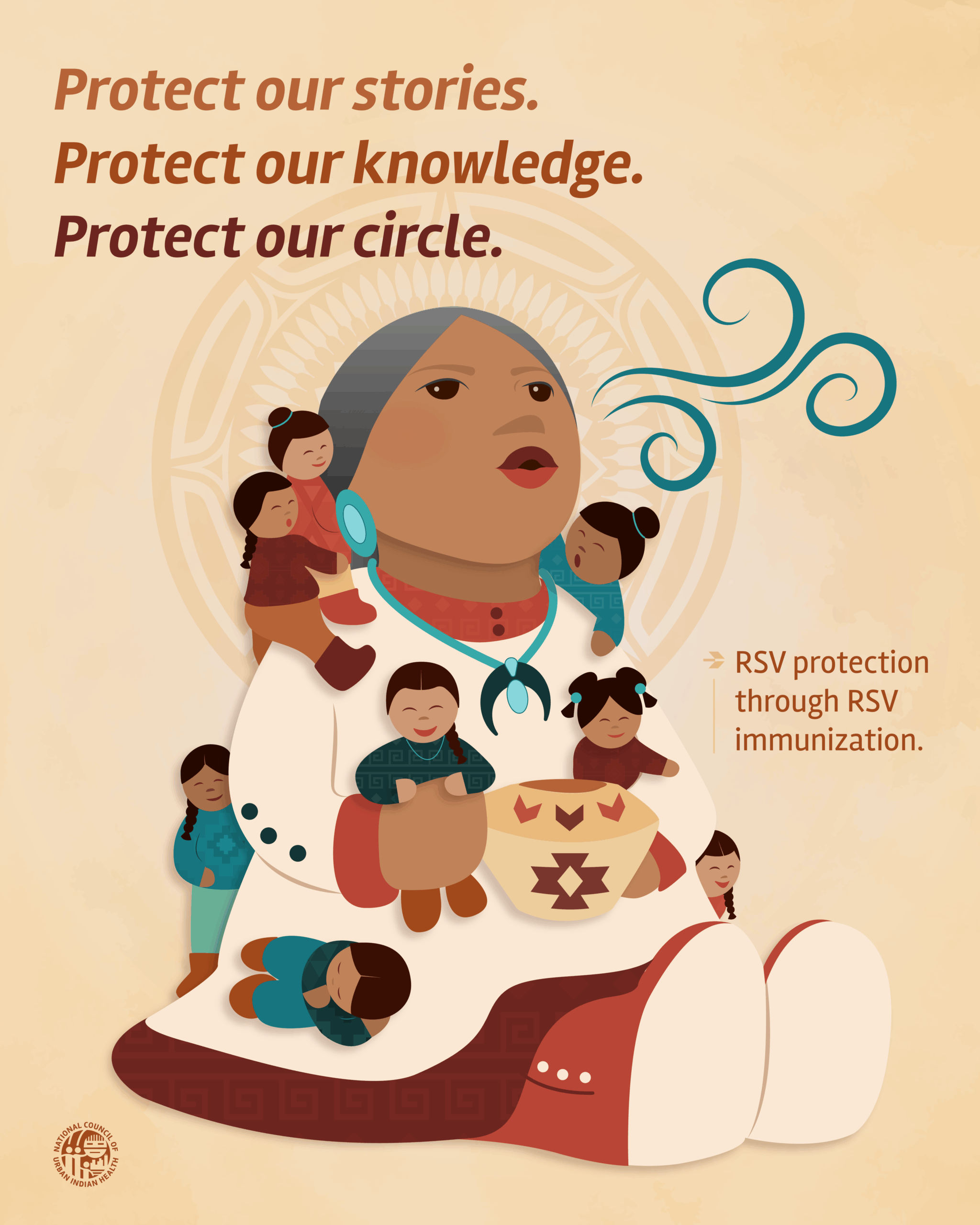
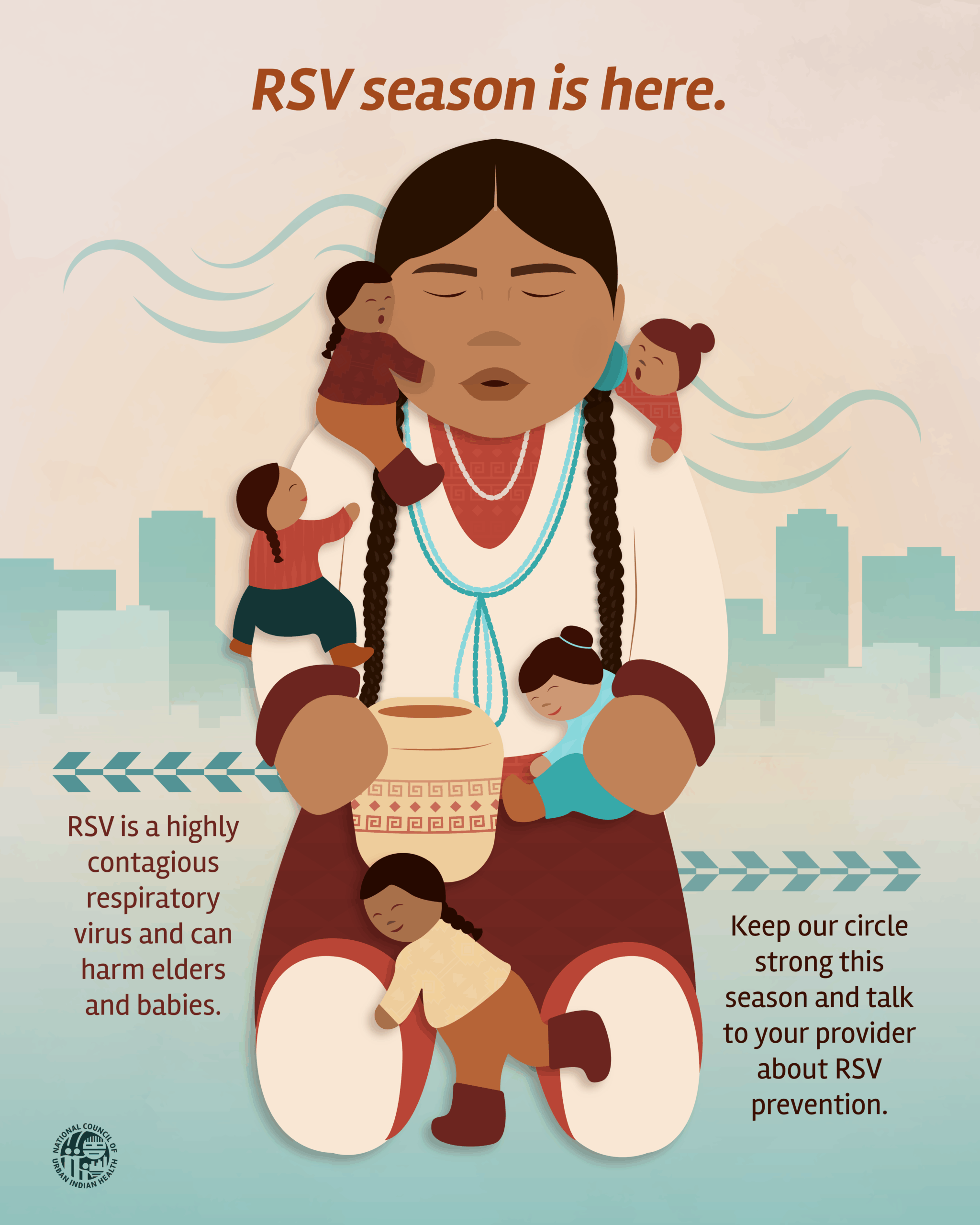
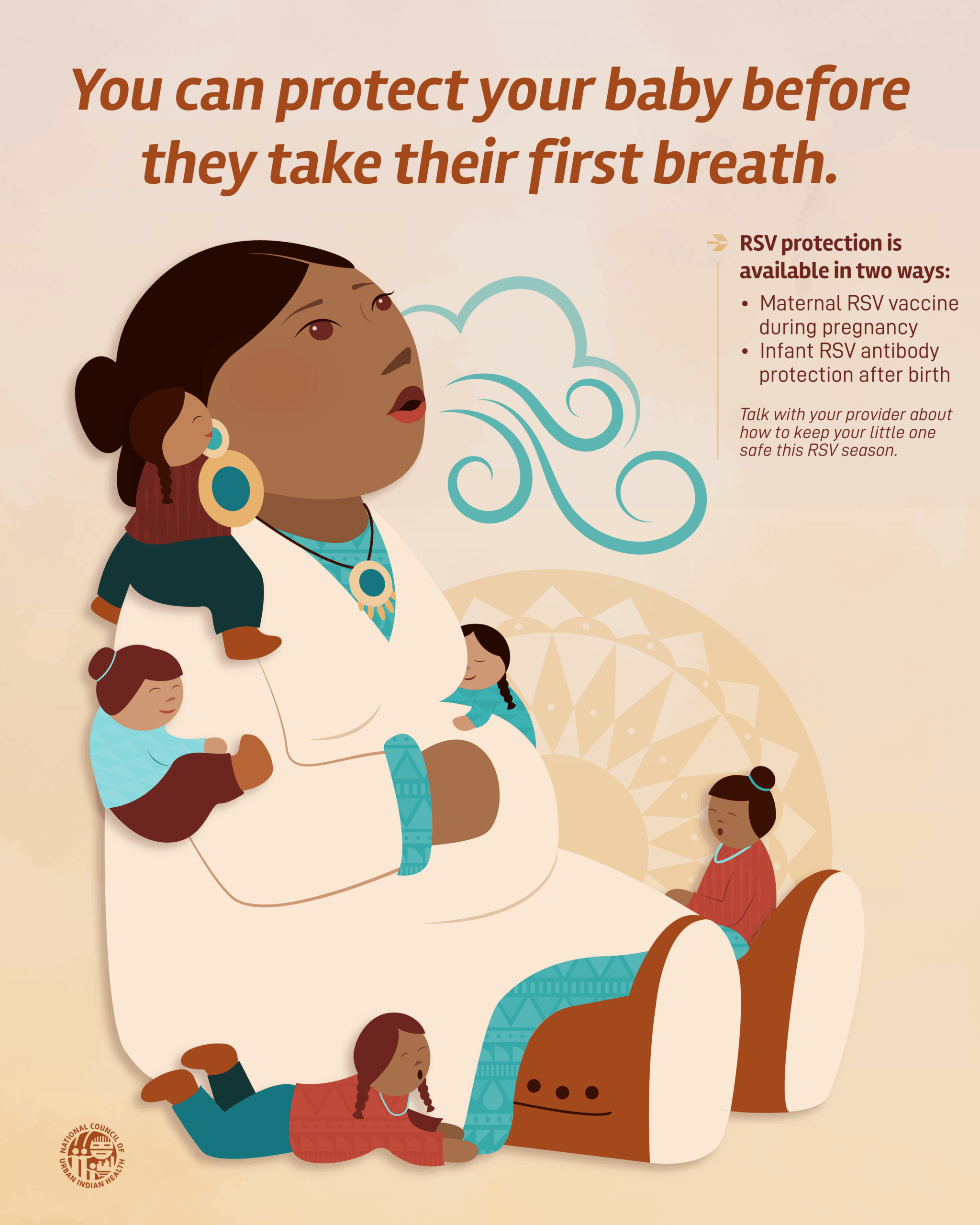
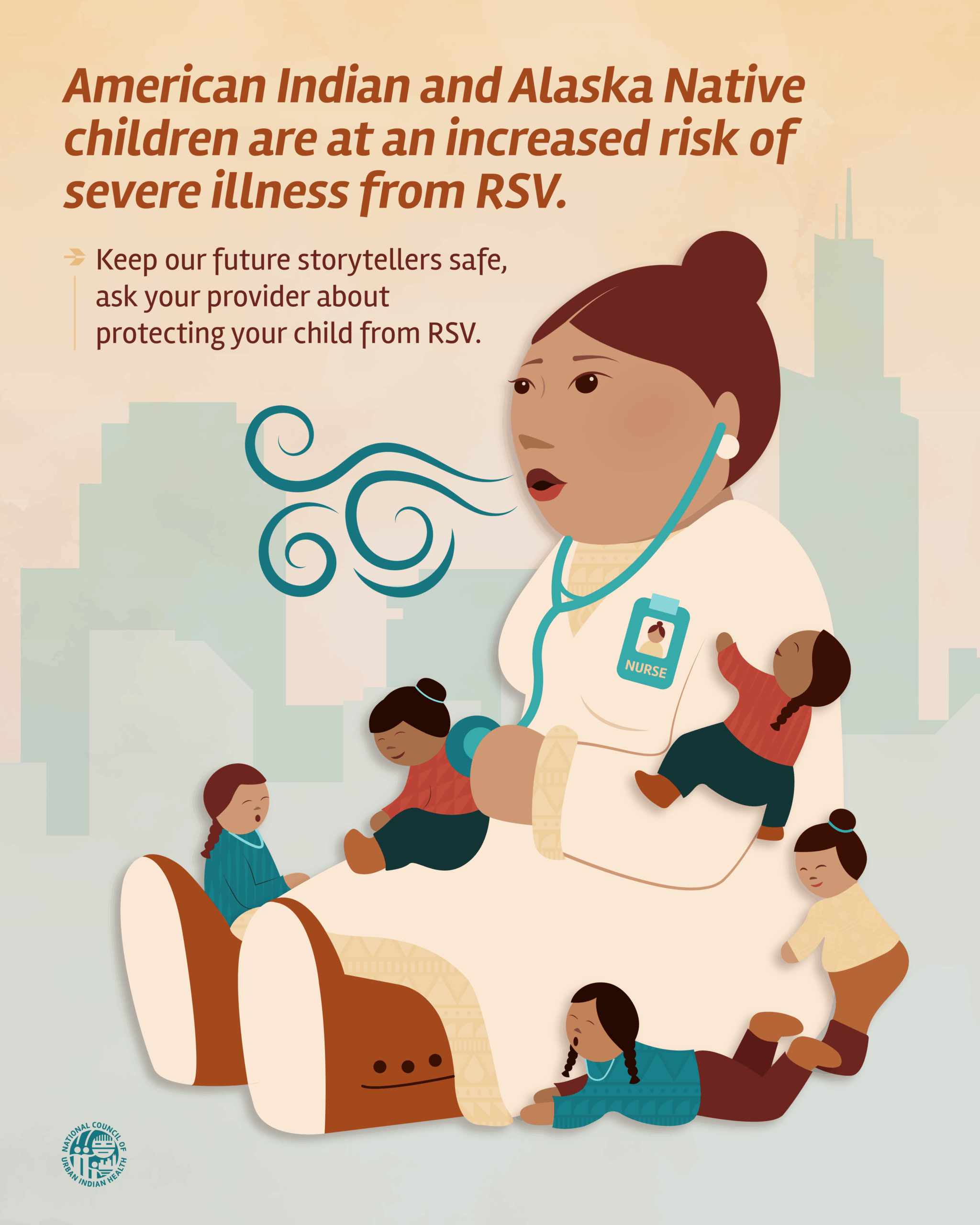
Storyteller Graphics
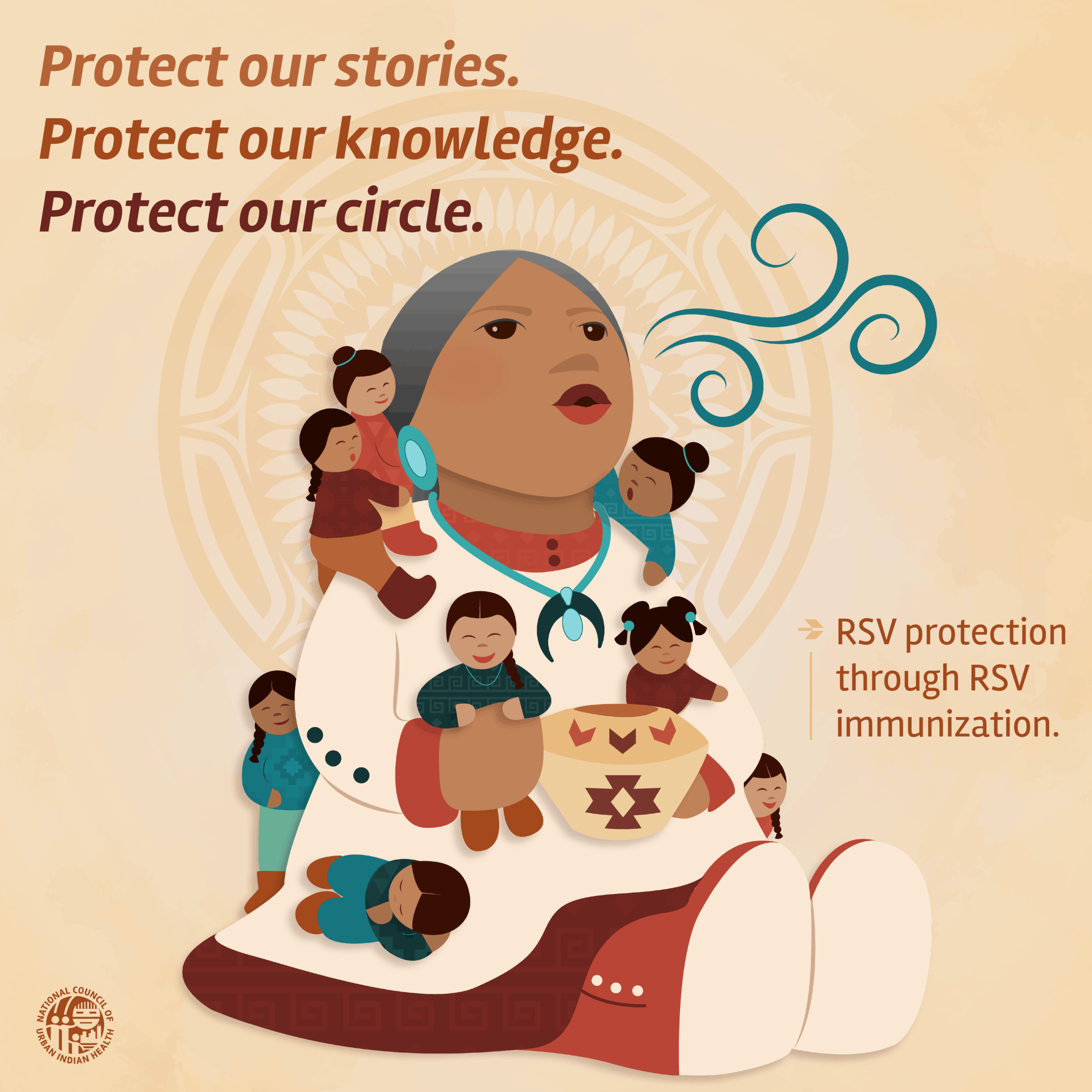
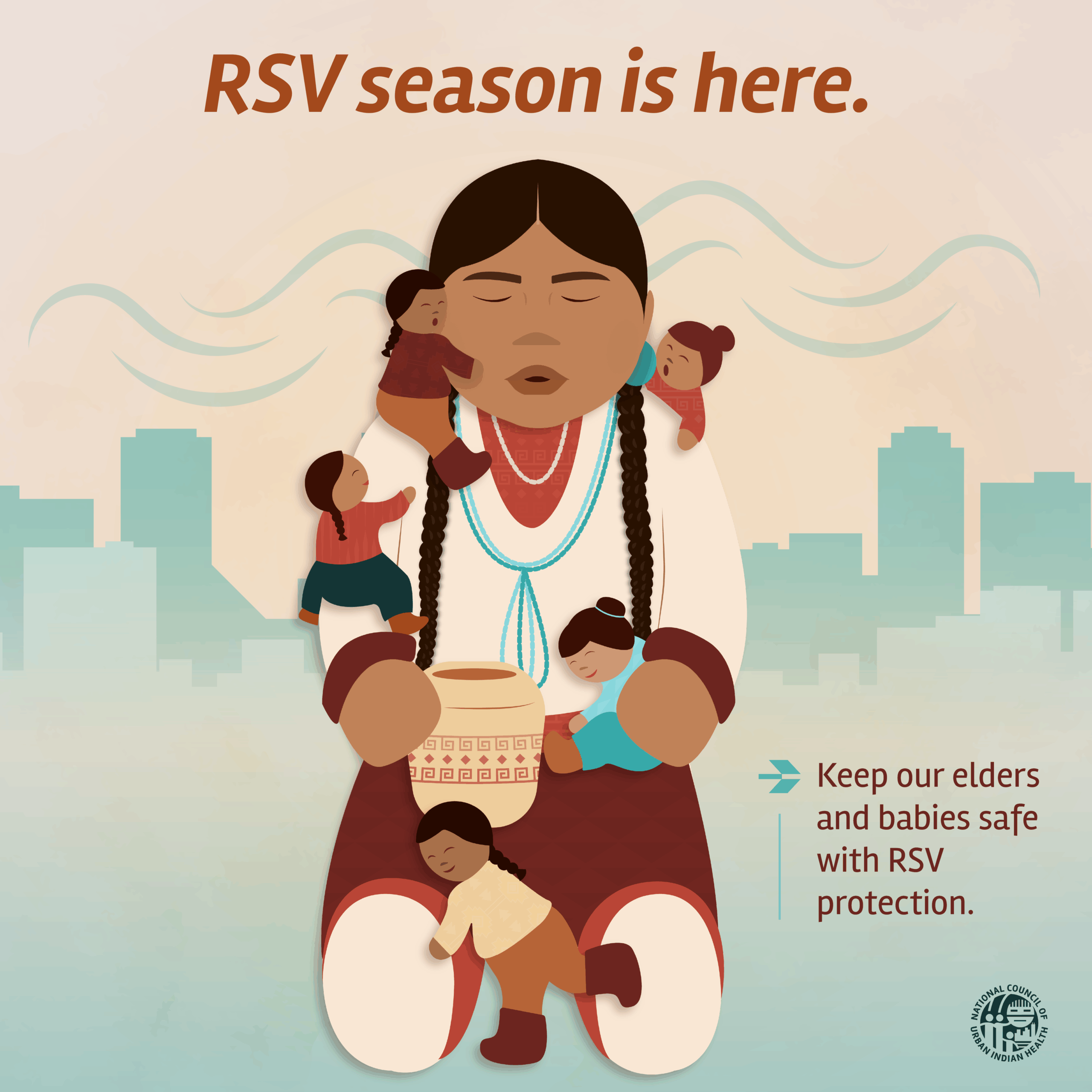
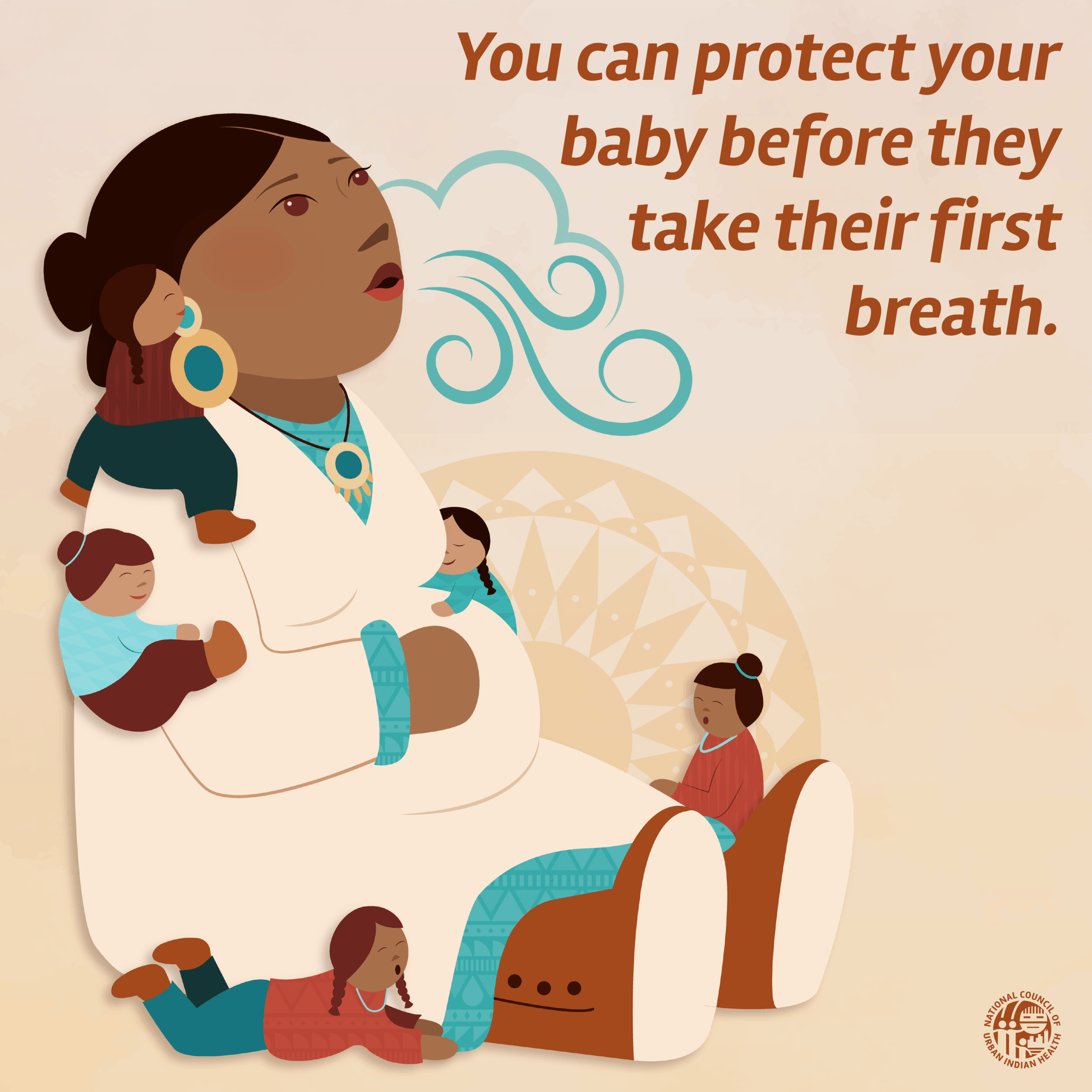
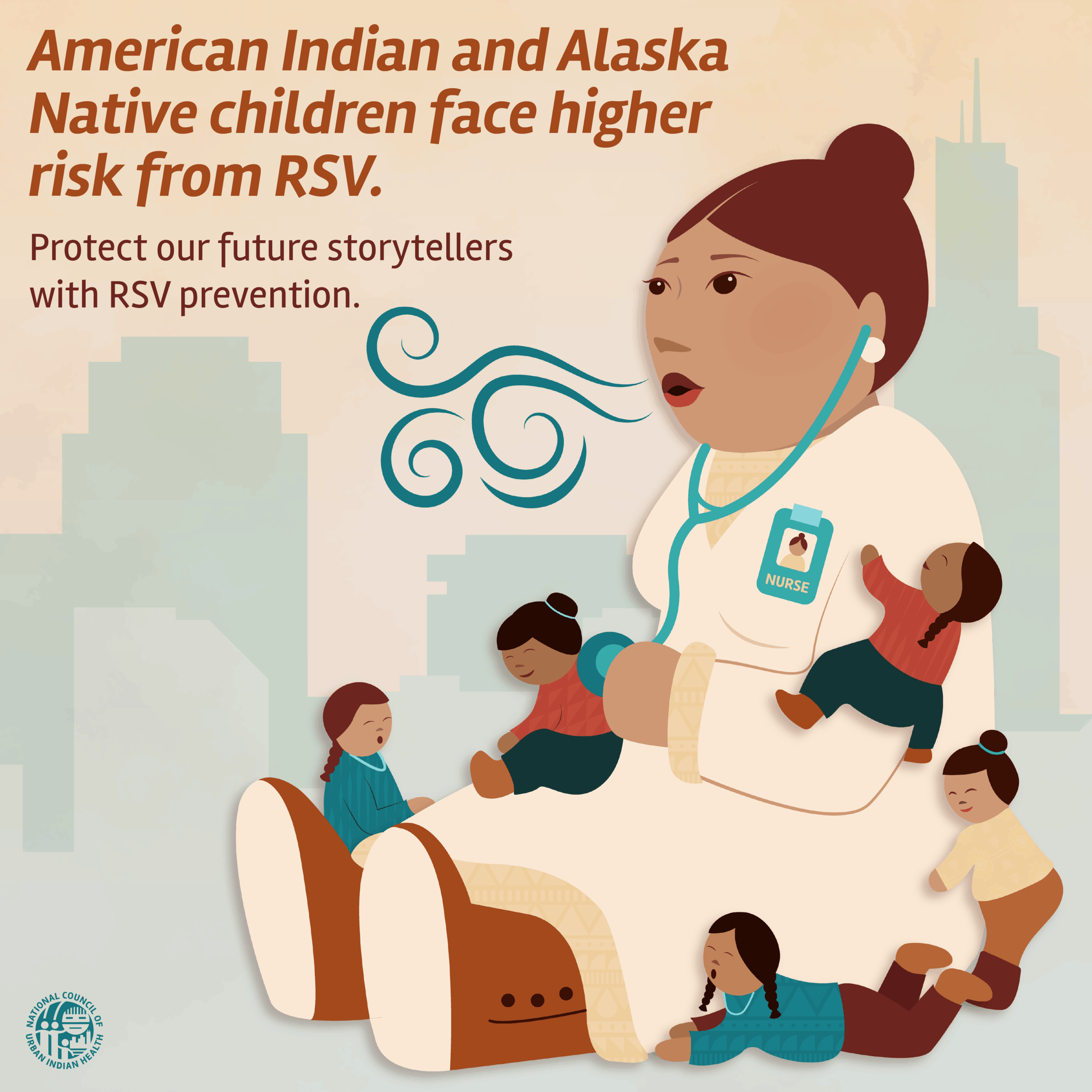
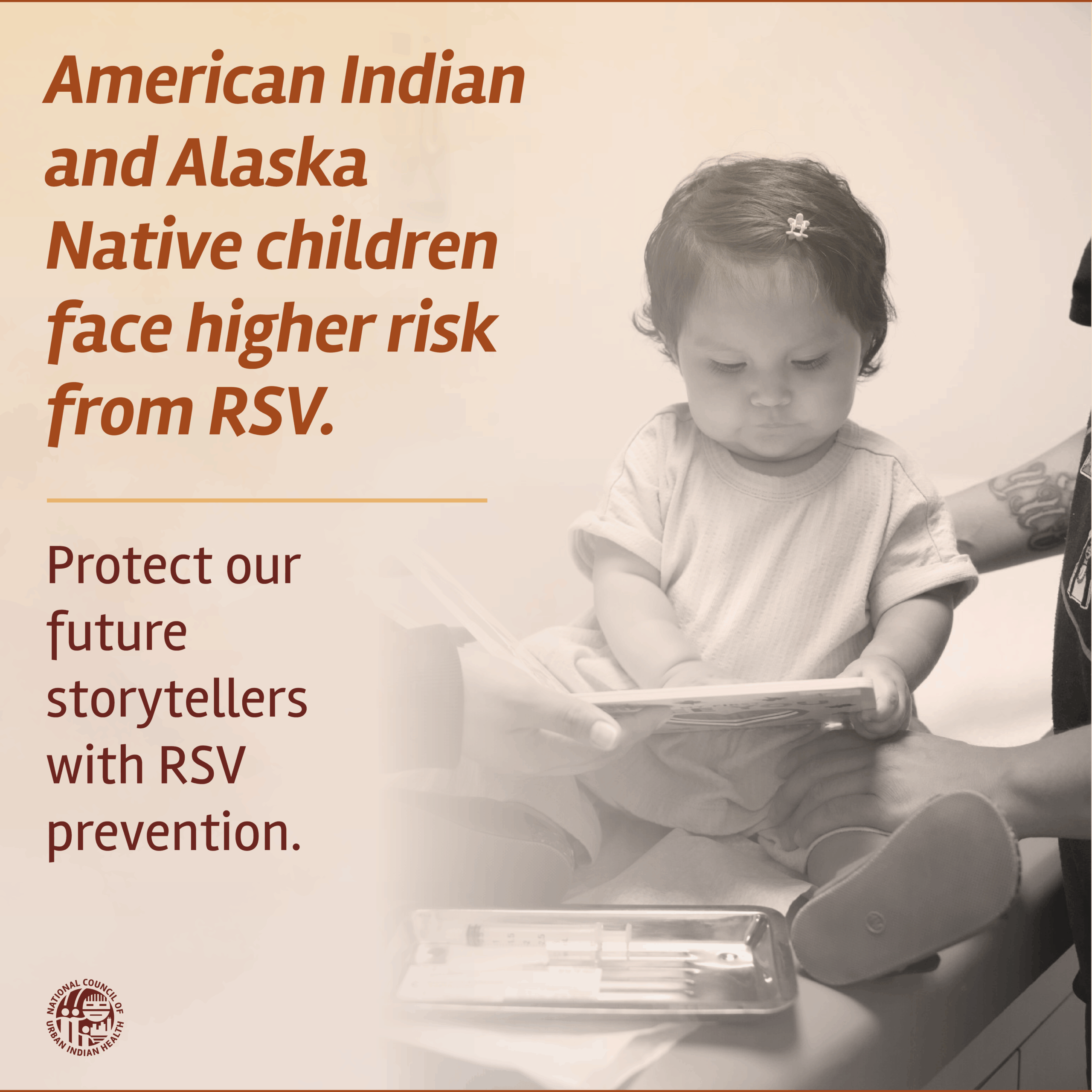
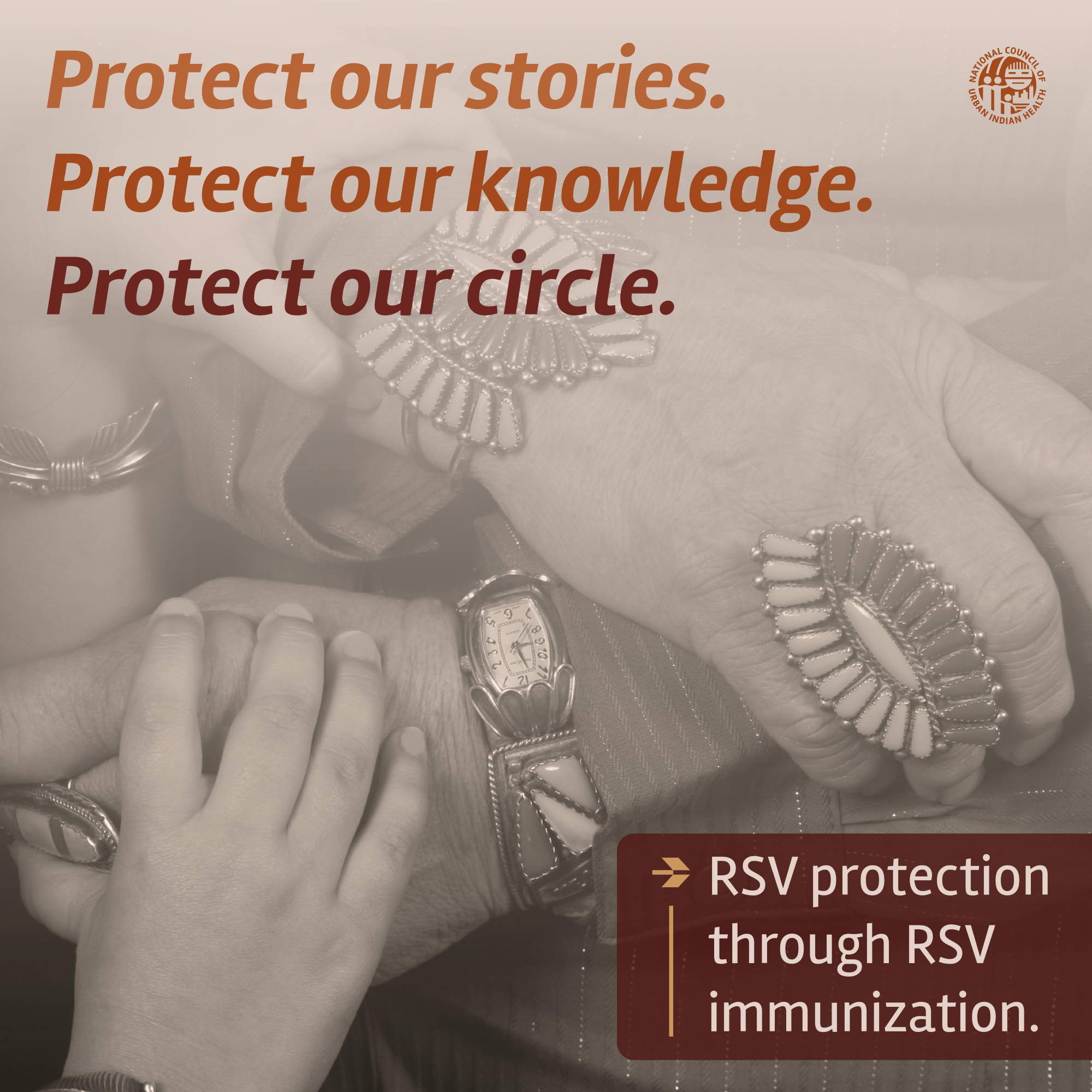
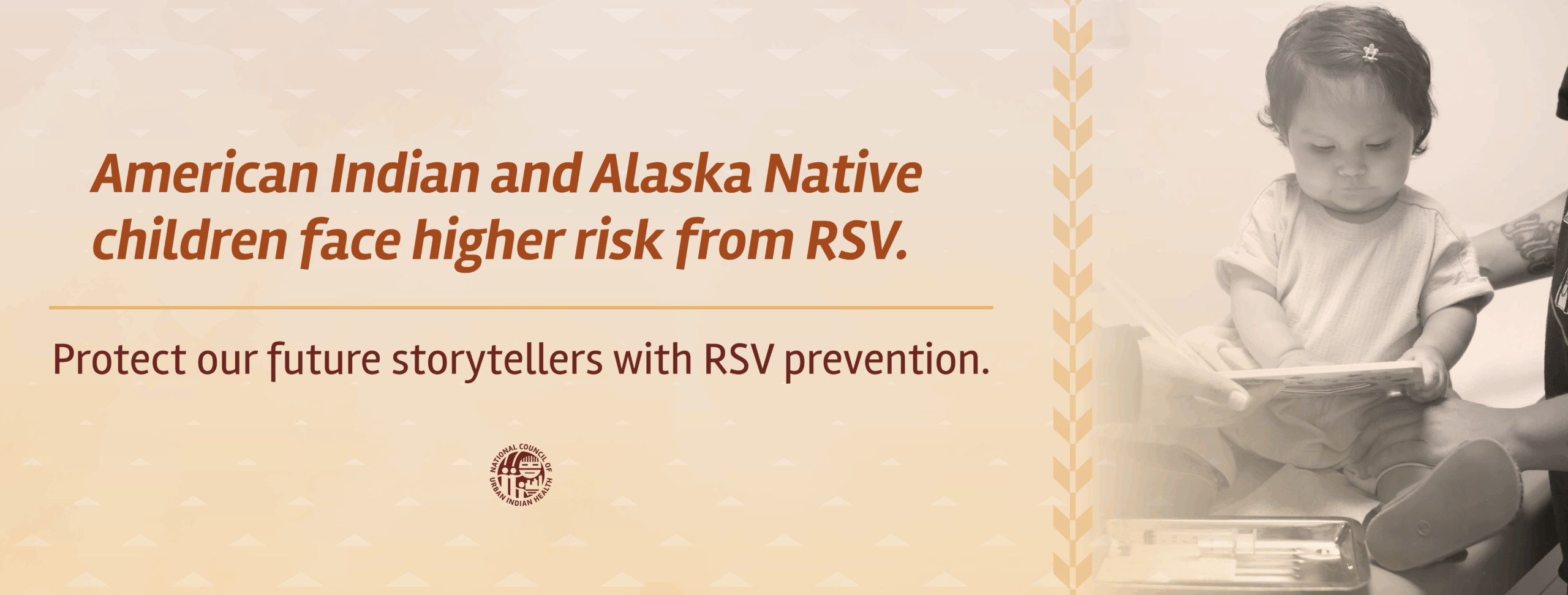
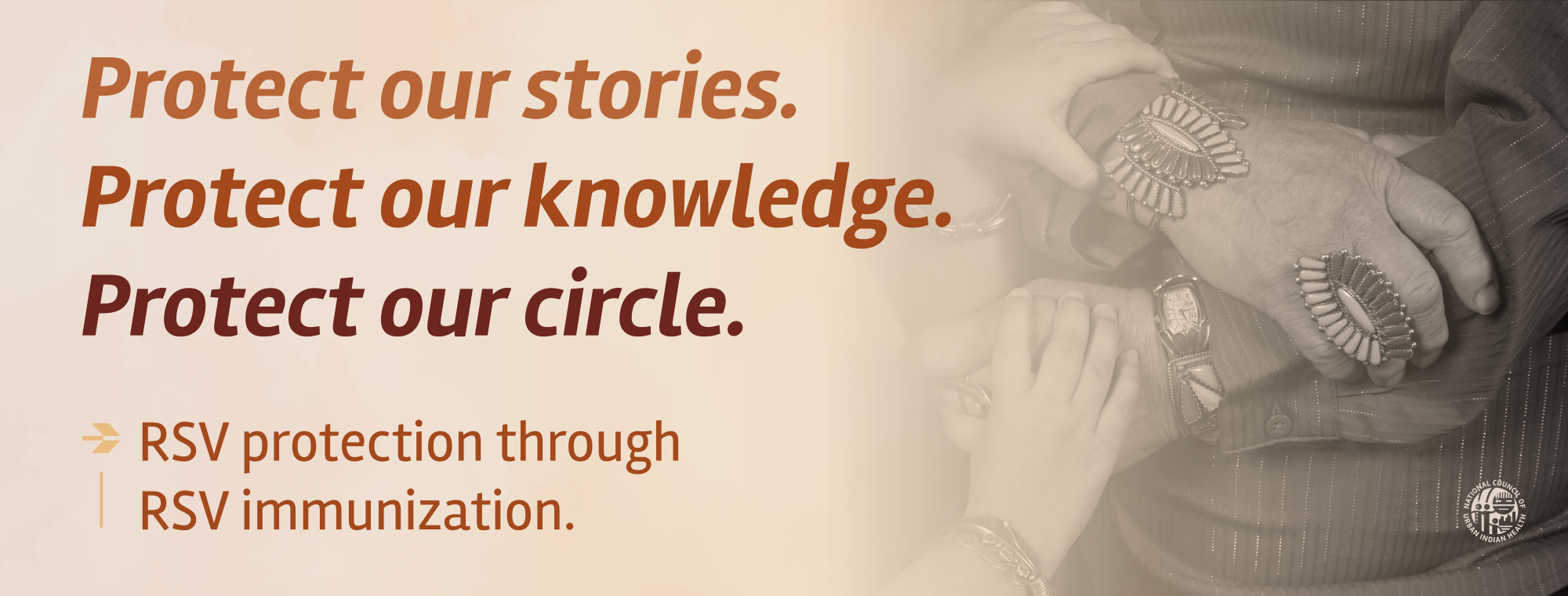
Photo Graphics
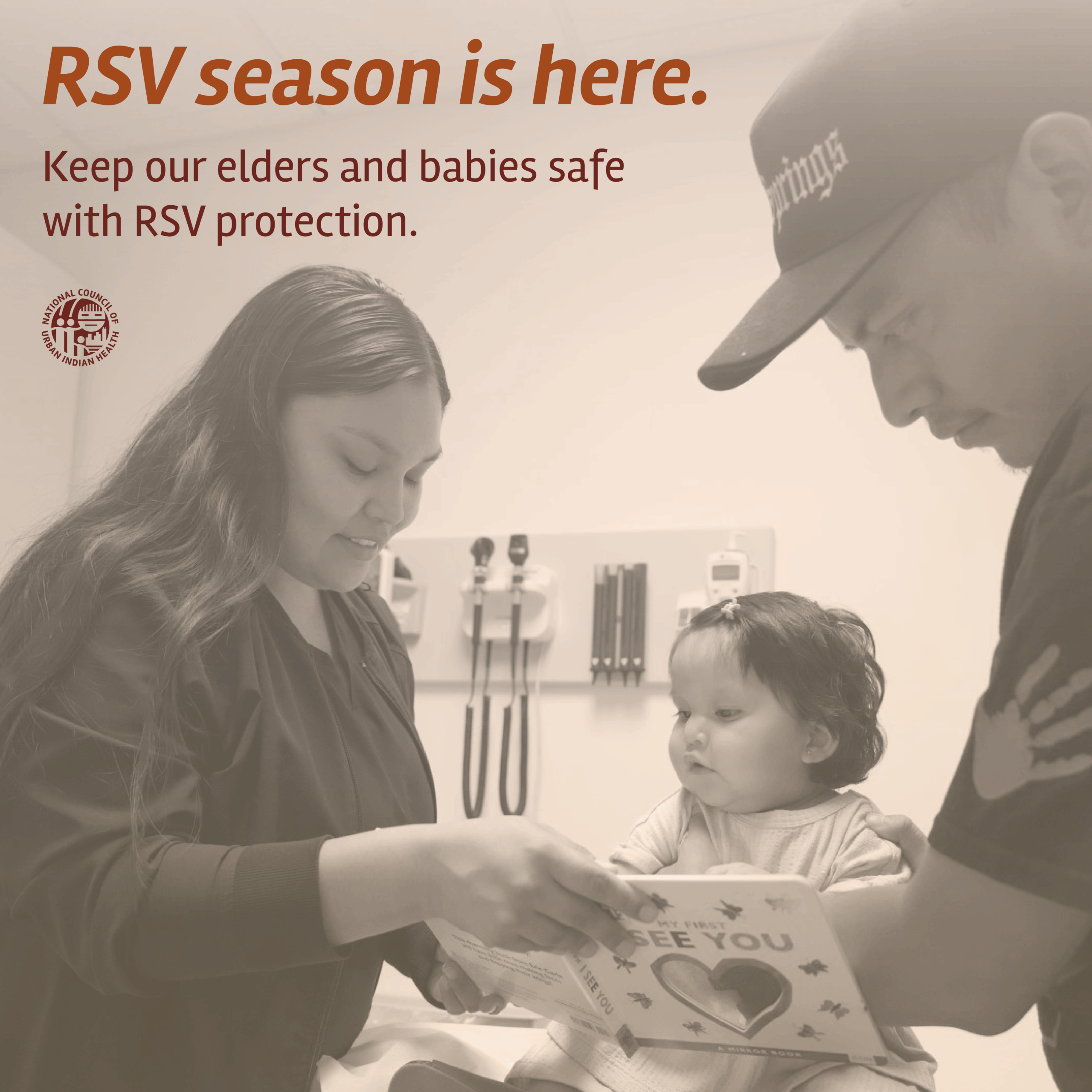
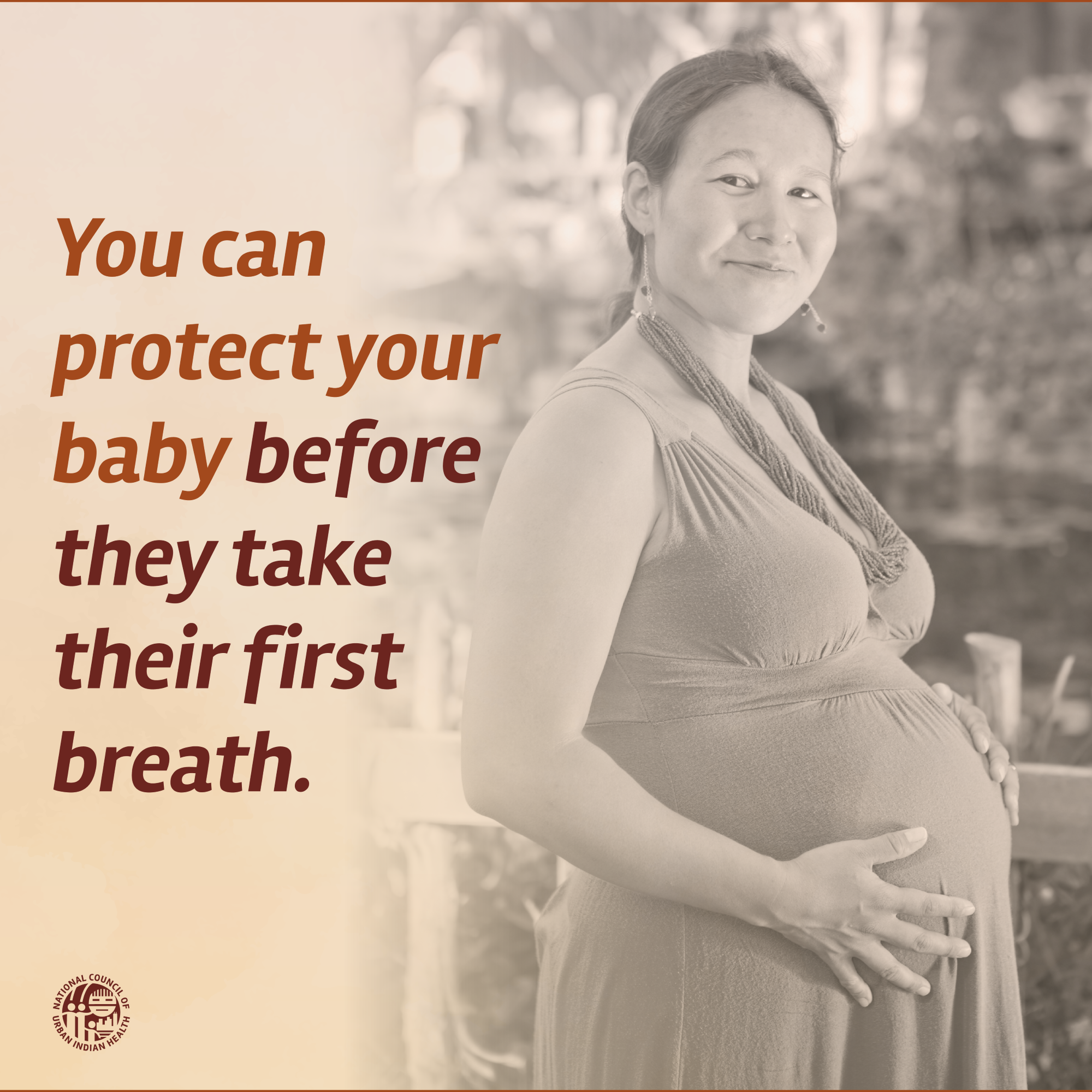
RSV disproportionately impacts American Indian Alaska Native (AI/AN) children, but there are ways we can help protect them. For AI/AN infants and children, @CDCgov recommends either maternal RSV vaccination (Abrysvo) or infant immunization with a long-acting RSV monoclonal antibody (Nirsevimab or Clesrovimab) to prevent severe RSV disease in infants < 8 months. Nirsevimab is also recommended for AI/AN children (ages 8-19 months) during their 2nd RSV season.
Protect our youngest members this RSV season. Talk to your child’s provider today about how to keep them safe from RSV. #NHPN #NativeHealth
RSV is a contagious respiratory virus that can be dangerous for babies and young children. It is the leading cause of hospitalization in infants, with American Indian and Alaska Native children experiencing disproportionately higher rates of RSV-related hospitalization and ICU admission rates when compared to other U.S. infants.
RSV immunization can protect our future storytellers and knowledge keepers. Talk to your provider today about RSV prevention. 🛡️#NHPN #NativeHealth
Infants can receive protection from RSV either through maternal antibodies or after birth with preventative antibodies.
Either a single dose of the maternal RSV vaccine during 32-36 weeks of pregnancy (between September through January), or a single dose of RSV monoclonal antibody for babies born during or before their first RSV season (October through March), can shield them during their most vulnerable months. 🩺🧑🏽🍼 #NHPN #NativeHealth
RSV season is here, and it spreads quickly and can be dangerous for our babies and elders. There are ways to protect them! Immunization recommendations for elders and babies can differ. Let’s keep our circle strong and ask your provider about how to prevent RSV this season. 💪💉#NHPN #NativeHealth #ProtectOurCommunity
RSV is a highly contagious respiratory virus and can harm elders and babies. American Indian and Alaska Native children experience disproportionately higher rates of RSV-related hospitalization and ICU admission rates when compared to other U.S. infants. While RSV disproportionately impacts American Indian Alaska Native (AI/AN) children, there are ways we can help protect our communities. Talk to your provider today about RSV prevention.
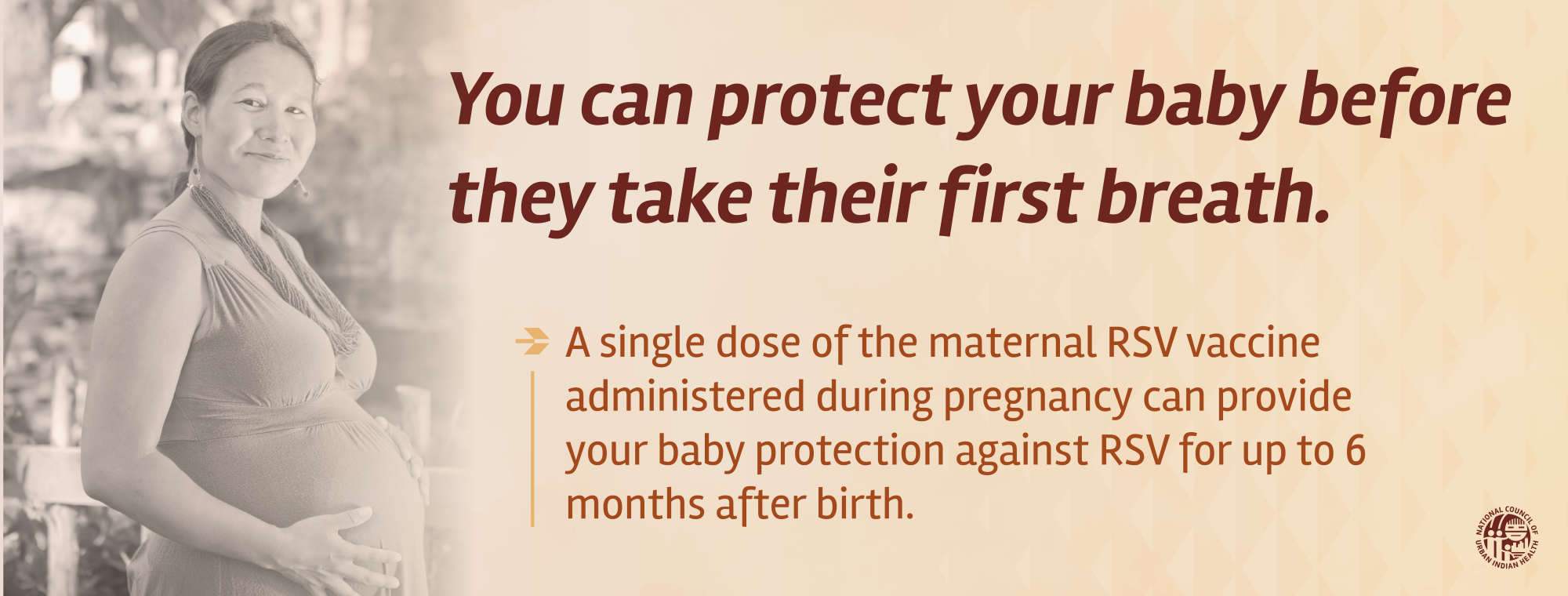
Maternal RSV Vaccine: Infants can receive protection from RSV within the womb through maternal antibodies. The Centers for Disease Control and Prevention recommends that a single dose of the maternal RSV vaccine is given during 32 to 36 weeks of pregnancy (between September through January).
OR
Infant and Young Child Protection: The Centers for Disease Control and Prevention recommend a single dose of RSV monoclonal antibody for babies born during or before their first RSV season (October through March), to prevent severe RSV disease in infants under 8 months. An additional dose is recommended for AI/AN children under 19 months during their second RSV season.
Storyteller Graphics
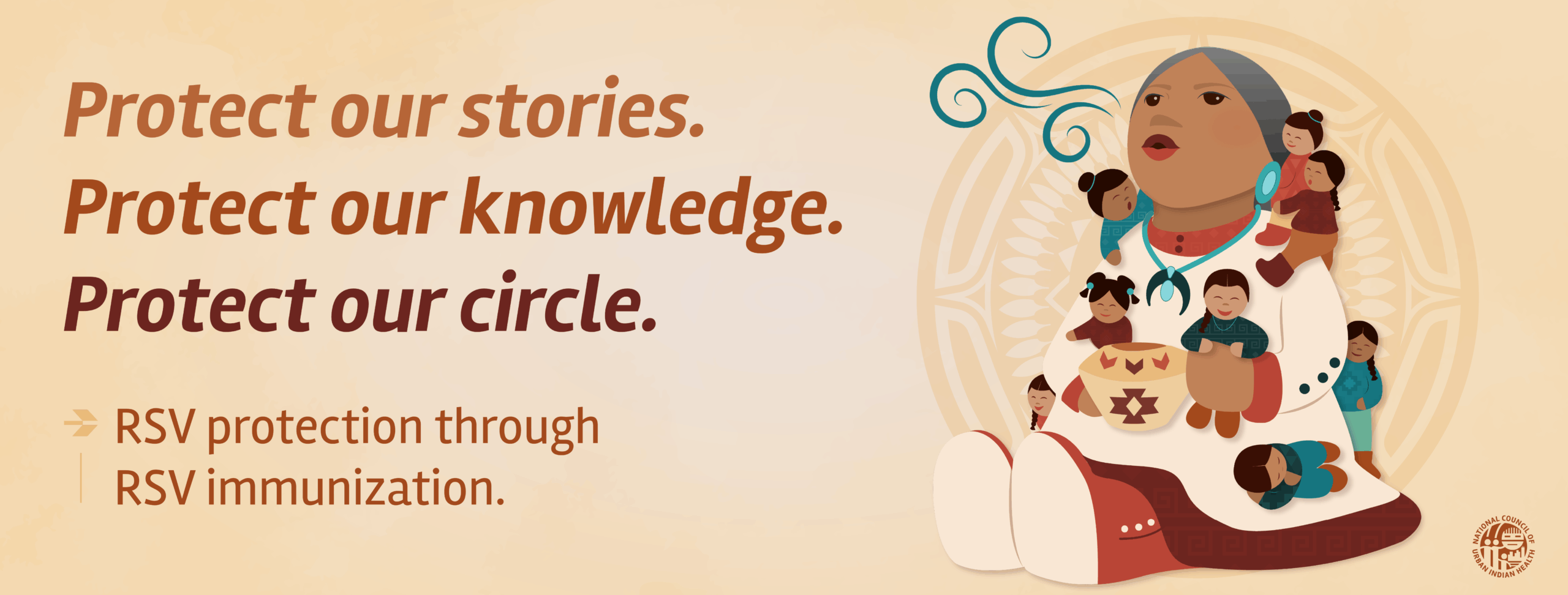
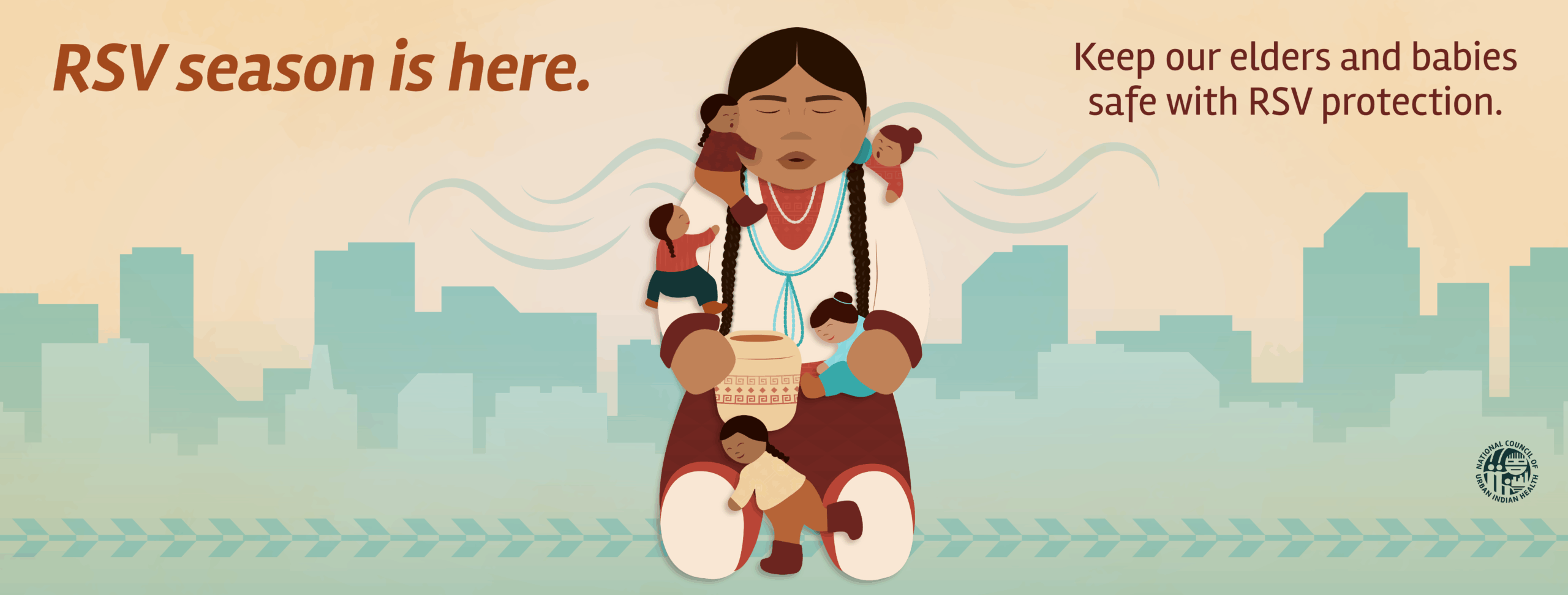
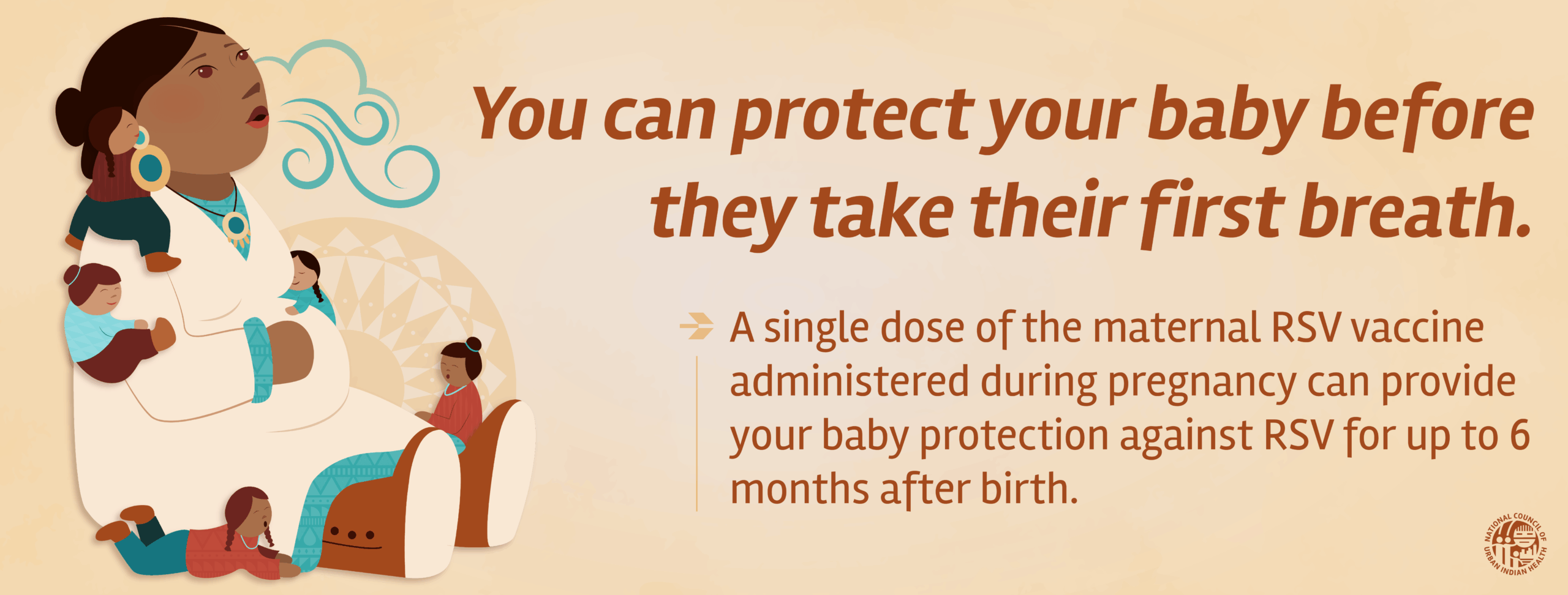
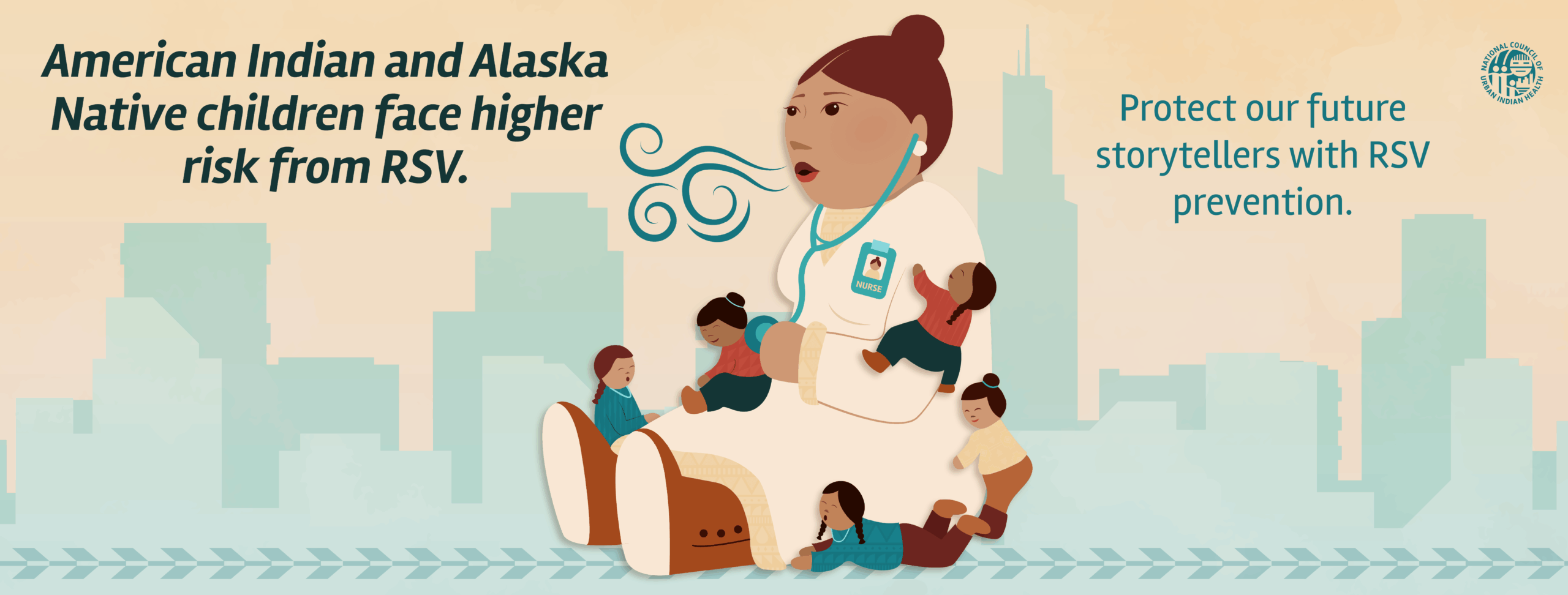
Photo Graphics
What is RSV (Respiratory Syncytial Virus)?
Respiratory Syncytial Virus (RSV) is a common virus that infects the nose, throat, and lungs. It spreads easily through coughs, sneezes, and touching contaminated surfaces. RSV spreads in the fall and winter along with other respiratory viruses and usually peaks in December and January. Most people experience mild, cold-like symptoms, but RSV can be serious for infants, young children, older adults, and those with weakened immune systems. American Indian and Alaska Native children experience a high burden of RSV and face higher risks. They are 4-10 times more likely to get severe RSV, compared to other communities.
What are the risks of RSV?
RSV is the leading cause of infant hospitalization in the U.S. Each year in the United States, an estimated 58,000–80,000 children younger than 5 years are hospitalized due to RSV. American Indian and Alaska Native children experience disproportionately higher rates of RSV-related hospitalization and ICU admission when compared to other U.S. infants. RSV can cause severe illness such as:
How to prevent severe RSV?
While there is no specific treatment for RSV beyond management of illness with supportive care until the virus clears on its own, there are two immunization options available to prevent severe RSV in infants and young children. A maternal RSV vaccine given to the mother during pregnancy or an RSV antibody given to your baby. For high-risk populations such as American Indian and Alaska Native children, the following immunizations can help prevent severe RSV:
Maternal RSV vaccine given during pregnancy:
RSV monoclonal antibody injection given to the baby:
*RSV season can be extended in some locations, including Alaska, where RSV has unique circulation patterns. These jurisdictions may adopt locally tailored recommendations for immunizations.
To learn more about RSV and immunizations available to protect both adults and children, visit the Centers for Disease Control and Prevention.
These storyteller illustrations draw inspiration from Pueblo clay sculptures with roots that extend deep into generations of tradition. The modern storyteller figurine was first created in 1964 by Helen Cordero of Cochiti Pueblo, who gave visual life to the oral practice of passing down lessons, values, history, and ways of life. Today, storyteller figurines remain among the most cherished forms of clay art, with artists shaping their storytellers to reflect diverse traditions and beliefs. The open mouth of each figurine represents the act of sharing stories with the children gathered around it. This campaign continues that legacy, raising awareness about RSV to protect our most vulnerable, including babies and young children, and safeguarding the next generation of storytellers and knowledge keepers.
National Council of Urban Indian Health
712 H St NE
#5030
Washington, DC 20002-3627
Phone: 202.544.0344