From Partnership to Practice: Lessons in Native Maternal Health from Bakersfield American Indian Health Project
Authors: Nahla Holland and Alyssa Smith-Longee
Introduction
Current rates of pregnancy-related deaths in the United States emphasize gaps in care and support for different racial/ethnic groups. Non-Hispanic American Indian and Alaska Native (AI/AN) people experience deaths during pregnancy/up to one year postpartum at the highest rate compared to other groups, with a rate four times higher than non-Hispanic White people.1 However, even one death is too many; actionable, culturally relevant prevention efforts need to be a focus to ensure the wellness of AI/AN relatives.
The National Council of Urban Indian Health (NCUIH), in partnership with the Centers for Disease Control and Prevention (CDC) and the CDC Foundation (CDCF), supports Urban Indian Organizations (UIOs) in preventing pregnancy-related deaths in urban AI/AN communities. NCUIH also works to support connections of UIOs with local Maternal Mortality Review Committees (MMRCs) to help ensure that the stories of those who have passed, or transitioned, are treated with respect and that future prevention recommendations are culturally relevant. MMRCs are multidisciplinary groups that may include clinical and non-clinical committee members, and that convene at the state or local level to comprehensively review deaths that occur during or within 1 year of the end of pregnancy.2 AI/AN people living in urban areas may face distinct maternal health challenges. UIOs report that pregnancy and postpartum concerns affect outcomes before, during, and after pregnancy and reflect both clinical conditions and broader barriers to safety, stability, and care. These concerns include:
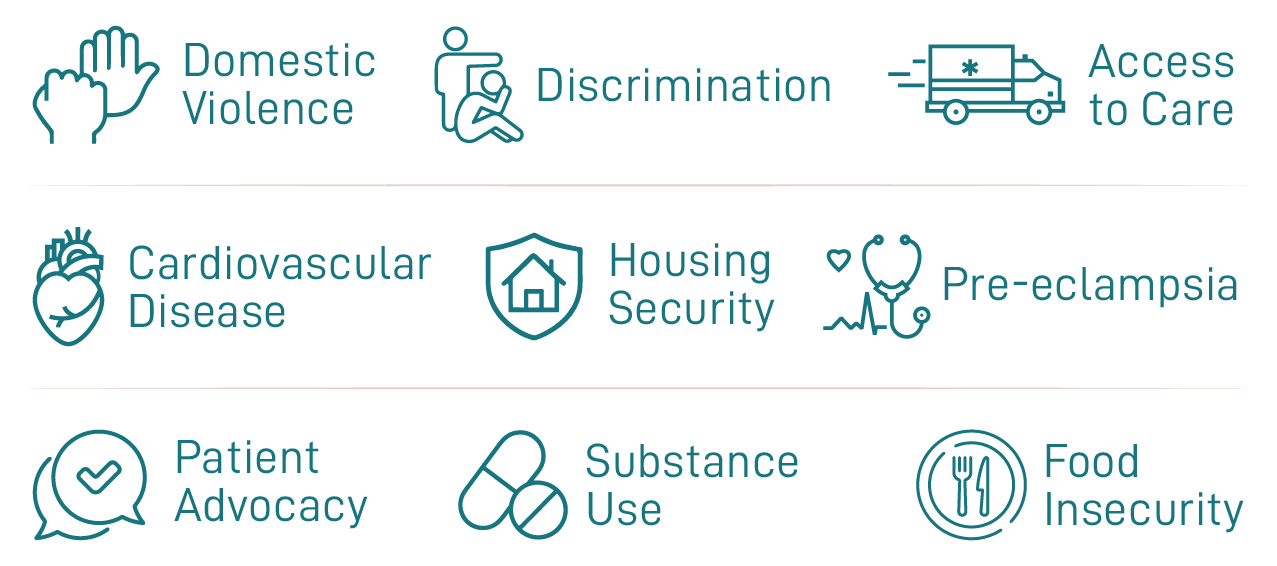
Pregnancy and postpartum health concerns identified by UIOs (2023)
These concerns make it clear that meaningful action is needed to support the health and well-being of urban AI/AN people during pregnancy and postpartum. UIOs play a critical role in identifying and responding to these needs within their communities. The following case study illustrates how one UIO is working to address these concerns and put these priorities into practice.
Case Study
As an example of the impacts that NCUIH has accomplished in working with UIOs to improve maternal health challenges in urban AI/AN communities, we would like to share a case study of the Bakersfield American Indian Health Project (BAIHP). BAIHP is an outreach and referral UIO located in Bakersfield, California, serving the AI/AN and larger community in Kern County. BAIHP embraces culturally community-driven models of wellness for its patients.
In 2025, BAIHP and NCUIH partnered under NCUIH’s CDCF MMRC grant to build capacity through NCUIH’s assistance for addressing maternal health concerns. One goal was to build a relationship by connecting the California urban AI/AN community and the local California MMRC, the CA Central Valley MMRC. BAIHP and NCUIH worked collaboratively to strengthen the MMRCs knowledge of UIOs and urban AI/AN communities through conversations with the CA Central Valley MMRC. With the support of the California Central Valley MMRC, two BAIHP staff members were onboarded to the committee to provide active input on AI/AN stories and values during the review process.
Additionally, with the dedicated funding for supporting pregnancy and postpartum health, BAIHP hired a part-time OB/GYN. The new OB/GYN supported RNs and FNPs at both BAIHP sites as they built out their perinatal and pediatrics programming. The BAIHP team developed obstetric policies and procedures and partnered with local Tribes, hospitals, and other health initiatives.
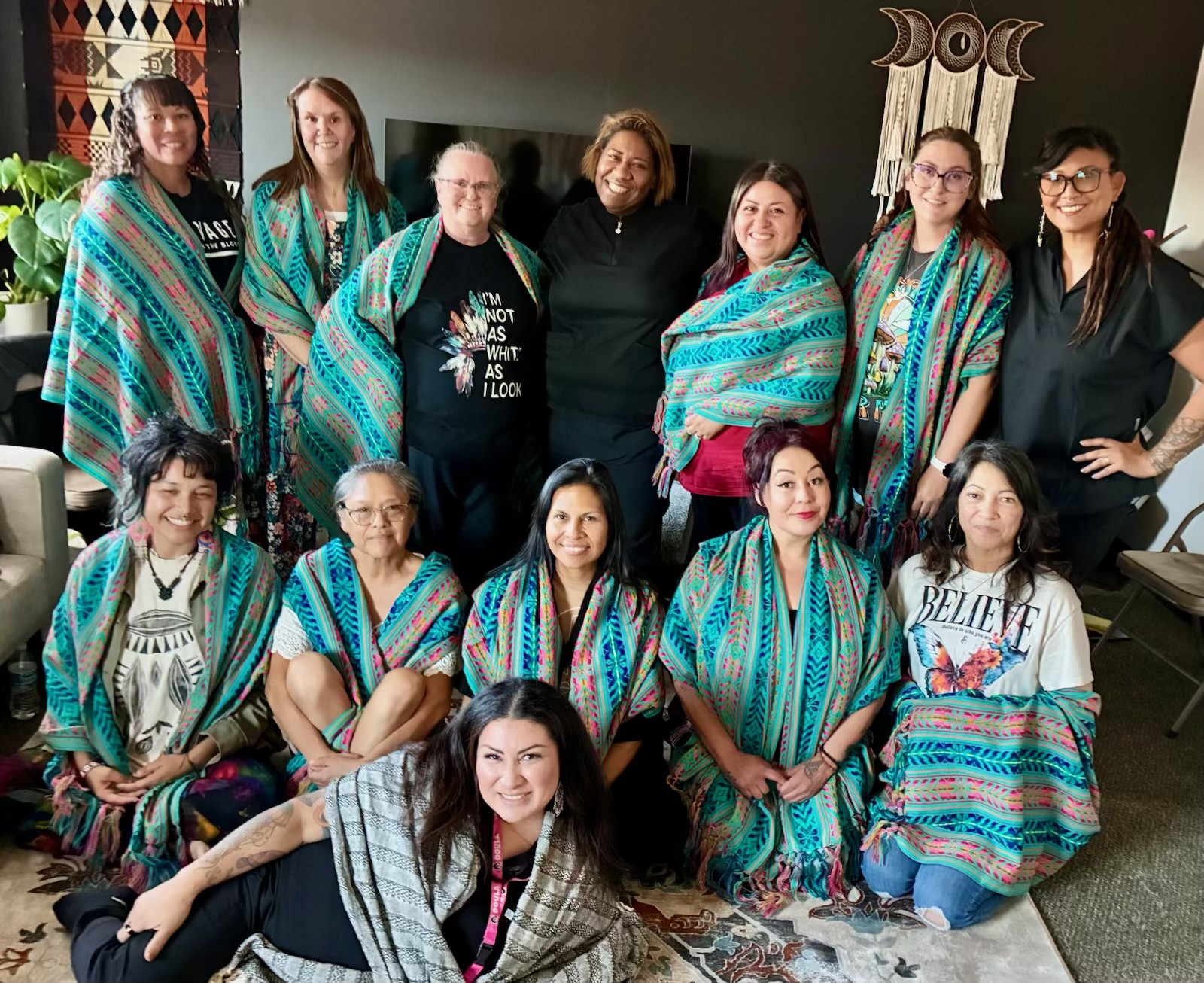
Indigenous Doula Scholarship Program 2025/2026 Graduates Trained by Three Moons Doula Collective. (Photo Credit: BAIHP)
BAIHP and NCUIH attended in-person and virtual national convenings on AI/AN pregnancy and postpartum health. During these discussions, BAIHP staff developed the idea to start an Indigenous doula scholarship program and a community doula plan. Indigenous doulas are a culturally rooted protective factor for our community, guiding our relatives through pregnancy and the post-partum period. This doula program was designed for Indigenous people to become trained and certified as a doula at no cost to them and provide care right in their communities. After certification, all the doulas who graduated provided care to BAIHP patients and to the larger community for one year. In April 2026, BAIHP graduated ten doulas from their program. This unique scholarship opportunity trained more Indigenous people to become doulas and allowed them direct access to their community to provide indigenous-centered birthing practices.
In August 2025, during their Bright Futures, Big Careers back-to-school event, BAIHP staff set up a maternity corner full of resources and professionals for expecting and recent parents, staffed by OB/GYNs, RNs, and a local doula. Over 500 attendees attended the event, where they could ask questions of care providers, receive perinatal supplies and resources, and learn about other trusted local specialty care providers in their community.
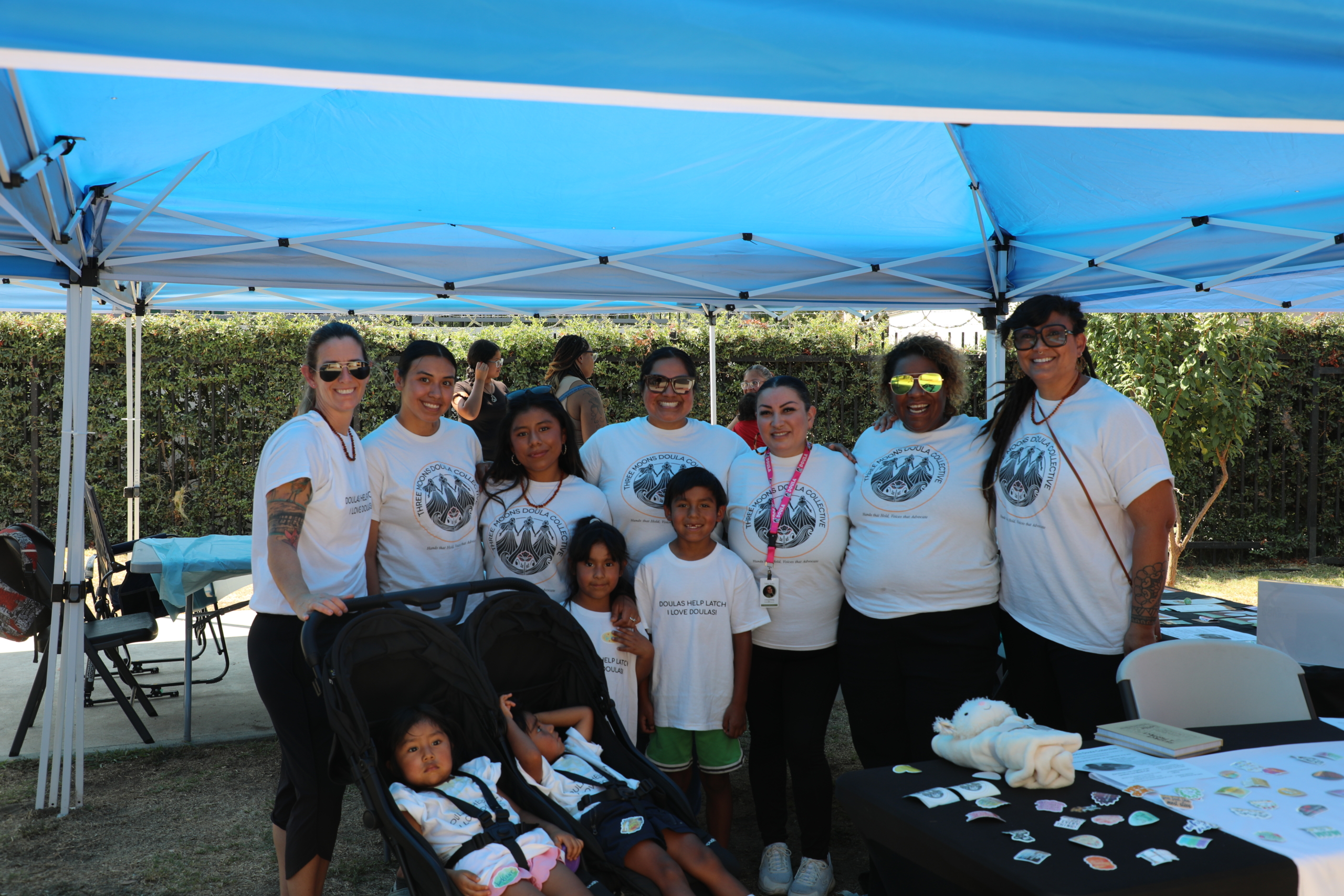
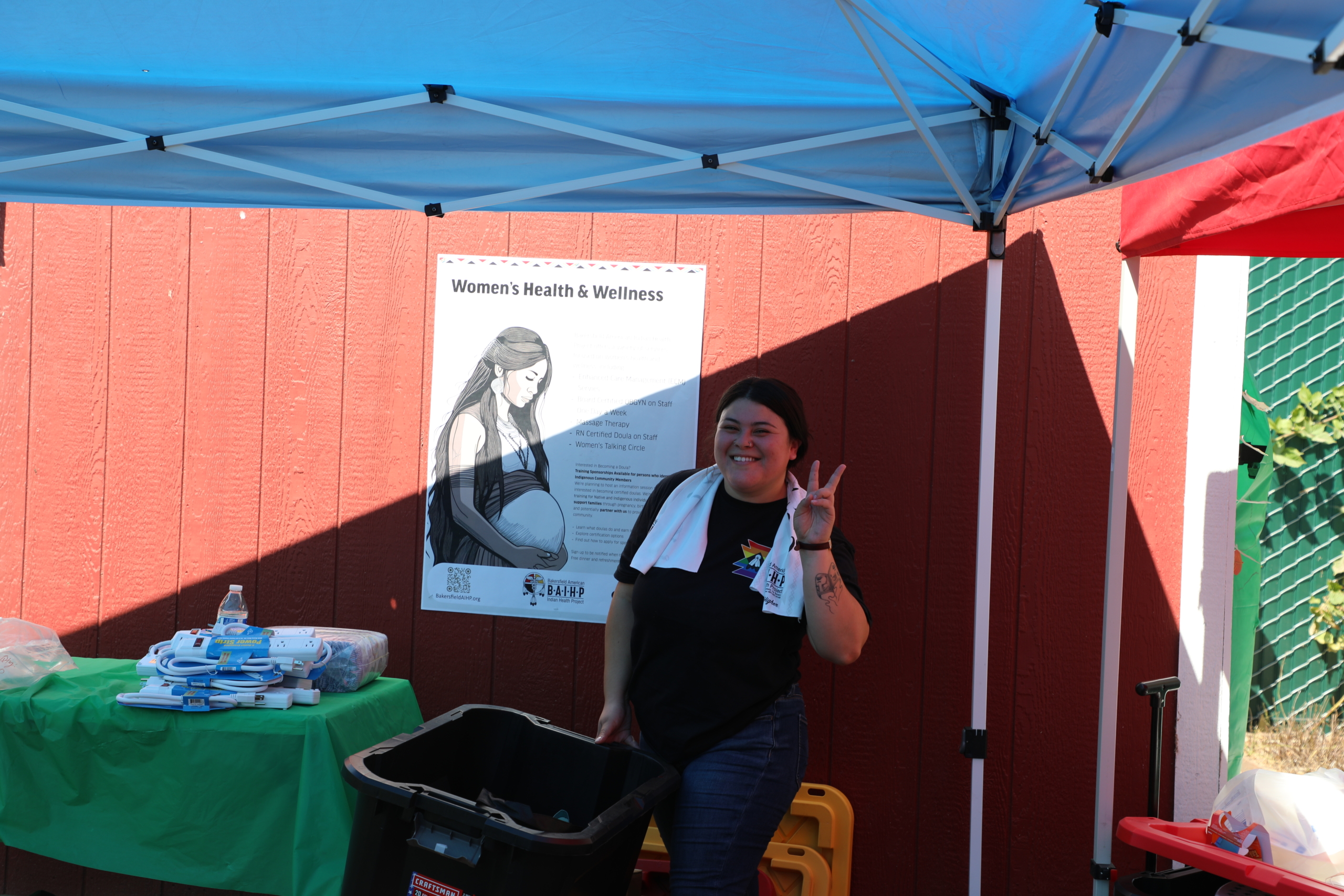
Bright Futures, Big Careers back-to-school event (Photo credit: BAIHP)
Additionally, after conversations with their California Central Valley MMRC, BAIHP joined calls with the California Maternal Quality Care Collective (CMQCC), a health initiative focused on improving perinatal health outcomes. BAIHP’s established partnerships with local doulas, graduate students, hospitals, health departments, Tribes, the California Maternal Quality Care Collective (CMQCC), and the Black Infant and Maternal Health Initiative informed the broader community about pregnancy and postpartum resources for AI/AN people in the area.
The work in progress at BAIHP exemplifies the exceptional role UIOs play in their communities as care providers but also in promoting strength-based programming and upholding Indigenous values of wellness. BAIHP and UIOs in general offer tremendous opportunities to connect our urban relatives with the best perinatal care and to create culturally relevant, strength-based initiatives developed by our communities.
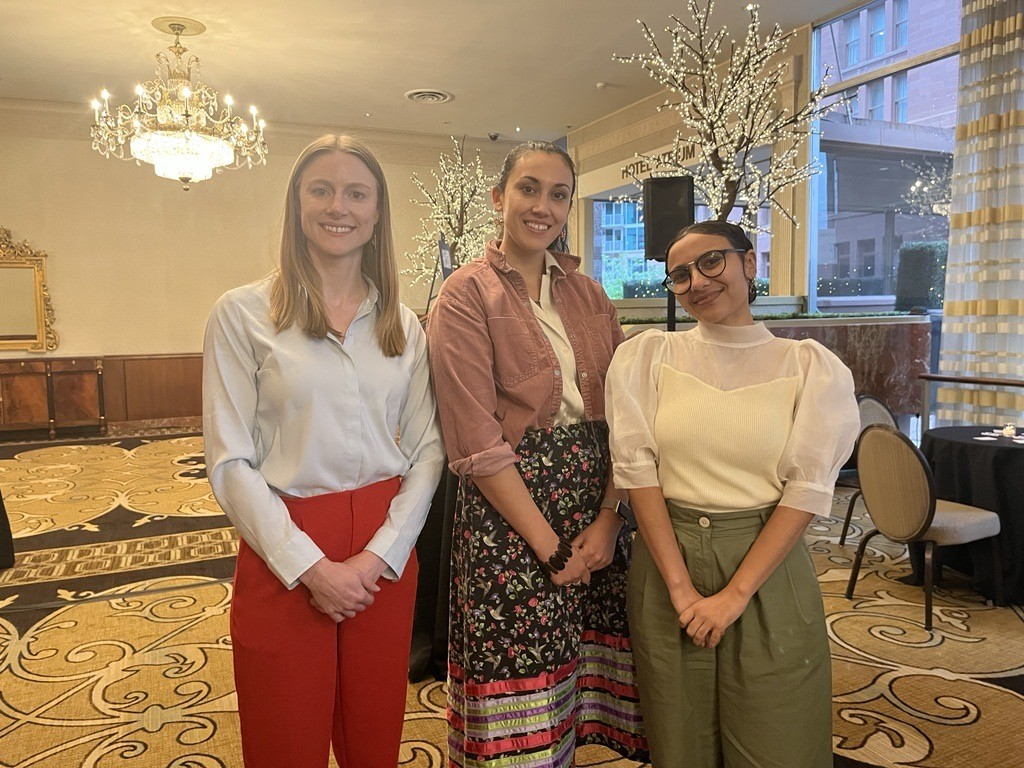
BAIHP and NCUIH at National Indian Health Board Convening on Tribal Maternal Health 2025. From left to right: Alanna Costello (BAIHP), Alyssa Smith-Longee (NCUIH), Nahla Holland (NCUIH)
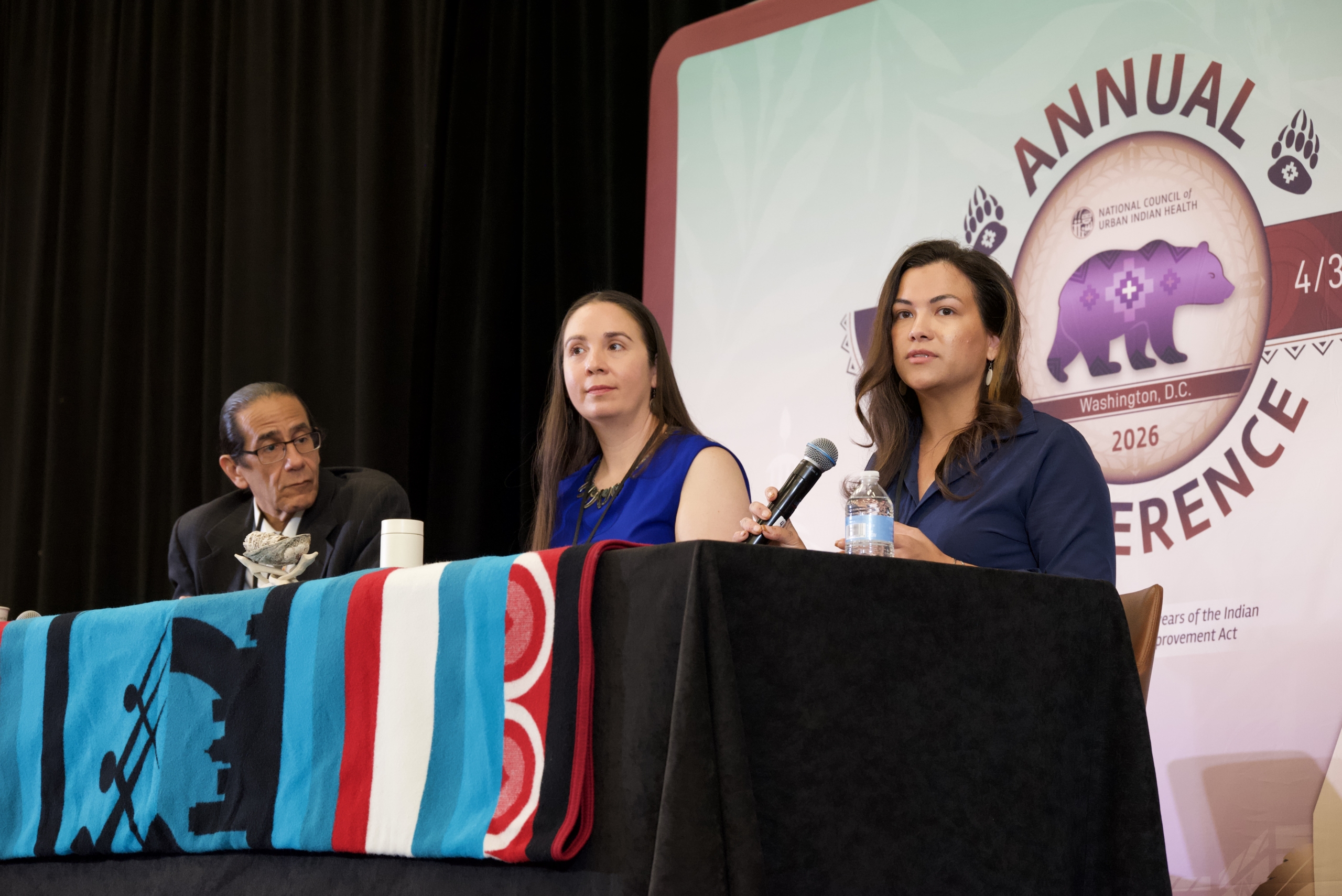
Tara Gray, Tribal Liaison at BAIHP, presenting at the NCUIH 2026 Annual Conference Maternal Health Session, alongside other Subject Matter Experts. From left to right: Dr. Brian Thompson (Upstate Medical University), Janelle Palacios (Encoded 4 Story), Tara Gray (BAIHP)
Recommendations and Best Practices
UIOs like BAIHP are uniquely positioned to integrate clinical care with community trust and community-level programming. The partnership between BAIHP and NCUIH reinforced that investing in UIOs and their maternal health efforts yields both systemic change (MMRC representation) and direct community impact (doula graduates, outreach events, new care policies). To facilitate a community of learning, NCUIH hosted a maternal health session at its 2026 Annual Conference, where alongside other subject matter experts, BAIHP Tribal Liaison, Tara Gray, shared best practices and recommendations from the partnership. While the session addressed barriers and challenges facing AI/AN mothers, it centered on community-led solutions.
Recommendations and best practices to strengthen maternal health outcomes at UIOs:
- Community Members as Care Providers. Training and certifying community members as doulas and birth workers (Indigenous Doula Programs/Scholarships).
- Center Strength-Based, Culturally Driven Programming. Hosting community education and events grounded in Indigenous values of wellness and community strengths. (see image)
- Meeting the community where they are. Integrating maternal health education and services during other community events or home visiting programs.
- Incorporating community voices through local and national partnerships. MMRCs should make efforts to connect with the UIOs in their respective states, and vice versa, to ensure urban AI/AN voices don’t go unheard.
- Consistent funding to ensure maternal health promotion efforts can continue without gaps or delays.
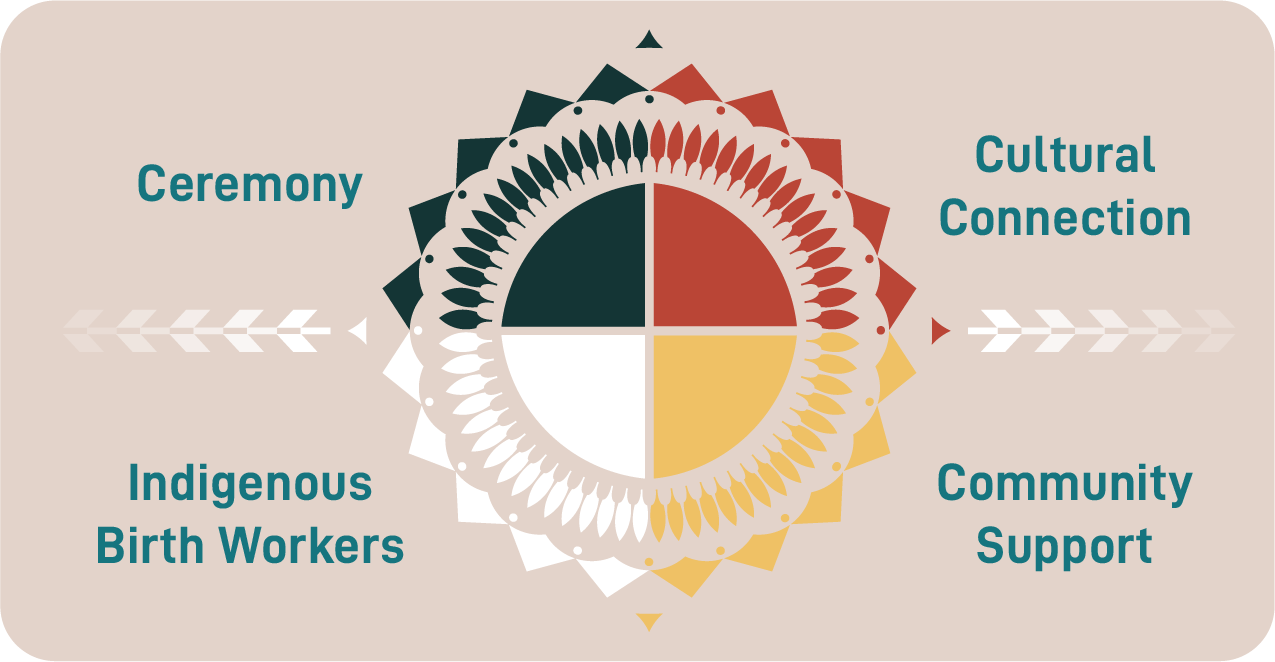
Protective factors within AI/AN communities for pregnancy and postpartum health
MMRCs also play an important role in strengthening maternal health through prioritizing community and AI/AN voices in the review process.
To strengthen maternal health outcomes for AI/AN communities, MMRCs should:
- Address systemic biases and trauma of AI/AN people
- Examine influences such as Indigenous determinants of health
- Highlight protective factors within case abstraction
- Protect AI/AN committee members throughout the review process
- Respect traditional knowledge
- Center the individual’s story and lived experience over data points
- Fund and empower community-led maternal health solutions
- Establish and uphold continued relationships with UIOs, Tribes, and other AI/AN serving organizations (including transparent data sharing agreements)
Conclusion
Recent data show that nearly all AI/AN pregnancy-related deaths reviewed were preventable.3 No voices should go unheard, no stories untold, and strengthening maternal health efforts should remain a priority with UIOs and Tribes, and local, federal, and national stakeholders. To learn more about how to get involved, please contact research@ncuih.org. For more information on AI/AN pregnancy and postpartum health, and how NCUIH is working with UIOs and national partners to promote healthier communities for our pregnant and postpartum relatives, please visit NCUIH.org/maternal-health.
Thank you to Bakersfield American Indian Health Project for their thoughtful review and input on this post.
1 Centers for Disease Control and Prevention. (2025, December 18). Data from the Pregnancy Mortality Surveillance System. https://www.cdc.gov/maternal-mortality/php/pregnancy-mortality-surveillance-data/index.html?cove-tab=1
2 Centers for Disease Control and Prevention. (2024, May 15). About Maternal Mortality Review Committees. https://www.cdc.gov/maternal-mortality/php/mmrc/index.html
3 Centers for Disease Control and Prevention. (2025a, August 22). Pregnancy-related deaths among American Indian or Alaska native women: Data from maternal mortality review committees. https://www.cdc.gov/maternal-mortality/php/data-research/mmrc/aian.html?cove-tab=3